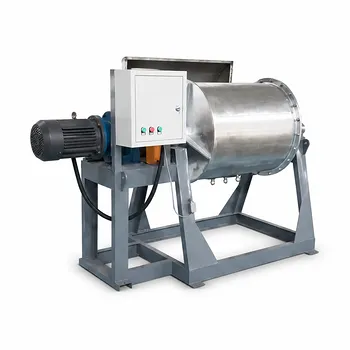
The planetary ball mill serves as the critical mechanical architect for composite cathodes. In the context of sulfide-based all-solid-state batteries, it goes beyond simple blending to force distinct solid powders—specifically sulfur, carbon nanotubes, and sulfide electrolytes—into a unified, functional composite via high-energy mechanical forces.
Core Takeaway In solid-state batteries, physical contact equates to electrochemical performance. The planetary ball mill utilizes intense shear and impact forces to achieve intimate, microscopic contact between active materials and solid electrolytes. This process is mandatory to construct the continuous ionic and electronic pathways that standard mixing cannot create.
Creating the Triple-Phase Interface
The Challenge of Solid-Solid Contact
Unlike liquid electrolyte batteries, where the liquid naturally wets the electrode materials, all-solid-state batteries rely on solids touching solids.
Without sufficient force, gaps remain between the particles. These gaps act as insulators, preventing the movement of ions and electrons and rendering the battery inefficient or non-functional.
Establishing Dual Transport Networks
The primary role of the ball mill is to integrate three specific components: the active material (Sulfur powder), the electron conductor (Multi-walled carbon nanotubes or MWCNTs), and the ionic conductor (Sulfide solid electrolyte, such as LPSC).
The mill creates a "triple-phase boundary" where these materials meet. This ensures that every particle of sulfur is accessible to both electrons (via carbon) and lithium ions (via the electrolyte).
Achieving Intimate Contact
The planetary ball mill drives these materials together at the microscopic level.
By applying high-energy mechanical forces, the machine ensures the conductive agents and ionic conductors are not just adjacent to the active material, but are physically pressed into an intimate, cohesive structure.
Mechanics of the Process
Impact and Shear Forces
The mechanism relies on the complex motion of the milling jars. As they rotate, the grinding balls generate intense shear and impact forces.
These forces physically deform the powders, pressing them together and breaking down the surface barriers that typically prevent adhesion between dry solids.
Refinement and Dispersion
Beyond mixing, the process refines the material. The mechanical impact breaks up agglomerates (clusters of particles) effectively.
This dispersion is critical for materials like MWCNTs, which tend to tangle. Proper dispersion ensures a uniform conductive network throughout the cathode rather than isolated conductive "hotspots."
Understanding the Trade-offs
Risk of Structural Damage
While high energy is necessary for contact, it is a double-edged sword. Excessive ball milling can degrade the crystalline structure of the solid electrolyte or the active material.
Prolonged exposure to high impact forces may induce an unwanted transition to a disordered phase, potentially altering the electrochemical properties negatively if not carefully controlled.
Heat and Chemical Stability
Planetary ball milling generates significant friction and heat.
Sulfide electrolytes are chemically sensitive. Without careful regulation of rotation speed and duration, the local heat generated could potentially trigger degradation or side reactions within the mixing jar.
Making the Right Choice for Your Goal
To optimize your cathode preparation, align your milling parameters with your specific performance targets:
- If your primary focus is Electronic Conductivity: Prioritize milling protocols that maximize shear forces to disentangle and uniformly disperse carbon nanotubes (MWCNTs) without pulverizing them.
- If your primary focus is Ionic Transport: Focus on achieving the highest density of intimate contact between the sulfur and the sulfide electrolyte (LPSC) to minimize interfacial resistance.
The planetary ball mill is not merely a mixer; it is a reactor that mechanically engineers the microscopic interfaces required for a viable solid-state battery.
Summary Table:
| Feature | Role in Composite Cathode Preparation |
|---|---|
| Primary Mechanism | High-energy impact and shear forces for microscopic material integration. |
| Key Components | Active sulfur, carbon nanotubes (MWCNTs), and sulfide electrolytes (e.g., LPSC). |
| Interface Goal | Establishing a "triple-phase boundary" for simultaneous ionic and electronic transport. |
| Key Benefit | Eliminates gaps between solid particles to ensure intimate physical contact. |
| Process Risk | Over-milling can cause structural damage or thermal degradation to sensitive sulfides. |
Elevate Your Solid-State Battery Research with KINTEK
Precision is paramount when engineering the future of energy storage. KINTEK specializes in high-performance laboratory equipment designed to meet the rigorous demands of battery material synthesis.
Our advanced planetary ball mills and crushing systems provide the exact mechanical force needed to create intimate solid-solid interfaces, while our vacuum and atmosphere furnaces ensure the chemical stability of your sensitive sulfide electrolytes. Whether you require hydraulic presses for pelletizing or specialized PTFE and ceramic consumables, KINTEK delivers the tools to optimize your electronic and ionic transport networks.
Ready to refine your cathode preparation? Contact our technical experts today to find the perfect milling and processing solution for your laboratory.
Related Products
- High Energy Planetary Ball Mill for Laboratory Horizontal Tank Type Milling Machine
- High-Energy Omnidirectional Planetary Ball Mill Milling Machine for Laboratory
- Laboratory Planetary Ball Mill Rotating Ball Milling Machine
- High Energy Planetary Ball Mill Milling Machine for Laboratory
- High Energy Planetary Ball Mill Machine for Laboratory Horizontal Tank Type
People Also Ask
- What are the parameters of a planetary ball mill? Master Speed, Time, and Media for Perfect Grinding
- What is the function of a planetary ball mill for nanostructured eutectic steel? Essential Prep for High-Strength Alloys
- What role does a planetary ball mill play in the preparation of NASICON-type solid electrolytes like LATP and LAGP?
- What is the function of a planetary ball mill in solid-state electrolyte prep? Milling vs. SDS Methods Explained
- What is the specific function of a planetary ball mill in preparing Cr-50 wt% Si alloy? Master Mechanical Alloying