Thermal management is the critical control factor in the Plasma Electrolytic Oxidation (PEO) process. Because PEO generates extreme localized heat through high-energy micro-discharges, integrating a cooling circulation system or using dry ice is mandatory to prevent the electrolyte from overheating. Without this intervention, the solution will rapidly degrade, compromising the stability of the process and the quality of the resulting coating.
The PEO process generates instantaneous temperatures exceeding 4000K, which threatens to decompose the electrolyte and damage the coating. Active cooling is required to maintain a stable low-temperature environment, ensuring uniform microstructure growth and preventing chemical deterioration.
The Thermal Challenge of PEO
High-Energy Micro-Discharges
The core mechanism of PEO involves high-voltage electrical breakdown. This creates localized plasma micro-discharges on the surface of the metal.
These discharges generate instantaneous temperatures exceeding 4000K. While these hot spots are microscopic, they release a massive amount of thermal energy into the surrounding environment.
Rapid Electrolyte Heating
Because the discharges occur at the interface of the metal and the liquid, the heat dissipates directly into the electrolyte.
Without an external heat removal mechanism, the bulk temperature of the electrolyte rises rapidly. This creates an unstable thermal environment that changes the physics of the reaction as time progresses.
Protecting the Electrolyte
Preventing Chemical Decomposition
The electrolyte is a carefully balanced chemical solution. Excessive heat can cause the active chemical components to decompose or precipitate out of the solution.
Cooling systems keep the bath within a lower temperature range (often between 5°C and 20°C). This preserves the chemical stability of the electrolyte, ensuring it remains effective throughout the treatment.
Controlling Evaporation
Unchecked heating leads to rapid evaporation of the water content in the electrolyte.
This changes the concentration of the solution, altering its conductivity and pH. Cooling mitigates this evaporation, maintaining a consistent chemical profile necessary for predictable results.
Ensuring Coating Quality
Uniform Microstructure Growth
The structure of the oxide layer depends heavily on the temperature at which it forms.
By stabilizing the bath temperature, you ensure the uniformity of the oxide layer's microstructure. This prevents variations in thickness and porosity across the surface of the part.
Preventing Structural Defects
Excessive heat causes thermal stress within the ceramic layer.
If the electrolyte becomes too hot, it can lead to ablation or cracking of the coating. A cooled environment maintains the continuity of discharge modes, preventing these destructive defects.
Operational Trade-offs
System Complexity vs. Process Stability
Integrating a cooling loop or managing dry ice adds mechanical complexity to the reactor setup.
However, this complexity is unavoidable. Attempting to run PEO without cooling simplifies the hardware but makes the process scientifically unrepeatable and prone to failure.
Energy Efficiency Considerations
The cooling system consumes significant energy to counteract the heat generated by the power supply.
While this lowers the overall energy efficiency of the operation, it is a necessary trade-off to achieve a functional, high-quality ceramic coating.
Optimizing Your PEO Setup
To ensure the success of your coating process, you must match your cooling strategy to your operational scale.
- If your primary focus is industrial consistency: Implement an automated external circulation system with a chiller to hold the electrolyte at a strict setpoint (e.g., 20°C).
- If your primary focus is short-term laboratory experimentation: Dry ice can be used as a temporary, manual method to suppress temperature spikes in smaller beakers.
Temperature control is not merely a safety precaution; it is a fundamental processing parameter that dictates the integrity of your final ceramic layer.
Summary Table:
| Feature | Impact of High Heat | Benefit of Cooling (5°C - 20°C) |
|---|---|---|
| Electrolyte Stability | Rapid chemical decomposition and evaporation | Preserves concentration and chemical integrity |
| Coating Structure | Increased porosity, ablation, and cracking | Promotes uniform growth and microstructure |
| Process Control | Unpredictable conductivity and pH shifts | Maintains stable electrical discharge modes |
| Surface Integrity | Thermal stress and structural defects | Reduces thermal stress for continuous layers |
Elevate Your PEO Research with KINTEK Precision
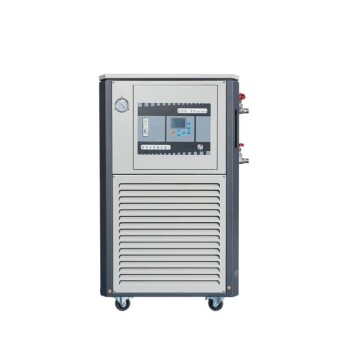
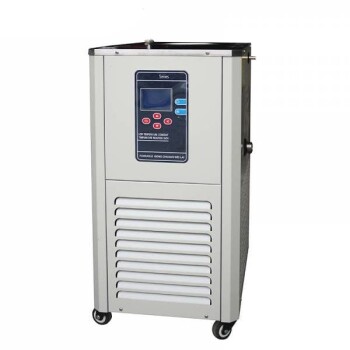
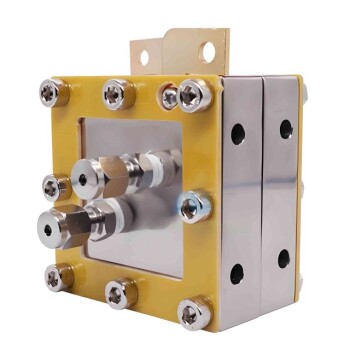
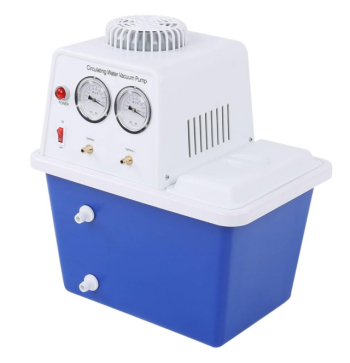
Thermal stability is the backbone of successful Plasma Electrolytic Oxidation. At KINTEK, we specialize in the high-performance laboratory equipment necessary to master these demanding processes. Whether you are conducting fundamental research or industrial scaling, our comprehensive range of cooling solutions (ULT freezers, chillers, and cold traps) and specialized electrolytic cells are designed to maintain the precise thermal environments your materials require.
From high-temperature furnaces for post-treatment to battery research tools and ceramic consumables, KINTEK provides the integrated solutions needed to prevent structural defects and ensure coating uniformity.
Ready to optimize your PEO setup? Contact us today to discover how our expert-grade equipment can enhance your laboratory's efficiency and process repeatability.
References
- Maman Kartaman Ajiriyanto, Anawati Anawati. Kajian Literatur Karakteristik Lapisan Keramik Oksida yang Ditumbuhkan Diatas Paduan Zirkonium dengan Metode Plasma Electrolytic Oxidation. DOI: 10.13057/ijap.v12i1.49853
This article is also based on technical information from Kintek Solution Knowledge Base .
Related Products
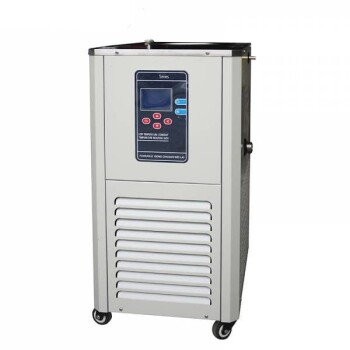
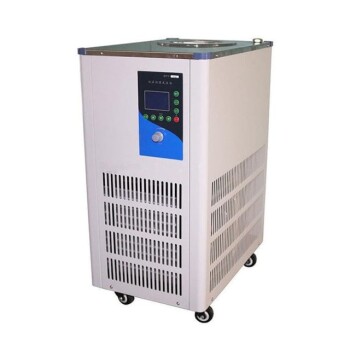
- 5L Chilling Circulator Cooling Water Bath Circulator for Low Temperature Constant Temperature Reaction Bath
- 100L Chilling Circulator Cooling Water Circulator for Low Temperature Constant Temperature Reaction Bath Water Bath Cooling
- 10L Chilling Circulator Cooling Water Bath Low Temperature Constant Temperature Reaction Bath
- Chemical Vapor Deposition CVD Equipment System Chamber Slide PECVD Tube Furnace with Liquid Gasifier PECVD Machine
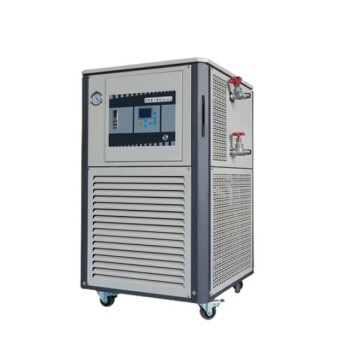
- 100L Heating Chilling Circulator Cooling Water Bath Circulator for High and Low Temperature Constant Temperature Reaction
People Also Ask
- What is the necessity of a circulating water bath in chlorate production? Optimize Yield & Purity with Precision
- Why is a circulating water chiller required for Prussian Blue nanoparticles? Ensure Stability & Batch Reproducibility
- What function does a circulating cooling chiller perform during the gas adsorption isotherm testing of nanoporous carbon?
- How does a constant temperature circulator support the leaching reaction of gold scrap? Optimize Gold Recovery Results
- How do constant temperature circulators impact weight-loss immersion tests? Ensure Precision in Corrosion Analysis