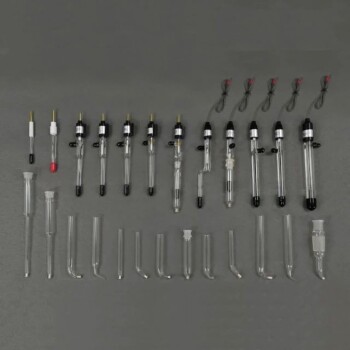
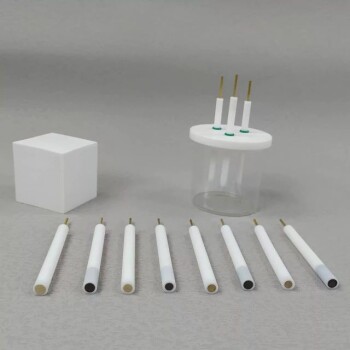
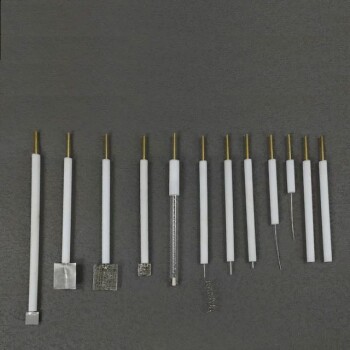
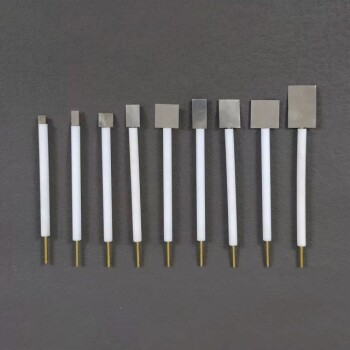
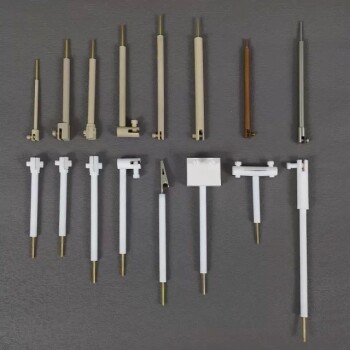
The Ag/AgCl (saturated KCl) reference electrode is the indispensable "ruler" of an electrochemical system. It provides a fixed, stable potential that allows for the precise measurement and control of the working electrode. Without this constant baseline, it is impossible to distinguish between the actual chemical reaction and random fluctuations in the measurement environment.
The core necessity of an Ag/AgCl reference electrode lies in its ability to provide a constant electrochemical benchmark. This stability ensures that any potential changes observed are a direct result of reaction kinetics at the working electrode, guaranteeing the accuracy, reproducibility, and scientific validity of the data.
Defining the Potential Benchmark
Elimination of System Drift
An Ag/AgCl electrode maintains a constant and known potential throughout the duration of an experiment. By providing a stable baseline, it ensures that any recorded potential changes originate entirely from the reaction kinetics at the working electrode interface rather than from "noise" or drift within the measurement system itself.
Precise Identification of Redox Peaks
Stability in potential control directly determines the accuracy of the oxidation peak potential. This precision is vital for the qualitative identification of electroactive species, such as dopamine or gallic acid, where a slight shift in potential could lead to the misidentification of the substance.
Monitoring Working Electrode Behavior
The reference electrode allows an electrochemical workstation to accurately monitor the potential of the working electrode relative to the electrolyte. This is essential for defining specific ranges for redox reactions and for calculating critical values like corrosion potential (ECORR).
Ensuring Data Reproducibility and Comparability
Consistency Across Experimental Batches
Using a standardized reference electrode ensures that measurement data is comparable across different experimental conditions. This consistency is vital for research that requires high reproducibility, such as testing catalysts or microbial electrolysis cells across multiple trials.
Accurate Determination of Overpotentials
In reactions like the Hydrogen Evolution Reaction (HER) or Oxygen Evolution Reaction (OER), the Ag/AgCl electrode allows for the precise determination of onset potentials. By eliminating errors caused by circuit resistance, it provides the accuracy needed to calculate overpotentials effectively.
Maintaining Selectivity in Sensors
For advanced sensors, such as those using graphene nanoflowers, the reference electrode ensures the selectivity and accuracy of the device. It allows the system to target specific oxidation peaks (e.g., at 0.15 V) even when testing complex environments like varying water samples.
Understanding the Trade-offs
The Risk of Ion Contamination
While the saturated KCl solution provides stability, it also introduces the risk of chloride ion leakage into the analyte. In certain experiments, such as those involving silver-sensitive catalysts or specific non-aqueous electrolytes, this leakage can contaminate the system and alter reaction results.
Temperature and Maintenance Requirements
The potential of an Ag/AgCl electrode is temperature-dependent, meaning significant fluctuations in lab temperature can affect the baseline accuracy. Additionally, the internal KCl solution must remain saturated; if the salt precipitates or the solution evaporates, the electrode's potential will shift, compromising the integrity of the data.
Liquid Junction Potential
A liquid junction potential always exists at the interface between the electrode’s internal filling and the external test solution. While usually small, this potential can introduce slight errors in high-precision thermodynamic measurements if not properly accounted for or minimized.
How to Apply This to Your Research
Before starting your next electrochemical test, consider the specific requirements of your analyte and environment to ensure your reference choice is optimal.
- If your primary focus is qualitative identification: Use a freshly calibrated Ag/AgCl electrode to ensure the measured oxidation peaks align perfectly with known standards for your specific molecule.
- If your primary focus is long-term stability (e.g., corrosion studies): Ensure the KCl solution remains saturated throughout the test to prevent potential drift from compromising your ECORR calculations.
- If your primary focus is avoiding sample contamination: Consider using a "double-junction" Ag/AgCl electrode to provide an extra barrier between the KCl filling and your sensitive reaction environment.
By strictly controlling the reference potential, you transform a simple current measurement into a rigorous and scientifically valid analysis of chemical behavior.
Summary Table:
| Feature | Function | Research Benefit |
|---|---|---|
| Potential Stability | Constant voltage benchmark | Eliminates system drift and measurement noise |
| Peak Identification | Precise redox potential control | Accurate qualitative identification of species |
| Reproducibility | Standardized reference point | Ensures consistency across different lab batches |
| Performance Analysis | Overpotential calculation | Critical for evaluating catalysts (HER/OER) |
| Data Integrity | Liquid junction management | Minimizes errors in thermodynamic measurements |
Elevate Your Electrochemical Precision with KINTEK
Precision in electrochemical detection starts with the right tools. KINTEK specializes in high-performance laboratory solutions designed to provide the stability and accuracy your research demands.
Whether you are performing complex redox analysis or developing next-generation energy storage, our comprehensive portfolio has you covered:
- Electrochemical Excellence: High-quality electrolytic cells, specialized electrodes (including Ag/AgCl), and battery research tools.
- Advanced Thermal Processing: High-temperature furnaces (muffle, vacuum, CVD/PECVD) and high-pressure reactors/autoclaves.
- Sample Preparation: Precision crushing, milling systems, and hydraulic presses for pellet and isostatic pressing.
- Lab Essentials: Cooling solutions, homogenizers, and durable ceramics/PTFE consumables.
Ready to achieve superior data reproducibility? Contact our experts today to find the perfect equipment tailored to your specific application and ensure your results are always scientifically valid.
References
- Chenggong Gui. Prediction of food additives based on grey prediction model and electrochemical analysis of gallic acid. DOI: 10.54097/hset.v33i.5328
This article is also based on technical information from Kintek Solution Knowledge Base .
Related Products
- Reference Electrode Calomel Silver Chloride Mercury Sulfate for Laboratory Use
- Electrolytic Electrochemical Cell Gas Diffusion Liquid Flow Reaction Cell
- Copper Sulfate Reference Electrode for Laboratory Use
- Graphite Disc Rod and Sheet Electrode Electrochemical Graphite Electrode
- Glassy Carbon Electrochemical Electrode
People Also Ask
- What is the function of a reference electrode? Master Precision in Three-Electrode Reactor Reconstruction
- What is the recommended maintenance for the filling solution of a reference electrode? A Guide to Stable & Accurate Readings
- Which electrode is used as a ground reference? Master the Key to Accurate Electrochemical Measurements
- What is the reference electrode in potentiometry? The Key to Stable & Accurate Measurements
- Which electrode is used as a reference? A Guide to Accurate Electrochemical Measurements