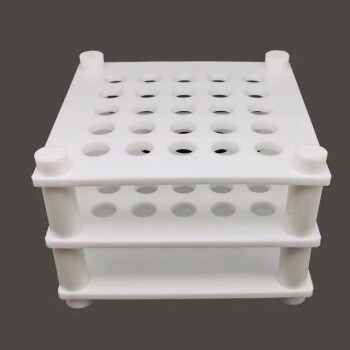
The primary function of a PTFE-lined high-pressure reactor is to provide a sealed, corrosion-resistant environment for subcritical chemical reactions. This setup allows for the rapid formation of cobalt-iron-based (CoFe) nanocomposites with irregular spherical structures by maintaining precise temperature and pressure levels—typically around 80 °C—which significantly improves efficiency over traditional hydrothermal methods.
This reactor configuration creates a specialized "micro-environment" that balances chemical inertness with structural safety. By isolating the reaction from the metallic vessel wall, it ensures both the purity of the nanocomposite and the longevity of the equipment.
Facilitating Controlled Reaction Environments
Enabling Subcritical Chemical Reactions
The reactor acts as a pressure vessel that allows aqueous solutions to reach temperatures and pressures necessary for subcritical reactions. In the case of CoFe nanocomposites, this environment facilitates the rapid decomposition of precursors and the subsequent growth of nanostructures. By operating in a closed system, the reactor prevents the loss of volatile components and maintains a constant reaction state.
Improving Synthesis Efficiency
Compared to open-air or traditional hydrothermal processes, high-pressure reactors enable reactions to occur at significantly lower temperatures. This efficiency is driven by the internal pressure generated during heating, which accelerates the formation of irregular spherical structures. For CoFe synthesis, this means achieving high-quality results in as little as one hour at 80 °C.
Protecting Material Purity and Structural Integrity
The Role of PTFE Chemical Inertness
The Polytetrafluoroethylene (PTFE) liner is essential because the reaction solutions often contain strong electrolytes and metal salts. PTFE is almost entirely chemically inert, meaning it will not react with the cobalt or iron precursors. This ensures that the chemical pathway of the synthesis remains focused solely on the intended nanocomposite formation.
Preventing Metallic Contamination
Without the PTFE liner, the acidic or alkaline nature of the hydrothermal solution would corrode the internal walls of the stainless steel reactor. This corrosion would lead to metal ion leaching, introducing impurities like chromium or nickel into the CoFe nanocomposite. The liner serves as a physical barrier that guarantees the high purity of the final electrocatalyst or material.
Structural Safety via the Stainless Steel Shell
While the PTFE liner provides chemical protection, it lacks the mechanical strength to withstand high internal pressures. The external stainless steel jacket provides the necessary structural integrity to contain the pressure generated at high temperatures. This combination allows for a safe, high-pressure environment that is also chemically "clean" on the inside.
Understanding the Trade-offs and Limitations
Thermal and Pressure Constraints
While PTFE is highly resistant to chemicals, it has a thermal limit, typically around 250 °C–260 °C. Exceeding these temperatures can lead to the deformation or "creeping" of the liner, which may cause the seal to fail. Users must balance the need for high-temperature synthesis with the mechanical limits of the polymer lining.
Issues with Thermal Lag
The presence of a thick PTFE liner inside a stainless steel shell creates thermal lag during the heating process. Because PTFE is a poor thermal conductor, the internal temperature of the solution may take longer to reach the setpoint than the external temperature controller suggests. Precise synthesis requires accounting for this stabilization time to ensure consistent morphology.
Optimizing the Reactor for Your Synthesis Goals
To achieve the best results in the hydrothermal synthesis of nanocomposites, your approach should vary based on your specific requirements:
- If your primary focus is material purity: Ensure the PTFE liner is thoroughly "pickled" or cleaned with dilute acid between runs to prevent cross-contamination of metal ions.
- If your primary focus is morphology control (e.g., nanowires vs. spheres): Focus on the heating rate and the "fill degree" of the reactor, as the internal pressure directly influences the growth direction of the nanocrystals.
- If your primary focus is equipment longevity: Never exceed 80% of the reactor’s total volume to allow for the safe expansion of liquids and the accumulation of generated gases.
By mastering the balance between chemical inertness and pressurized heat, you can reliably produce high-performance cobalt-iron-based nanocomposites.
Summary Table:
| Key Component/Feature | Function in CoFe Synthesis | Main Benefit |
|---|---|---|
| PTFE Liner | Provides chemical inertness & prevents ion leaching | Guarantees high material purity |
| SS External Shell | Maintains structural integrity under pressure | Ensures laboratory safety |
| Subcritical Environment | Accelerates precursor decomposition at ~80°C | Increases synthesis efficiency |
| Sealed System | Prevents loss of volatile components | Maintains constant reaction state |
Elevate Your Synthesis Precision with KINTEK
Achieving high-purity cobalt-iron-based nanocomposites requires equipment that balances chemical inertness with extreme pressure resilience. KINTEK specializes in premium laboratory solutions, offering a robust range of high-temperature high-pressure reactors and autoclaves designed specifically for hydrothermal and subcritical applications.
From our chemically resistant PTFE-lined vessels to advanced CVD/PECVD systems and high-temperature furnaces, we provide the tools researchers need for consistent, reliable results. Whether you are developing next-generation electrocatalysts or performing complex material milling, KINTEK’s portfolio—including hydraulic presses, electrolytic cells, and cooling solutions—is engineered to meet the strictest scientific standards.
Ready to optimize your lab’s performance? Contact our experts today to find the perfect reactor configuration for your research goals.
References
- Shiva Bhardwaj, Ram K. Gupta. Bimetallic Co–Fe sulfide and phosphide as efficient electrode materials for overall water splitting and supercapacitor. DOI: 10.1186/s11671-023-03837-1
This article is also based on technical information from Kintek Solution Knowledge Base .
Related Products
- Custom PTFE Teflon Parts Manufacturer for Hydrothermal Synthesis Reactor Polytetrafluoroethylene Carbon Paper and Carbon Cloth Nano-growth
- Custom PTFE Teflon Parts Manufacturer for Reagent Wide Mouth Fine Mouth Sample High Temperature Bottles
- Stainless High Pressure Autoclave Reactor Laboratory Pressure Reactor
- Customizable High Pressure Reactors for Advanced Scientific and Industrial Applications
- Custom PTFE Teflon Parts Manufacturer for Microwave Digestion Tank
People Also Ask
- What is the function of a PTFE reactor in MXene etching? Ensure Safe, High-Purity MAX Phase Conversion
- Why is a PTFE reactor required for titanium-based nano-ceramic coating solutions? Ensure Chemical Inertness & Purity
- Why must a Polytetrafluoroethylene (PTFE) reactor be used for Ti3C2TX MXene etching? Ensure Safety and Purity
- Why are PTFE reactors preferred for silver phosphate glass testing? Ensure Purity and Kinetic Accuracy
- What are the advantages of using polytetrafluoroethylene (PTFE) liners in hydrothermal synthesis reactors? High Purity