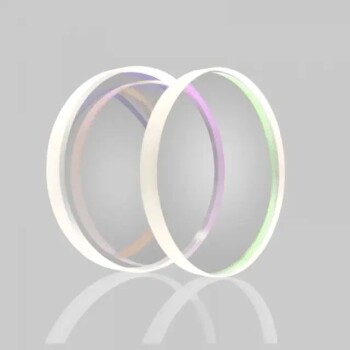
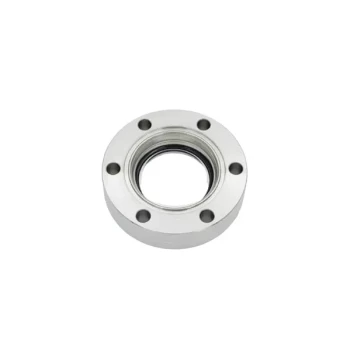
The primary function of a sapphire glass window in a high-throughput infrared thermography reactor is to act as an optical interface that possesses exceptionally high transmittance in the infrared wavelength range. This allows an external high-resolution camera to accurately capture minute temperature rise signals generated by internal catalyst arrays, while simultaneously maintaining the physical integrity of the reactor.
Sapphire is utilized because it uniquely solves a dual engineering challenge: it provides the necessary optical clarity for sensitive thermal imaging while offering the mechanical robustness required to withstand high pressures and temperatures.
The Critical Role of Optical Clarity
Enabling Precise Signal Detection
In high-throughput experimentation, data accuracy is paramount. Sapphire is selected specifically for its ability to pass infrared light with minimal absorption or reflection.
This high transmittance is critical for the external infrared camera. Without it, the minute temperature rise signals generated by the catalyst array would be lost or distorted before they reached the sensor.
Preserving Data Integrity
Any material placed between the sensor and the subject acts as a filter. Sapphire ensures that the thermal data recorded represents the actual reaction activity, rather than artifacts caused by window interference.
Physical Durability in Harsh Environments
Withstanding High Temperatures
Reactors often operate under extreme thermal conditions. Sapphire glass possesses significant high-temperature resistance, allowing it to maintain its form and clarity where other materials might soften, warp, or become opaque.
This resistance ensures that the transparency of the window is maintained throughout the duration of a heated experiment.
Resisting Pressure Fluctuations
Beyond heat, these reactors are subject to internal stress. Sapphire offers superior mechanical strength, enabling the window to act as a structural component.
It effectively withstands internal pressure fluctuations, preventing catastrophic failure and ensuring the safety of the experimental process.
Understanding the Operational Trade-offs
The Necessity of Specialized Materials
In standard environments, common glass or plastic might suffice for viewing. However, in infrared thermography, standard materials often block IR wavelengths.
The use of sapphire represents a necessary engineering choice to prioritize signal transmission without sacrificing safety. Using a material with lower mechanical strength would compromise the reactor's pressure rating, while using a stronger, non-transparent material would render the infrared camera useless.
Making the Right Choice for Your Goal
When designing or operating a reactor, understanding the role of the viewport is essential for data quality and safety.
- If your primary focus is signal sensitivity: Prioritize materials like sapphire with high IR transmittance to ensure even the faintest thermal signals from the catalyst array are detected.
- If your primary focus is operational safety: Rely on sapphire’s mechanical strength to serve as a reliable barrier against high internal pressures and thermal stress.
By utilizing sapphire glass, you ensure that the delicate requirement for optical precision never compromises the rigorous demands of reactor safety.
Summary Table:
| Feature | Sapphire Window Benefit | Why It Matters for IR Reactors |
|---|---|---|
| Optical Clarity | High Infrared Transmittance | Captures minute temperature signals from catalyst arrays without distortion. |
| Thermal Stability | High-Temperature Resistance | Maintains transparency and structural integrity under extreme heat. |
| Mechanical Strength | Superior Structural Durability | Withstands internal pressure fluctuations and ensures operational safety. |
| Chemical Inertness | Corrosion Resistance | Protects the optical interface from harsh reactive environments inside the reactor. |
Elevate Your Research Precision with KINTEK Solutions
Don't let subpar materials compromise your data integrity. At KINTEK, we specialize in high-performance laboratory equipment designed for the most demanding research environments. Whether you need high-temperature high-pressure reactors and autoclaves equipped with precision sapphire viewports, or specialized crushing and milling systems for sample preparation, our team provides the engineering excellence you require.
From catalyst research tools to PTFE consumables and ceramics, KINTEK is your partner in achieving accurate, repeatable results. Contact us today to discuss your reactor specifications and discover how our advanced cooling solutions, hydraulic presses, and thermal processing equipment can optimize your high-throughput experiments.
References
- Thomas J. Lenk, Santiago Casu. A High-Throughput Screening Approach to Identify New Active and Long-Term Stable Catalysts for Total Oxidation of Methane from Gas-Fueled Lean–Burn Engines. DOI: 10.3390/catal10020159
This article is also based on technical information from Kintek Solution Knowledge Base .
Related Products
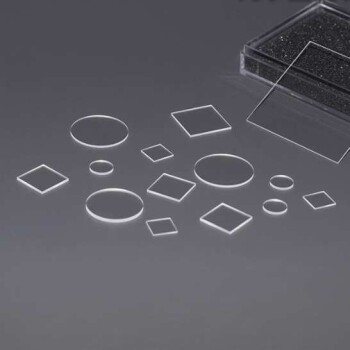
- Infrared Transmission Coating Sapphire Sheet Substrate Window
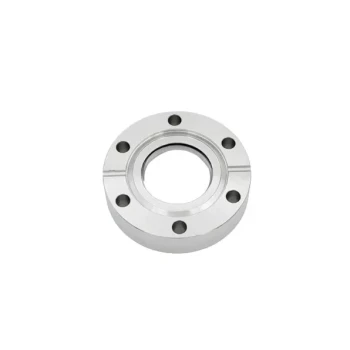
- CF Ultra-High Vacuum Observation Window Stainless Steel Flange Sapphire Glass Sight Glass
- KF Ultra-High Vacuum Observation Window Stainless Steel Flange Sapphire Glass Sight Glass
- CVD Diamond Optical Windows for Lab Applications
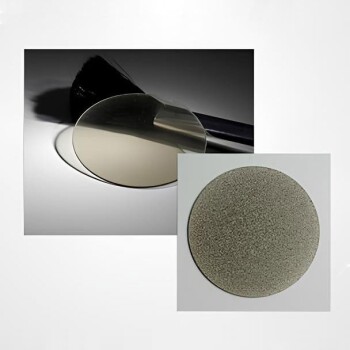
- Optical Window Glass Substrate Wafer Sheets Zinc Sulfide ZnS Window
People Also Ask
- Is Sputter Tint good? Premium Heat Rejection & Long-Term Durability Explained
- What are the applications of optical coating? Unlock Advanced Light Control for Your Industry
- What is the thinnest coating? Unlocking Unique Properties at the Atomic Scale
- What is organic thin film? A Guide to Engineered Molecular Layers for Advanced Tech
- How do cooling jackets or heat exchangers contribute to the stability of glycerol conversion? Master Thermal Management