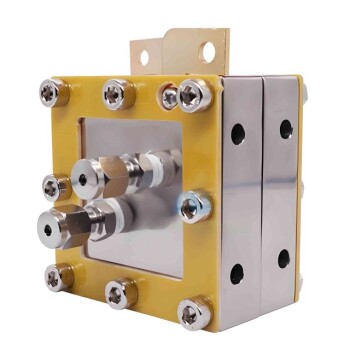
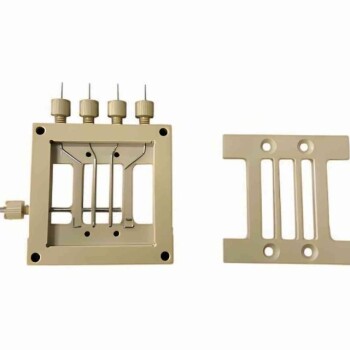
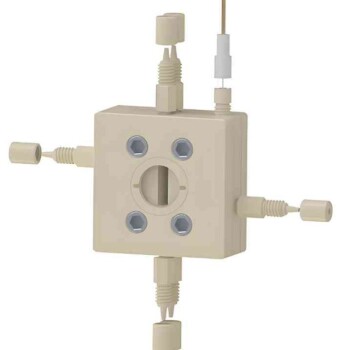
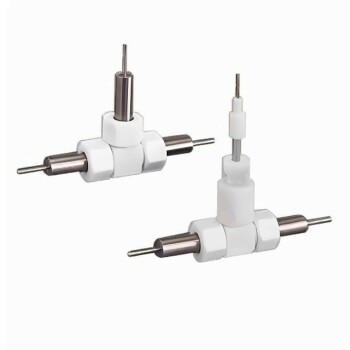
The primary function of the electrolytic cell is to deposit a pure nickel pre-coating onto a C45 steel substrate before the thermochemical treatment begins. This electrolytic deposition acts as a critical reservoir of nickel, which is required to facilitate the specific chemical reactions necessary for a multicomponent boriding process.
By establishing a pure nickel layer on the steel surface, the electrolytic process enables the formation of a robust iron-nickel boride (Fe-Ni-B) compound. This pre-treatment is essential for enhancing the coating's total thickness and eliminating the brittleness often associated with standard boriding.
The Mechanism of Pre-Plating
To understand why the electrolytic cell is used, one must look at how the nickel layer interacts with the steel during the heating phase.
Creating a Reactive Source
The electrolytic cell does not create the final hard coating itself. Instead, it places a pure nickel layer on the substrate to act as a reactant.
Inter-diffusion During Treatment
During the subsequent thermochemical treatment, this nickel layer does not remain static. It undergoes inter-diffusion with the steel substrate.
Formation of Fe-Ni-B
This diffusion process provides the necessary nickel source to form a specific iron-nickel boride (Fe-Ni-B) layer. Without the initial electrolytic deposition, this complex multicomponent layer could not form.
Critical Technical Advantages
The inclusion of the electrolytic cell stage directly alters the mechanical properties of the final component.
Increasing Coating Thickness
The presence of the nickel pre-coating significantly increases the total thickness of the borided layer compared to standard methods. A thicker layer generally translates to a longer service life for the component.
Suppressing Brittleness
A major challenge in boriding is the formation of the FeB phase, which is inherently brittle and prone to cracking.
Improving Mechanical Properties
By introducing nickel, the process suppresses the formation of the brittle FeB phase. This ensures the coating retains high hardness while improving its overall mechanical integrity and resistance to fracture.
Process Dependencies and Dynamics
While effective, this method introduces specific dependencies that must be managed to ensure success.
Reliance on Substrate Compatibility
The process is specifically noted for C45 steel substrates. The interaction between the electrolytic nickel and the specific metallurgy of the steel is vital for the correct diffusion to occur.
The Necessity of Two Steps
Success depends entirely on the sequential nature of the process. The electrolytic plating must occur first to provide the "fuel" (nickel) for the subsequent thermochemical "engine."
Making the Right Choice for Your Goal
The use of an electrolytic cell in this context is a strategic choice to overcome the limitations of traditional boriding.
- If your primary focus is Durability: This process is ideal because it significantly increases the total thickness of the protective layer.
- If your primary focus is Toughness: The suppression of the brittle FeB phase makes this superior for applications where coating fracture is a risk.
This approach transforms a standard surface treatment into a high-performance multicomponent system by leveraging the chemistry of nickel diffusion.
Summary Table:
| Feature | Function in Pre-Plating Stage | Benefit to Final Coating |
|---|---|---|
| Nickel Deposition | Creates a pure Ni reservoir on C45 steel | Enables Fe-Ni-B compound formation |
| Inter-diffusion | Facilitates Ni-substrate chemical reaction | Increases total layer thickness & durability |
| Phase Control | Suppresses formation of brittle FeB phase | Improves mechanical integrity & fracture resistance |
| Substrate Prep | Sequential electrolytic deposition | Ensures superior toughness and service life |
Elevate Your Material Performance with KINTEK Precision Solutions
Maximize the durability and toughness of your industrial components with KINTEK’s advanced electrolytic cells and electrodes. Whether you are optimizing multicomponent nickel-based boriding for C45 steel or developing complex surface treatments, our high-performance laboratory equipment provides the precision you need to suppress brittleness and increase coating thickness.
Why choose KINTEK?
- Comprehensive Range: From specialized electrolytic cells and high-temperature furnaces (muffle, vacuum, CVD) to high-pressure reactors.
- Expert Solutions: Tailored support for battery research, material crushing/milling, and precise hydraulic pressing.
- Targeted Results: Achieve superior mechanical properties and longer service life for your high-performance materials.
Ready to transform your surface treatment process? Contact KINTEK today to discuss your project needs and explore our full portfolio of laboratory consumables and equipment.
References
- M. Tacikowski, T. Wierzchoń. The Effect of Chemical Composition on the Microstructure and Properties of Multicomponent Nickel-Based Boride Layers Produced on C45 Steel by the Hybrid Method. DOI: 10.3390/coatings14020197
This article is also based on technical information from Kintek Solution Knowledge Base .
Related Products
- PTFE Electrolytic Cell Electrochemical Cell Corrosion-Resistant Sealed and Non-Sealed
- Super Sealed Electrolytic Electrochemical Cell
- Electrolytic Electrochemical Cell with Five-Port
- H Type Electrolytic Cell Triple Electrochemical Cell
- Electrolytic Electrochemical Cell Gas Diffusion Liquid Flow Reaction Cell
People Also Ask
- What is the necessity of selecting a PTFE electrolytic cell? Ensure Precise Graphene Corrosion Testing Accuracy
- What is the proper method for cleaning the surface of an all-PTFE electrolytic cell? Ensure Accurate Results with a Pristine Surface
- How should an all-PTFE electrolytic cell be stored after use? Expert Maintenance Tips for Long-Lasting Performance
- What is the proper cleaning method for an all-PTFE electrolytic cell? Essential Tips for Surface Integrity
- What are the standard opening specifications for all-PTFE electrolytic cells? A Guide to Sealed vs. Non-Sealed Ports