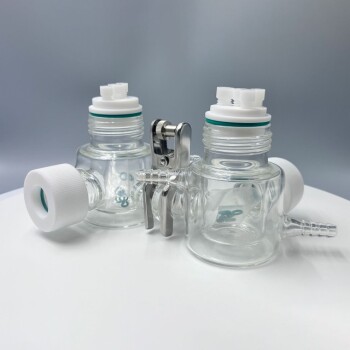
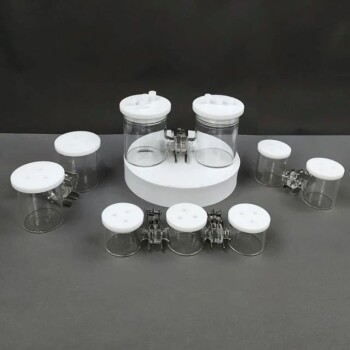
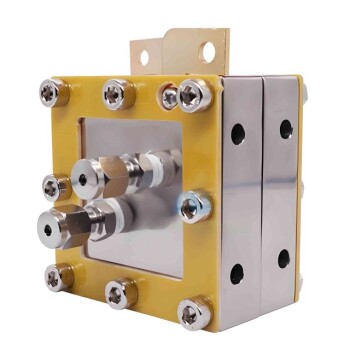
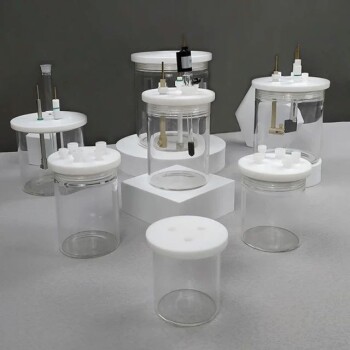
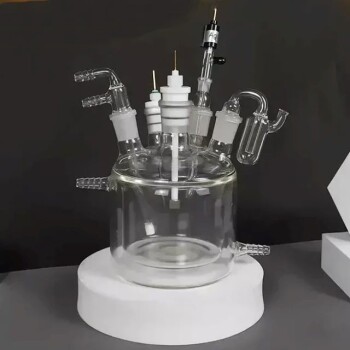
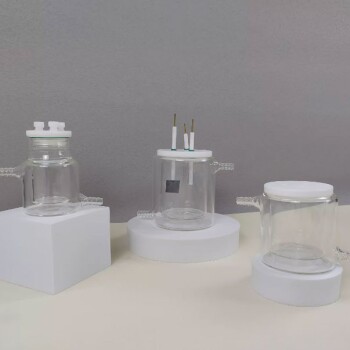
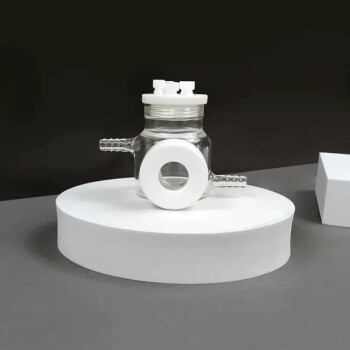
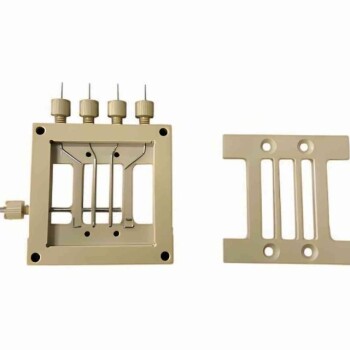
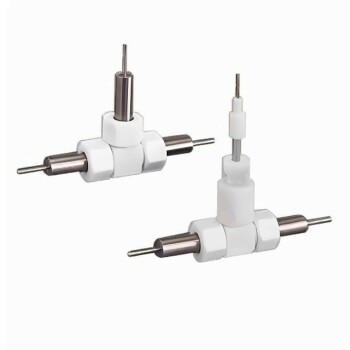
The primary function of an H-type electrolytic cell in nitrate electroreduction (NitRR) is the physical isolation of the cathode and anode chambers through a specialized ion-exchange membrane.
This structural configuration prevents the ammonia products generated at the cathode from migrating to the anode, where they would be re-oxidized into nitrates or nitrogen gas. By blocking these cross-reactions, the H-type cell ensures the accurate collection of products and the precise calculation of Faradaic efficiency (FE), which are critical for evaluating catalyst performance.
The H-type cell acts as a controlled electrochemical environment that preserves the integrity of reaction products by preventing their re-oxidation at the counter electrode. This design is essential for distinguishing true catalytic activity from experimental artifacts caused by product migration.
Enhancing Experimental Precision
Preventing Product Re-oxidation
Ammonia produced during the NitRR process is highly susceptible to being oxidized back into precursors if it contacts the anode. The H-type design utilizes a proton exchange membrane (often Nafion) to create a physical barrier that keeps ammonia safely confined within the cathode chamber.
Eliminating Anodic Interference
The membrane also prevents oxygen or oxidative intermediates generated at the anode from reaching the cathode. Without this separation, these anodic species could interfere with the reduction reaction, leading to inaccurate data regarding the catalyst's performance.
Data Integrity and Yield Calculation
Accurate Faradaic Efficiency (FE)
FE is a key metric for determining how effectively a catalyst directs electrical energy toward a specific product. By ensuring that the ammonia produced is not lost to anodic re-oxidation, the H-type cell allows researchers to correlate electron consumption with product yield accurately.
Measuring Intrinsic Selectivity
This cell configuration enables scientists to isolate the intrinsic behavior of a catalyst under controlled conditions. It ensures that the observed selectivity is a result of the catalyst's surface properties rather than a byproduct of the experimental setup's inability to contain reaction products.
Understanding the Trade-offs and Limitations
Ohmic Resistance and Voltage Drops
The introduction of a membrane between the two chambers increases the internal resistance of the electrochemical system. This can lead to significant voltage drops, requiring researchers to use iR compensation techniques to maintain precise control over the working electrode's potential.
Material and Structural Constraints
Most H-type cells are constructed from glass, which is a fragile material requiring careful handling. Additionally, the membrane itself can become a point of failure if it develops leaks or if ion crossover occurs, which can lead to pH gradients that alter the local reaction environment.
Applying the H-Type Cell to Your NitRR Study
Selecting and operating an H-type cell requires balancing the need for data precision with the physical constraints of the electrochemical system.
- If your primary focus is catalyst selectivity: Ensure the use of a high-quality ion-exchange membrane to prevent product crossover from masking the true Faradaic efficiency.
- If your primary focus is high-current density testing: Carefully monitor and compensate for the ohmic resistance introduced by the membrane to avoid potential control errors.
- If your primary focus is long-term stability: Regularly check the integrity of the membrane and the pH balance between chambers to ensure consistent reaction conditions over time.
The H-type cell remains the fundamental tool for laboratory-scale NitRR research, providing the necessary isolation to turn complex electrochemical data into reliable scientific insights.
Summary Table:
| Feature | Function in NitRR | Impact on Data |
|---|---|---|
| Ion-Exchange Membrane | Physical barrier between anode and cathode | Prevents ammonia re-oxidation at the anode |
| Dual-Chamber Design | Isolates gas/liquid products | Ensures accurate Faradaic Efficiency (FE) calculation |
| Proton Exchange | Facilitates ion transport while blocking products | Maintains intrinsic catalyst selectivity results |
| Glass Construction | High chemical resistance and visibility | Provides a stable but fragile environment for reactions |
Elevate Your Electrochemical Research Precision with KINTEK
Achieving accurate Faradaic efficiency in nitrate electroreduction requires more than just a catalyst—it demands reliable, high-performance hardware. KINTEK specializes in providing researchers and industrial labs with premium electrolytic cells and electrodes designed to minimize interference and maximize data integrity.
Beyond our specialized electrochemical tools, our comprehensive portfolio includes:
- High-Temperature Systems: Muffle, tube, vacuum, and CVD furnaces for advanced material synthesis.
- Sample Preparation: Precision crushing, milling, and hydraulic presses (pellet, isostatic) for consistent results.
- Reaction Control: High-pressure reactors, autoclaves, and cooling solutions like ULT freezers.
- Essential Consumables: PTFE products, high-purity ceramics, and crucibles.
Whether you are a researcher focused on intrinsic selectivity or a distributor seeking certified, reliable lab equipment with full OEM/ODM support, KINTEK is your dedicated partner in scientific excellence.
Ready to optimize your lab's performance? Contact our experts today to find the perfect solution for your NitRR studies!
References
- Wenxi Qiu, Panpan Li. Size‐Defined Ru Nanoclusters Supported by TiO<sub>2</sub> Nanotubes Enable Low‐Concentration Nitrate Electroreduction to Ammonia with Suppressed Hydrogen Evolution. DOI: 10.1002/smll.202300437
This article is also based on technical information from Kintek Solution Knowledge Base .
Related Products
- H-Type Double-Layer Optical Electrolytic Electrochemical Cell with Water Bath
- H Type Electrolytic Cell Triple Electrochemical Cell
- Customizable PEM Electrolysis Cells for Diverse Research Applications
- Electrolytic Electrochemical Cell with Five-Port
- Super Sealed Electrolytic Electrochemical Cell
People Also Ask
- What is the overall structure of the H-type double-layer optical water bath electrolytic cell? Precision Design for Controlled Experiments
- How is the electrolyte managed in H-type electrolytic cells for specific reactions? Achieve Precise Control and High Purity
- What checks should be performed on the H-type electrolytic cell before use? Ensure Accurate Electrochemical Data
- What is important regarding temperature control for the H-type electrolytic cell? Ensure Precision and Data Integrity
- What is the overall structure of the H-type electrolytic cell? Understanding Dual-Chamber Electrochemical Designs