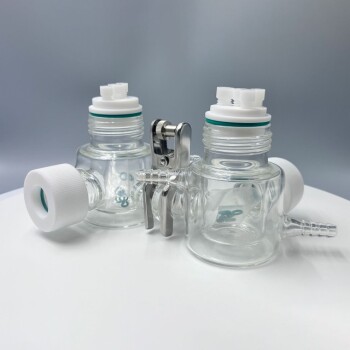
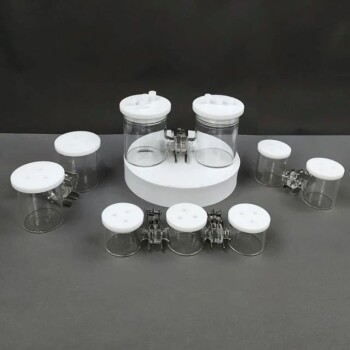
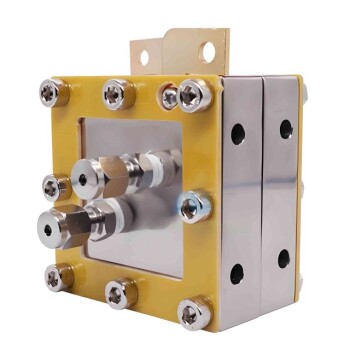
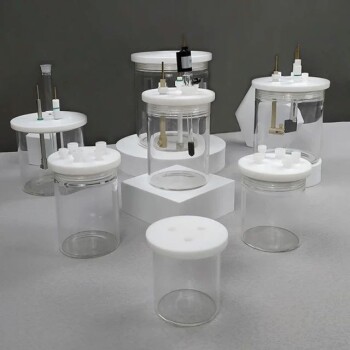
Effective maintenance of an H-type electrolytic cell begins immediately after the experiment concludes. To ensure longevity and data accuracy, you must rinse all components first with tap water to remove bulk electrolytes, followed by multiple thorough rinses with deionized or distilled water.
Core Takeaway: Preserving the integrity of your electrochemical data requires preventing cross-contamination. The most critical step is an immediate, multi-stage rinse with high-purity water followed by rapid drying to eliminate water stains.
Preparation and Safety Protocols
Immediate Shutdown Procedures
Before cleaning begins, safety must be prioritized. First, turn off the power supply completely.
Next, turn off the constant temperature water bath. Do not attempt to remove the electrolytic cell while the power or heating systems are active, as this creates a significant accident risk.
Waste Management
Properly remove the reaction products and waste liquid from the cell.
If the products require analysis, store them appropriately. Treat waste liquid according to environmental protection regulations; never dispose of chemical waste down the drain without proper neutralization or processing.
The Standard Cleaning Process
The Rinse Cycle
Start by rinsing the cell body and components with tap water. This removes the majority of the residual electrolyte and reaction products.
Follow this immediately with multiple rinses using deionized or distilled water. This step is vital to remove ions present in tap water that could contaminate future experiments.
Drying the Cell
Once rinsed, the interior of the cell should be dried effectively.
Using nitrogen gas to blow-dry the components is the preferred method. This prevents the formation of water stains that can occur during air drying.
Handling Stubborn Residues
Chemical Cleaning Options
If simple rinsing does not remove all contaminants, you may use a suitable cleaning agent. Ethanol is often effective for organic residues, while a dilute acid or base may be used for inorganic deposits.
However, you must exercise extreme caution. Ensure the chosen agent is compatible with the cell material to avoid corrosion or structural damage.
Mechanical Restrictions
Never use metal brushes to clean the cell.
The surfaces of the electrolytic cell and electrodes are sensitive. Metal brushes will scratch these surfaces, permanently altering the cell's geometry and electrochemical properties.
Common Pitfalls to Avoid
Dangerous Chemical Interactions
Be mindful of the chemicals used during the cleaning process. Avoid mixing strong acids and bases (such as Nitric Acid and Sodium Hydroxide) in the waste stream.
Mixing these can cause a violent exothermic reaction, posing a danger to the operator and the equipment.
The Cost of Delay
Clean the electrodes and reaction vessel immediately after use.
Allowing the cell to sit dirty allows residues to adhere to the surface, making them significantly harder to remove later and increasing the risk of permanent contamination.
Making the Right Choice for Your Goal
- If your primary focus is Routine Maintenance: Perform an immediate tap water rinse followed by three cycles of deionized water rinsing to prevent ion buildup.
- If your primary focus is Residue Elimination: Use a solvent like ethanol or a specific dilute acid for stubborn dirt, but verify material compatibility first.
- If your primary focus is Equipment Longevity: Avoid abrasive tools and dry with nitrogen gas to prevent scratching and mineral spotting.
Treat your electrolytic cell with precision care, and it will deliver precise data.
Summary Table:
| Step | Procedure | Recommended Materials |
|---|---|---|
| 1. Safety | Power off and disconnect temperature bath | N/A |
| 2. Preliminary Rinse | Remove bulk electrolytes and waste | Tap water |
| 3. High-Purity Rinse | Eliminate residual ions and contaminants | Deionized or distilled water |
| 4. Drying | Prevent water stains and mineral buildup | Nitrogen gas blow-dry |
| 5. Deep Cleaning | Remove stubborn organic or inorganic residues | Ethanol or dilute acid/base |
Elevate Your Electrochemical Research with KINTEK
Precision in the lab starts with high-quality equipment and rigorous maintenance. At KINTEK, we specialize in providing researchers with the tools needed for excellence—from high-performance electrolytic cells and electrodes to specialized battery research consumables.
Whether you need advanced H-type cells, durable platinum electrodes, or specialized PTFE and ceramic components, our team is dedicated to supporting your scientific breakthroughs. Our comprehensive portfolio also includes high-temperature furnaces, autoclaves, and cooling solutions tailored for demanding laboratory environments.
Ready to upgrade your lab or need expert advice on the right tools for your application?
Contact KINTEK Experts Today and let us provide the precision equipment your research deserves.
Related Products
- H-Type Double-Layer Optical Electrolytic Electrochemical Cell with Water Bath
- H Type Electrolytic Cell Triple Electrochemical Cell
- Customizable PEM Electrolysis Cells for Diverse Research Applications
- Super Sealed Electrolytic Electrochemical Cell
- Electrolytic Electrochemical Cell with Five-Port
People Also Ask
- What is the overall structure of the H-type double-layer optical water bath electrolytic cell? Precision Design for Controlled Experiments
- How is the electrolyte managed in H-type electrolytic cells for specific reactions? Achieve Precise Control and High Purity
- What checks should be performed on the H-type electrolytic cell before use? Ensure Accurate Electrochemical Data
- What is important regarding temperature control for the H-type electrolytic cell? Ensure Precision and Data Integrity
- What is the overall structure of the H-type electrolytic cell? Understanding Dual-Chamber Electrochemical Designs