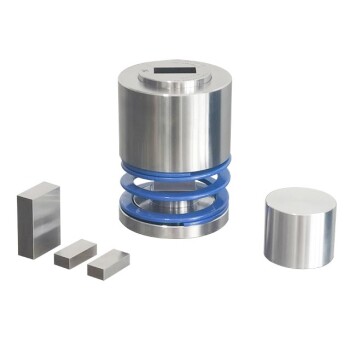
The primary function of high-pressure reactors in this context is to replicate the aggressive physical and chemical environments found in hydrodesulfurization (HDS) units to test material durability. Operating at temperatures between 200-300°C and pressures of 20-90 bar, these devices safely contain corrosive media like hydrogen sulfide to evaluate how steel alloys degrade under realistic refinery conditions.
High-pressure reactors, often called autoclaves, bridge the gap between theoretical material science and real-world application. They provide the containment necessary to safely quantify corrosion rates in volatile atmospheres that would be impossible to replicate in standard laboratory setups.
Simulating the Hydrodesulfurization Environment
To accurately study corrosion, you cannot rely on ambient conditions. You must recreate the specific stressors present in the refinery process.
Precise Atmospheric Control
The reactor’s main role is maintaining a precisely controlled physical environment.
In HDS simulations, this involves sustaining temperatures of 200-300°C and pressures ranging from 20-90 bar. These elevated parameters are critical because they mimic the kinetic energy and pressure gradients found in actual production.
Containment of Aggressive Gases
Corrosion in HDS units is largely driven by the presence of hydrogen and hydrogen sulfide.
High-pressure reactors are engineered to seal these hazardous gases safely. This containment allows researchers to expose materials to these specific chemical mixtures without risking leaks or environmental contamination.
Testing Complex Fuel Mixtures
Modern refining often involves biomass fuel mixtures, which introduce unique corrosive challenges.
The reactor allows for the introduction of these specific media types. This ensures that the simulation accounts for the exact chemical interactions occurring between the fuel source and the containment vessel.
Analytical Outcomes of Simulation
The ultimate goal of using these reactors is not just to create pressure, but to generate actionable data regarding material lifespan.
Evaluating Corrosion Rates
The reactor allows engineers to measure the rate of material loss over time.
By accelerating chemical reactions through increased pressure, the device highlights how quickly a specific alloy will lose structural integrity. This is essential for predicting the lifespan of refinery equipment.
Identifying Degradation Mechanisms
Beyond simple mass loss, these studies reveal how the steel fails.
The simulation helps identify specific degradation mechanisms in steel alloys, such as pitting or cracking. Understanding the mechanism of failure is the first step in engineering a solution to prevent it.
Understanding the Operational Trade-offs
While high-pressure reactors are invaluable for simulation, they introduce specific complexities that must be managed.
Safety and Sealing Challenges
Working with high-pressure hydrogen and hydrogen sulfide creates significant safety risks.
The integrity of the reactor's seal is paramount. A failure in the seal at 90 bar with toxic gases presents an immediate danger to personnel and equipment, requiring rigorous safety protocols.
Complexity of Setup
Replicating these conditions requires sophisticated equipment design.
Unlike standard atmospheric testing, these reactors—or autoclaves—must be robust enough to withstand the very corrosion they are testing, often requiring expensive, specialized materials for the reactor body itself.
Leveraging Data for Material Selection
The data derived from high-pressure reactor studies should directly inform your engineering and procurement decisions.
- If your primary focus is Equipment Longevity: Prioritize alloys that demonstrate low degradation mechanisms under the specific pressure/temperature combination of your target HDS unit.
- If your primary focus is Safety Compliance: Use the reactor data to validate that your containment materials can withstand the worst-case scenario pressures (up to 90 bar) without catastrophic failure.
- If your primary focus is Processing New Fuels: Run simulations using the specific biomass mixtures you intend to refine to identify unforeseen corrosive interactions before full-scale implementation.
By utilizing high-pressure reactors, you transform material selection from a best-guess estimate into a data-driven engineering process.
Summary Table:
| Parameter | HDS Simulation Range | Primary Role in Corrosion Study |
|---|---|---|
| Temperature | 200°C to 300°C | Replicates refinery thermal kinetic energy |
| Pressure | 20 to 90 bar | Mimics production pressure gradients |
| Gaseous Media | $H_2$ and $H_2S$ | Tests resistance to aggressive, toxic gases |
| Fuel Type | Traditional & Biomass | Evaluates complex chemical interactions |
| Outcome | Data Analysis | Quantifies mass loss and degradation mechanisms |
Secure Your Lab’s Precision with KINTEK
Don't leave material integrity to chance. KINTEK specializes in advanced laboratory solutions designed for the most demanding environments. Whether you are conducting critical corrosion studies or exploring new biomass fuels, our high-performance high-temperature high-pressure reactors and autoclaves provide the safety and precision you need to simulate HDS conditions accurately.
From high-temperature furnaces and crushing systems to specialized PTFE and ceramic consumables, KINTEK provides a comprehensive ecosystem for refinery research and material science.
Ready to upgrade your research capabilities? Contact KINTEK today to discuss how our robust reactors and laboratory tools can enhance your equipment longevity and safety compliance.
References
- András Gergely, Tamás Kristóf. Hydrogen Sulfide Corrosion of Carbon and Stainless Steel Alloys in Mixtures of Renewable Fuel Sources under Co-Processing Conditions. DOI: 10.5539/mas.v12n4p227
This article is also based on technical information from Kintek Solution Knowledge Base .
Related Products
- Customizable Laboratory High Temperature High Pressure Reactors for Diverse Scientific Applications
- Customizable High Pressure Reactors for Advanced Scientific and Industrial Applications
- Stainless High Pressure Autoclave Reactor Laboratory Pressure Reactor
- Mini SS High Pressure Autoclave Reactor for Laboratory Use
- High Pressure Laboratory Autoclave Reactor for Hydrothermal Synthesis
People Also Ask
- How do high-pressure and high-temperature reactors ensure the effective treatment of lignocellulosic wastewater in WAO?
- What equipment is required for high-pressure high-temperature reactions? Master Extreme Chemistry Safely
- How do you control high pressure in a reactor? A Guide to Safe & Stable Operation
- How does initial oxygen pressure affect the wet oxidation of pharmaceutical sludge? Master Your Oxidation Depth
- Why is argon better than nitrogen for inert atmosphere? Ensure Absolute Reactivity & Stability