The primary purpose is to ensure absolute experimental integrity. By constructing the mini-autoclave from the exact same material as the test sample, you eliminate external variables that compromise corrosion data. This configuration effectively prevents cross-contamination and ensures that any chemical changes observed are intrinsic to the alloy itself, not artifacts of the testing equipment.
Creating a chemically homogeneous environment eliminates foreign metal ion release and galvanic coupling. This is the only way to ensure that dissolution measurements taken via ICP-OES accurately reflect the true behavior of the specific alloy in supercritical water.
The Mechanics of Experimental Isolation
Preventing Cross-Contamination
In high-temperature, high-pressure environments like supercritical water, the containment vessel is often just as susceptible to corrosion as the sample.
If the autoclave is made of a different metal, it will dissolve and release its own ions into the fluid.
By using a mini-autoclave made of the same material, you ensure that the only source of metal ions in the solution is the alloy family you are studying.
Eliminating Coupling Effects
When two distinct metals are in contact within a corrosive medium, they can interact electrically.
This interaction, often referred to as a coupling effect (or galvanic corrosion), can artificially accelerate or inhibit the corrosion rate of your sample.
A unified material design removes this variable entirely, isolating the sample from external electrochemical influences.
Ensuring Data Validity
Accurate Dissolution Measurement
Researchers typically rely on Inductively Coupled Plasma Optical Emission Spectroscopy (ICP-OES) to measure corrosion.
This method quantifies the concentration of metal cations dissolved in the water.
If the autoclave walls are shedding ions, the ICP-OES reading becomes a mixture of "noise" (vessel corrosion) and "signal" (sample corrosion).
Calibrating for the Specific Alloy
The matching vessel design ensures that the cation concentration specifically reflects the dissolution rate of the test alloy.
This creates a baseline of truth, allowing researchers to calculate kinetics with high confidence.
Understanding the Trade-offs
Specificity vs. Flexibility
While this method provides the highest data fidelity, it imposes strict operational constraints.
You cannot easily swap different alloy families into the same vessel without reintroducing the contamination variables you sought to avoid.
Material Availability
This approach requires that the mini-autoclave be manufacturable from the experimental alloy.
This can be challenging if the test material is brittle, rare, or difficult to machine into a pressure vessel.
Optimizing Your Experimental Design
To ensure your corrosion data stands up to scrutiny, align your equipment choice with your accuracy requirements.
- If your primary focus is precise kinetic modeling: Prioritize a matched-material autoclave to ensure ICP-OES data is free from background interference.
- If your primary focus is eliminating experimental artifacts: Use this setup to remove the possibility of galvanic coupling altering your corrosion rates.
Eliminating material variables is the most effective step toward isolating the true behavior of alloys in supercritical environments.
Summary Table:
| Feature | Matched-Material Mini-Autoclave | Standard Pressure Vessel |
|---|---|---|
| Ion Source | Limited to test alloy family | Multiple metallic sources (noise) |
| Galvanic Effect | Eliminated (unified material) | Potential for coupling/acceleration |
| Data Accuracy | High-fidelity ICP-OES results | Background interference in readings |
| Primary Use | Precise kinetic modeling | General material screening |
| Application | Supercritical water corrosion studies | Broad high-pressure testing |
Elevate Your Research Precision with KINTEK
Don't let experimental artifacts compromise your corrosion data. KINTEK specializes in high-performance laboratory equipment, including high-temperature high-pressure reactors and autoclaves engineered to meet the most rigorous scientific standards. Whether you are conducting supercritical water experiments or complex battery research, our bespoke solutions—ranging from precision autoclaves to custom ceramic and PTFE consumables—ensure your results are accurate and reproducible.
Our value to you:
- Precision Engineering: Vessels designed to eliminate galvanic coupling and contamination.
- Comprehensive Portfolio: Access to everything from crushing systems to induction melting furnaces.
- Expert Support: Specialized equipment tailored for advanced alloy studies and material science.
Contact KINTEK today to discuss your experimental requirements!
References
- Mickaël Payet, Jean‐Pierre Chevalier. Corrosion mechanism of a Ni-based alloy in supercritical water: Impact of surface plastic deformation. DOI: 10.1016/j.corsci.2015.06.032
This article is also based on technical information from Kintek Solution Knowledge Base .
Related Products
- Mini SS High Pressure Autoclave Reactor for Laboratory Use
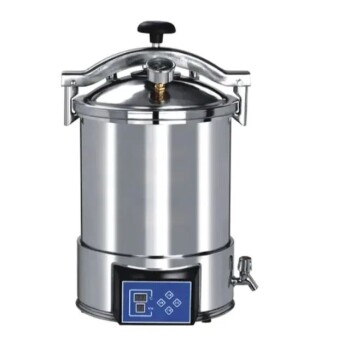
- Portable High Pressure Laboratory Autoclave Steam Sterilizer for Lab Use
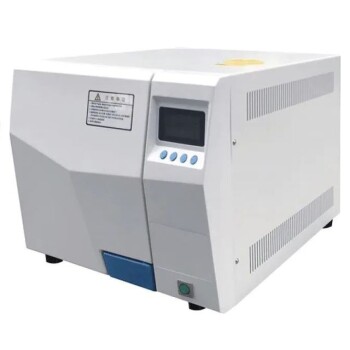
- Portable Digital Display Automatic Laboratory Sterilizer Lab Autoclave for Sterilization Pressure
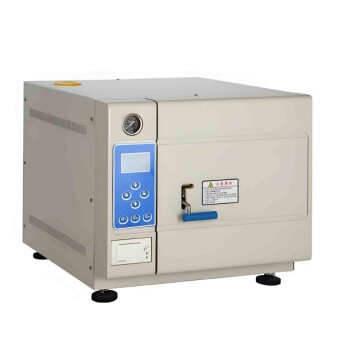
- Desktop Fast Laboratory Autoclave Sterilizer 35L 50L 90L for Lab Use
- Desktop Fast Laboratory Autoclave Sterilizer 20L 24L for Lab Use
People Also Ask
- Why use high-pressure reactors for molecular sieve synthesis? Unlock Superior Crystallinity and Framework Control
- Why are high-pressure reactors or autoclaves necessary for the synthesis of new functional materials? Unlock Precision.
- What are the advantages of using a high-pressure reactor like an autoclave? Maximize Liquefaction Speed & Yield
- What is the function of a high-pressure reactor autoclave? Enhancing Cu/N Co-Doped Carbon Catalyst Synthesis
- How are high-pressure reactors used to prepare metaphosphate electrocatalysts? Master In-Situ Precursor Growth