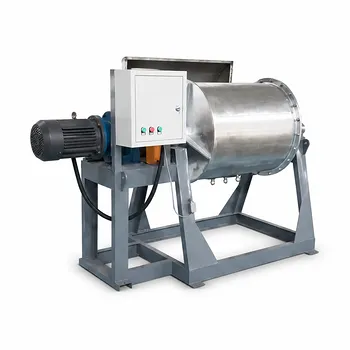
The primary role of a planetary ball mill is to ensure chemical and structural homogeneity through high-energy particle refinement and uniform dispersion. By applying intense impact and shear forces, the mill transforms raw alumina and zirconia into a sub-micron, non-agglomerated mixture. This state is critical for achieving a dense, pore-free microstructure during the final sintering phase.
The planetary ball mill acts as a mechanical activator that refines particles to sub-micron levels and breaks down agglomerates to ensure a perfectly uniform distribution of the zirconia phase within the alumina matrix. This process is essential for enhancing sintering kinetics and preventing mechanical defects caused by uneven particle segregation.
Achieving Microstructural Homogeneity
Refining Particle Size to Sub-Micron Levels
High rotational speeds generate intense impact forces that grind alumina and zirconia powders into the sub-micron range. This fine distribution is the essential foundation for creating high-performance ceramic composites with a dense microstructure.
Elimination of Particle Agglomeration
Raw ceramic powders often form clusters, or agglomerates, due to van der Waals forces. The planetary ball mill uses shear forces to break these clusters apart, ensuring that the zirconia reinforcing phase is independently and evenly distributed throughout the alumina matrix.
Establishing the Material Foundation
By ensuring a uniform dispersion of ultra-fine powders in a suspension, the mill sets the stage for uniform nucleation. This prevents the formation of large, irregular grains during subsequent thermal treatments, leading to a more consistent final product.
Enhancing Sintering Performance
Increasing Specific Surface Area and Energy
Reducing particle size significantly increases the specific surface area and surface energy of the powder. This higher energy state accelerates diffusion kinetics, which allows the material to reach full densification at lower sintering temperatures or shorter timeframes.
Mechanical Activation of Crystal Structures
The high-energy mechanical forces can induce lattice distortions and structural deformations in the ceramic powders. This "mechanical activation" provides the structural kinetic foundation necessary for phase transformations to occur more readily during heat treatment.
Improving Slurry Fluidity
In wet milling processes, breaking down micron-scale clusters allows for the preparation of high-solid-content ceramic slurries. These slurries maintain excellent fluidity, which is vital for advanced manufacturing techniques like slip casting or injection molding.
Preventing Mechanical Failures
Ensuring Isotropic Material Properties
Uniform dispersion prevents particle segregation, where zirconia clumps together in certain areas. Even distribution ensures that the final ceramic composite possesses consistent mechanical strength and toughness in all directions (isotropic properties).
Minimizing Microstructural Defects
By reducing the average particle size and removing porosity, the planetary ball mill minimizes internal flaws. This reduction in structural defects directly correlates to higher fracture toughness and better wear resistance in the finished ceramic.
Understanding the Trade-offs
Risk of Impurity Contamination
Extended milling durations, sometimes lasting up to 30 hours, increase the risk of media wear. Debris from the grinding balls or the mill container can leach into the powder, potentially introducing unwanted chemical phases that degrade the ceramic's purity.
Structural Damage from Excessive Energy
While mechanical activation is beneficial, excessive energy can cause unwanted cold welding or extreme lattice damage. If the milling intensity is not optimized, it may lead to unpredictable phase transformations that complicate the sintering process.
How to Apply This to Your Project
When preparing alumina-zirconia composites, your milling strategy should align with your specific performance requirements:
- If your primary focus is maximum densification: Prioritize longer milling times at high speeds to maximize surface energy and refine particles to the sub-micron level.
- If your primary focus is high mechanical toughness: Focus on the uniform dispersion of the reinforcing phase to prevent particle segregation and ensure isotropic properties.
- If your primary focus is material purity: Utilize high-hardness grinding media (such as zirconia balls) and optimize milling time to minimize contamination from wear debris.
Optimizing the planetary ball milling process is the single most important step in ensuring the structural integrity and performance of alumina-zirconia ceramic composites.
Summary Table:
| Key Role | Mechanical Process | Impact on Material |
|---|---|---|
| Particle Refinement | High-energy impact & shear | Reduces powders to sub-micron levels |
| De-agglomeration | Breaking van der Waals forces | Ensures uniform phase distribution |
| Mechanical Activation | Inducing lattice distortions | Lowers sintering temperature & time |
| Slurry Optimization | Breaking micron-scale clusters | Improves fluidity for advanced casting |
| Defect Reduction | Eliminating porosity | Increases fracture toughness & wear resistance |
Elevate Your Material Synthesis with KINTEK Precision
Achieving the perfect sub-micron dispersion for alumina-zirconia composites requires high-performance equipment. KINTEK specializes in advanced laboratory solutions designed to optimize your research and production workflows.
Our extensive portfolio includes:
- Crushing & Milling Systems: High-energy planetary ball mills and sieving equipment for perfect particle refinement.
- High-Temperature Furnaces: Muffle, tube, vacuum, and CVD furnaces for precise sintering and heat treatment.
- Hydraulic Presses: Pellet and isostatic presses to ensure high green density.
- Specialized Lab Tools: High-pressure reactors, electrolytic cells, and essential ceramic consumables like crucibles.
Whether you are focusing on maximum densification or high mechanical toughness, KINTEK provides the reliability and technical support you need. Contact us today to find the perfect milling solution for your project!
References
- K. D. Bopanna, Ginni Nijhawan. RETRACTED: Enhanced Sintering Performance of Ceramic Composites Fabricated by Powder Metallurgy. DOI: 10.1051/e3sconf/202343001126
This article is also based on technical information from Kintek Solution Knowledge Base .
Related Products
- High Energy Planetary Ball Mill for Laboratory Horizontal Tank Type Milling Machine
- Laboratory Planetary Ball Mill Rotating Ball Milling Machine
- High-Energy Omnidirectional Planetary Ball Mill Milling Machine for Laboratory
- High Energy Planetary Ball Mill Milling Machine for Laboratory
- Laboratory Horizontal Planetary Ball Mill Milling Machine
People Also Ask
- What is the role of a planetary ball mill in sulfide-based solid-state batteries? Engineer High-Performance Cathodes
- What are the parameters of a planetary ball mill? Master Speed, Time, and Media for Perfect Grinding
- What is the function of a planetary ball mill for nanostructured eutectic steel? Essential Prep for High-Strength Alloys
- What role does a planetary ball mill play in the preparation of NASICON-type solid electrolytes like LATP and LAGP?
- What is the function of a planetary ball mill in solid-state electrolyte prep? Milling vs. SDS Methods Explained