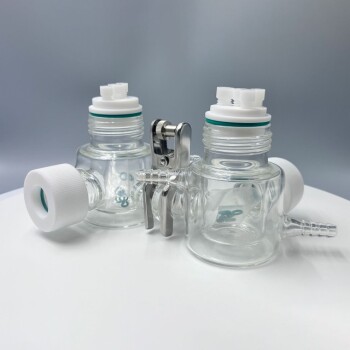
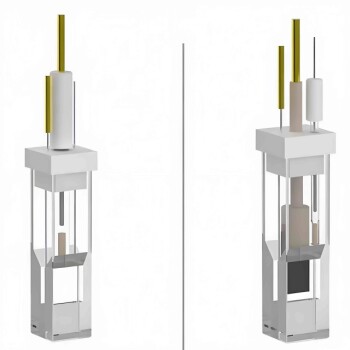
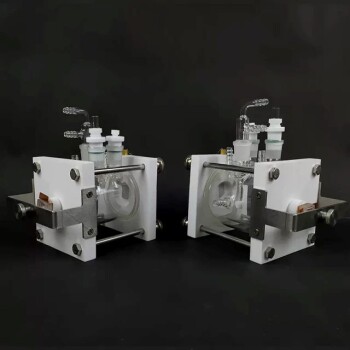
The primary purpose of a double-chamber H-type electrolytic cell is to physically separate the working electrode from the counter electrode while maintaining the necessary electrical connection. By utilizing a fritted glass diaphragm, the system creates a semi-permeable barrier that allows background ions to flow to sustain the current, yet effectively blocks dissolved metal ions from migrating across the cell.
Core Takeaway In quantitative electrochemical experiments, isolation is the key to data integrity. This setup prevents dissolved species from reaching the counter electrode and "redepositing," ensuring that the measured dissolution rate represents the true material loss without interference.
The Mechanics of Isolation
Creating Distinct Environments
The fundamental design of the H-type cell divides the experiment into two separate compartments. This physical segregation ensures that the chemical environment surrounding the working electrode remains distinct from that of the counter electrode.
The Role of the Fritted Glass
The fritted glass diaphragm is the critical component that connects these two chambers. It acts as a selective filter for the electrochemical circuit.
It allows the exchange of small ions required to maintain the flow of current between the electrodes. Simultaneously, it acts as a diffusion barrier to preventing larger, dissolved species generated at the working electrode from passing through.
Ensuring Experimental Accuracy
Preventing Redeposition
In a single-chamber cell, metal ions dissolved from the working electrode can easily diffuse to the counter electrode. Once there, they may undergo reduction and redeposit onto the counter electrode surface.
Preserving Quantitative Data
If redeposition occurs, it artificially lowers the perceived concentration of dissolved ions in the solution. This leads to inaccurate calculations of the dissolution rate.
By using the H-type cell, you ensure that ions—such as iridium in dissolution studies—remain trapped in the working electrode compartment. This allows for a precise, quantitative evaluation of how much material has actually dissolved.
Understanding the Operational Balance
The Necessity of Ion Exchange
While isolation is the goal, total separation is impossible because the circuit must remain complete. The system relies on the fritted glass being sufficiently porous to allow supporting electrolyte ions to pass.
The Integrity of the Barrier
The success of this setup hinges on the diaphragm's ability to minimize diffusion. If the barrier is compromised or too porous, dissolved ions will leak into the counter chamber, reintroducing the error of redeposition and invalidating the dissolution rate data.
Making the Right Choice for Your Goal
To ensure your electrochemical measurements are valid, consider your specific experimental objectives:
- If your primary focus is determining accurate dissolution rates: You must use an H-type cell with a fritted diaphragm to prevent the loss of dissolved ions via redeposition.
- If your primary focus is maintaining a stable current: Ensure the fritted glass is clean and unblocked to allow for free ion exchange between the isolated compartments.
This specialized setup transforms a standard electrolysis procedure into a precise analytical tool for quantifying material stability.
Summary Table:
| Feature | Function in H-Type Cell | Experimental Benefit |
|---|---|---|
| Dual Chambers | Physical electrode segregation | Prevents cross-contamination of chemical environments |
| Fritted Glass Diaphragm | Semi-permeable diffusion barrier | Allows ion flow while blocking large dissolved species |
| Ion Isolation | Traps dissolved metal ions | Prevents redeposition on the counter electrode |
| Electrical Continuity | Maintains ionic circuit | Ensures stable current flow for quantitative analysis |
Elevate Your Electrochemical Precision with KINTEK
Don't let ion redeposition compromise your research integrity. KINTEK specializes in high-performance laboratory equipment, providing researchers with advanced electrolytic cells, electrodes, and battery research tools designed for maximum accuracy.
Whether you are conducting material dissolution studies or complex electrolysis, our H-type cells and precision consumables ensure your data represents the true material performance. From high-temperature furnaces and reactors to specialized PTFE and ceramic components, we offer the complete toolkit for modern material science.
Ready to optimize your lab's experimental setup? Contact KINTEK today to discover our comprehensive range of electrochemical solutions and expert support.
References
- Léonard Moriau, Nejc Hodnik. Towards electrochemical iridium recycling in acidic media: effect of the presence of organic molecules and chloride ions. DOI: 10.1039/d2ra07142h
This article is also based on technical information from Kintek Solution Knowledge Base .
Related Products
- H-Type Double-Layer Optical Electrolytic Electrochemical Cell with Water Bath
- H Type Electrolytic Cell Triple Electrochemical Cell
- Double-Layer Water Bath Electrolytic Electrochemical Cell
- Double Layer Five-Port Water Bath Electrolytic Electrochemical Cell
- Side Window Optical Electrolytic Electrochemical Cell
People Also Ask
- What is the overall structure of the H-type double-layer optical water bath electrolytic cell? Precision Design for Controlled Experiments
- How is the electrolyte managed in H-type electrolytic cells for specific reactions? Achieve Precise Control and High Purity
- What checks should be performed on the H-type electrolytic cell before use? Ensure Accurate Electrochemical Data
- What is important regarding temperature control for the H-type electrolytic cell? Ensure Precision and Data Integrity
- What is the overall structure of the H-type electrolytic cell? Understanding Dual-Chamber Electrochemical Designs