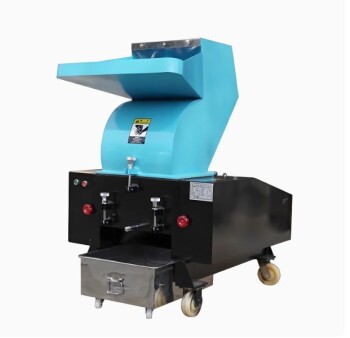
The primary purpose of using a laboratory-grade high-energy shaker in this context is to achieve deep degassing of the Zircon powder (ZrSiO4) slurry. This mechanical process forces trapped air and micro-bubbles out of the mixture before it is applied as a coating to the electrode.
Core Takeaway: The shaker serves a critical structural function by eliminating micro-bubbles that would otherwise turn into pores during drying. This ensures the final coating is dense and uniform, which is essential for preventing electrical failure and plasma leakage in the reactor.
The Physics of Coating Preparation
Deep Degassing
When preparing high-viscosity slurries for dielectric coatings, air is inevitably trapped during the initial mixing phases.
A standard mixer may not provide the necessary force to dislodge these gas pockets. The high-energy shaker applies intense agitation to drive trapped gas to the surface, effectively purging the mixture.
Elimination of Micro-bubbles
The specific target of this process is the removal of micro-bubbles.
While visible bubbles are easily removed, microscopic bubbles often remain suspended in the fluid. If left unchecked, these bubbles become permanent defects in the material structure.
Impact on Reactor Performance
Preventing Pore Formation
As the Zircon slurry dries and cures on the electrode, any remaining bubbles leave behind physical voids, known as pores.
The shaker ensures the wet slurry is void-free. This results in a solid, non-porous ceramic layer once the coating process is complete.
Integrity of Electrical Performance
In a Dielectric Barrier Discharge (DBD) reactor, the Zircon coating acts as a critical electrical insulator.
A non-porous structure is required to maintain consistent dielectric strength. The high-energy shaking process guarantees that the material properties are uniform across the entire surface of the electrode.
The Risks of Inadequate Preparation
Local Plasma Leakage
If the coating contains pores, the plasma discharge will not be uniform.
Pores create weak points where local plasma leakage can occur. This disrupts the controlled environment necessary for effective non-thermal plasma generation.
Dielectric Breakdown
The most severe consequence of a porous coating is dielectric breakdown.
Under high voltage, the electrical stress concentrates at the pores. This can cause the insulation to fail, leading to arcing and potentially damaging the reactor hardware.
Ensuring Reliability in Fabrication
To ensure the longevity and safety of your NTP reactor, the preparation phase is just as critical as the operation phase.
- If your primary focus is Structural Integrity: Prioritize high-energy shaking to eliminate micro-bubbles and prevent porosity in the dried ceramic layer.
- If your primary focus is Operational Safety: Use this degassing step to prevent dielectric breakdown and erratic plasma discharge caused by insulation defects.
The shaker is not simply a mixing tool; it is the primary safeguard against electrical failure in your electrode coatings.
Summary Table:
| Feature | Impact on Zircon (ZrSiO4) Coating | Benefit for NTP Reactors |
|---|---|---|
| Deep Degassing | Forces trapped air and micro-bubbles out of high-viscosity slurry | Ensures a dense, void-free material structure |
| Pore Elimination | Prevents voids from forming during the drying and curing phase | Maintains consistent dielectric strength |
| Structural Integrity | Creates a uniform, non-porous ceramic insulation layer | Prevents local plasma leakage and arcing |
| Mechanical Agitation | Ensures homogeneous distribution of Zircon particles | Extends electrode lifespan and operational safety |
Enhance Your Coating Precision with KINTEK
Don't let micro-porosity compromise your reactor's performance. At KINTEK, we specialize in high-performance laboratory equipment designed for rigorous material science applications. From high-energy shakers and homogenizers for perfect slurry preparation to high-temperature furnaces and vacuum systems for curing advanced ceramics, we provide the tools necessary to prevent dielectric breakdown and ensure structural integrity.
Ready to optimize your electrode fabrication? Contact our technical experts today to find the ideal shaking and milling solutions for your laboratory's needs.
References
- Raúl Argüello-Sánchez, Carlo Eduardo Medina‐Solís. Innovative Curved-Tip Reactor for Non-Thermal Plasma and Plasma-Treated Water Generation: Synergistic Impact Comparison with Sodium Hypochlorite in Dental Root Canal Disinfection. DOI: 10.3390/ma16227204
This article is also based on technical information from Kintek Solution Knowledge Base .
Related Products
- High-Energy Omnidirectional Planetary Ball Mill Machine for Laboratory
- High Energy Vibratory Ball Mill for Lab Use
- High Energy Vibratory Laboratory Ball Mill Double Tank Type
- High Energy Planetary Ball Mill Machine for Laboratory Horizontal Tank Type
- High Energy Planetary Ball Mill Milling Machine for Laboratory
People Also Ask
- What is the function of a high-energy planetary ball mill in preparing MAB phase precursors? Optimize MBene Synthesis
- What is the function of a high-energy planetary ball mill? Unlock Nanoscale Precision in Powder Metallurgy
- Why is a high-energy planetary ball mill preferred over traditional casting for nanocrystalline HEAs?
- What role does a high-energy planetary ball mill play in Mo-La2O3 alloying? Achieve Superior Microstructure Control
- What is the role of a high-energy planetary ball mill in W-Cu powder preparation? Achieve Superior Material Uniformity