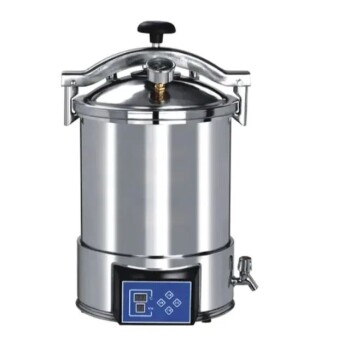
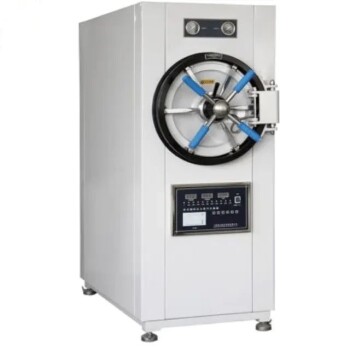
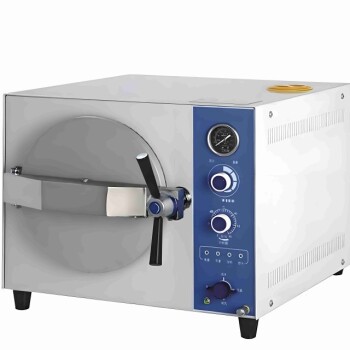
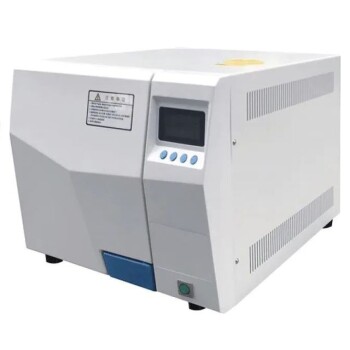
A high-pressure autoclave functions as a sealed reaction vessel that creates a controlled environment of elevated temperature and pressure, typically exceeding the atmospheric boiling point of the solvent. This allows precursors to undergo hydrothermal synthesis—dissolving and reacting in ways that are impossible under standard conditions—to form metal oxide nanomaterials.
The autoclave is not merely a container for heating; it is a precision instrument for morphological engineering. By manipulating pressure and temperature, it allows you to dictate the nucleation and growth kinetics of crystals, transforming raw precursors into highly specific nanostructures optimized for performance.
Creating the Critical Reaction Environment
Overcoming Atmospheric Limitations
The primary mechanical function of the autoclave is to permit heating without the loss of solvent.
By sealing the system, the autoclave allows the solvent to remain liquid at temperatures far above its normal boiling point. This generates subcritical or supercritical conditions, significantly accelerating reaction rates.
Enabling Precursor Dissolution
Many metal oxide precursors are insoluble or inert at standard temperatures and pressures.
The high-pressure environment facilitates the dissolution and recrystallization of these difficult materials (such as titanium precursors). This forces reactants to break down and reassemble into new solid phases.
Engineering Material Properties
Controlling Crystal Morphology
The most critical outcome of using a high-pressure autoclave is the ability to determine the shape of the final nanomaterial.
By precisely adjusting the "filling degree" (how full the vessel is), temperature, and time, you can induce the formation of specific shapes. References confirm the ability to engineer nanowires, nanobelts, nanocubes, or octahedra depending on the synthesis parameters.
Tuning Particle Size and Surface Area
The autoclave environment allows for the regulation of particle size distribution.
Control over the internal pressure helps limit uncontrolled growth, resulting in uniform particle sizes. This directly impacts the specific surface area, a crucial factor for applications like photocatalysis where surface contact is vital.
Enhancing Crystallinity and Phase Purity
Hydrothermal synthesis in an autoclave often yields materials with superior crystallinity compared to atmospheric methods.
The environment promotes the formation of specific crystalline phases (such as alpha-MnO2) and high-purity crystals. This enhanced crystallinity improves charge transfer efficiency and stability in electrochemical applications.
Strengthening Interfacial Bonding
For composite materials, the autoclave facilitates "in-situ" growth.
The high pressure forces active components to grow directly onto substrates (like biochar or carbon nitride). This creates Strong Metal-Support Interactions (SMSI), improving the chemical bonding between phases and preventing the material from degrading during use.
Understanding the Trade-offs
Chemical Corrosion Risks
The harsh internal environment of an autoclave can be destructive to the vessel itself, especially when using strong alkaline agents or acids.
To mitigate this, Teflon (PTFE) liners are essential. As noted in zeolite synthesis, these liners resist corrosion from aggressive agents like TEAOH, ensuring the purity of the final crystal and the safety of the steel vessel.
The "Black Box" Limitation
Unlike open reactions, you cannot observe the process inside an autoclave in real-time.
Because the vessel is sealed, success relies heavily on trial-and-error optimization of parameters (time, temperature, filling ratio) rather than visual monitoring.
Making the Right Choice for Your Goal
To maximize the utility of a high-pressure autoclave, align your synthesis parameters with your specific performance targets:
- If your primary focus is Photocatalysis: Prioritize parameter adjustments that increase specific surface area and induce porous structures (like mesoporous channels) to maximize light absorption and reactant contact.
- If your primary focus is Electrochemical Activity: Focus on temperature controls that isolate specific crystalline phases (e.g., specific polymorphs of MnO2) to improve ion transport and catalytic efficiency.
- If your primary focus is Composite Stability: Use the autoclave to promote in-situ growth on substrates, ensuring strong interfacial bonding to prevent delamination during long-term operation.
The high-pressure autoclave effectively bridges the gap between basic chemical mixing and advanced nanostructural design.
Summary Table:
| Parameter | Influence on Nanomaterials | Key Outcome |
|---|---|---|
| Temperature | Accelerates reaction kinetics and precursor dissolution | High crystallinity and phase purity |
| Internal Pressure | Maintains liquid state above boiling point | Supercritical conditions for unique phases |
| Filling Degree | Dictates internal pressure and vapor space | Controls morphology (nanowires, cubes, etc.) |
| Reaction Time | Regulates nucleation and crystal growth cycles | Determines particle size and surface area |
| PTFE Liners | Prevents chemical corrosion of the steel vessel | Ensures purity and vessel longevity |
Elevate Your Nanomaterial Research with KINTEK
Precision matters in hydrothermal synthesis. At KINTEK, we specialize in high-performance laboratory equipment designed to meet the rigorous demands of advanced material science. Whether you are engineering specific crystal morphologies or developing high-surface-area catalysts, our range of high-temperature high-pressure reactors and autoclaves provides the reliability and control you need.
Our value to you:
- Comprehensive Solutions: From high-pressure autoclaves and PTFE liners to crushing and milling systems and furnaces, we equip your entire workflow.
- Advanced Control: Achieve consistent, repeatable results in battery research, photocatalysis, and electrochemical applications.
- Unmatched Durability: Our equipment is built to withstand aggressive chemical environments and extreme conditions.
Ready to optimize your synthesis process? Contact KINTEK today to find the perfect autoclave or laboratory solution for your target research goals!
References
- Tetiana Dontsova, Ihor Astrelin. Metaloxide Nanomaterials and Nanocomposites of Ecological Purpose. DOI: 10.1155/2019/5942194
This article is also based on technical information from Kintek Solution Knowledge Base .
Related Products
- Mini SS High Pressure Autoclave Reactor for Laboratory Use
- High Pressure Laboratory Autoclave Reactor for Hydrothermal Synthesis
- Stainless High Pressure Autoclave Reactor Laboratory Pressure Reactor
- Desktop Fast High Pressure Laboratory Autoclave Sterilizer 16L 24L for Lab Use
- Laboratory High Pressure Horizontal Autoclave Steam Sterilizer for Lab Use
People Also Ask
- Why use high-pressure reactors for molecular sieve synthesis? Unlock Superior Crystallinity and Framework Control
- What is the function of a high-pressure reactor autoclave? Enhancing Cu/N Co-Doped Carbon Catalyst Synthesis
- Why are high-pressure reactors or autoclaves necessary for the synthesis of new functional materials? Unlock Precision.
- What are the advantages of using a high-pressure reactor like an autoclave? Maximize Liquefaction Speed & Yield
- How are high-pressure reactors used to prepare metaphosphate electrocatalysts? Master In-Situ Precursor Growth