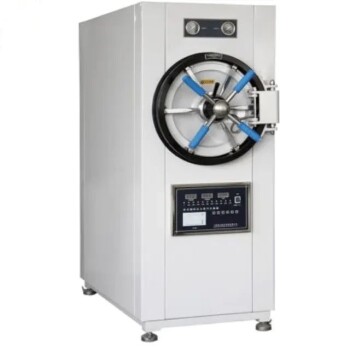
The high-pressure hydrothermal autoclave serves as the essential reaction vessel that creates a subcritical water environment. This sealed system allows precursors, such as urea and graphene oxide nanoribbons, to interact at temperatures (typically 180°C) and pressures far exceeding their standard boiling points. By significantly enhancing solvent penetration and chemical reactivity, the autoclave enables the effective embedding of nitrogen and oxygen species into the carbon framework, which modifies the material's surface polarity and introduces necessary structural defects.
The core role of the autoclave is to provide the energy and confinement required to force chemical dopants into the stable carbon lattice of graphene. This process transforms the nanoribbons from a relatively inert state into a functionalized material with tuned electronic properties.
The Mechanics of the Subcritical Environment
Exceeding Atmospheric Boiling Points
In a standard open container, water cannot exceed 100°C without evaporating, which limits the energy available for chemical reactions. The sealed autoclave prevents evaporation, allowing the liquid phase to reach 180°C or higher, creating a high-energy environment that accelerates the reaction between urea and graphene.
Enhancing Solvent Penetration
Under high pressure, the physical properties of water change, reducing its surface tension and viscosity. This subcritical state allows the solvent to penetrate deep into the stacked layers of graphene oxide nanoribbons, ensuring that nitrogen doping occurs uniformly throughout the material rather than just on the outer surface.
Chemical Transformation and Doping Efficiency
Driving the Reaction with Urea
Urea acts as a common nitrogen source that decomposes under hydrothermal conditions to release reactive nitrogen species. The high-pressure environment ensures these volatile species remain in solution long enough to bond with the carbon lattice of the nanoribbons, rather than escaping as gas.
Inducing Structural Defects and Polarity
The intense conditions within the autoclave promote the removal of certain oxygen groups while replacing others with nitrogen. This chemical remodeling increases material defects, which are often desirable for catalytic applications, and adjusts the surface polarity to improve how the nanoribbons interact with other chemicals or solvents.
Engineering Material Integrity
The Role of PTFE Liners
Most hydrothermal autoclaves utilize a PTFE (polytetrafluoroethylene) liner to hold the reactants. This liner provides critical chemical inertness, protecting the stainless steel outer shell from the corrosive nature of alkaline modifiers or acidic precursors used during the nitrogen-doping process.
Facilitating Strong Interfacial Bonding
The autoclave environment is not only useful for doping but also for creating stable composite materials. The high pressure promotes strong interfacial connections between the graphene nanoribbons and any added metal oxides or inorganic nanomaterials, ensuring the final product remains stable during long-term use.
Understanding the Trade-offs and Pitfalls
Complexity of Pressure Management
While high pressure is beneficial for reactivity, it requires strict safety protocols and high-quality equipment to prevent vessel failure. Incorrectly calculating the "fill degree" of the autoclave can lead to internal pressures that exceed the vessel's safety rating as the temperature rises.
Batch Processing Limitations
Hydrothermal synthesis is primarily a batch process, which can lead to variations between different production runs. Maintaining precise control over the heating and cooling rates is necessary to ensure that the nitrogen-doping levels and the size of the nanoribbons remain consistent across different batches.
How to Apply This to Your Project
When utilizing a high-pressure autoclave for graphene modification, your approach should depend on your specific material requirements:
- If your primary focus is maximum nitrogen content: Operate at the upper-temperature limits (e.g., 180°C to 200°C) and ensure a high concentration of nitrogen precursors like urea or ethylenediamine.
- If your primary focus is structural integrity: Use moderate temperatures and longer reaction times to allow for gradual self-assembly and to minimize the over-oxidation of the nanoribbon framework.
- If your primary focus is catalytic activity: Focus on inducing specific crystal planes or loading metal ions (like nickel or iron) simultaneously during the hydrothermal process to create active heterojunctions.
The high-pressure autoclave is the definitive tool for transforming simple carbon precursors into highly engineered, nitrogen-doped nanostructures through the precise control of subcritical fluid dynamics.
Summary Table:
| Feature | Role in Nitrogen-Doping | Key Benefit |
|---|---|---|
| Subcritical Water | Allows water to reach temperatures >180°C | Accelerates reaction kinetics beyond standard boiling points |
| High Pressure | Reduces solvent surface tension and viscosity | Ensures deep penetration into graphene oxide layers |
| PTFE Liner | Provides chemical inertness | Protects the reactor from corrosive precursors and urea |
| Reaction Vessel | Contains volatile nitrogen species (from urea) | Forces chemical dopants into the stable carbon lattice |
| Batch Control | Manages heating/cooling rates | Ensures consistent nitrogen levels and material integrity |
Elevate Your Nanomaterial Research with KINTEK
Precision is the key to successful graphene functionalization. At KINTEK, we understand that creating high-performance nitrogen-doped nanostructures requires more than just heat; it requires absolute control. Our premium high-temperature high-pressure reactors and autoclaves are designed to maintain the stable subcritical environments necessary for superior chemical transformation and material integrity.
Whether you are focusing on high-capacity battery research, catalytic activity, or structural composites, KINTEK provides a comprehensive range of laboratory solutions—from PTFE-lined autoclaves to advanced muffle furnaces and hydraulic presses.
Ready to optimize your synthesis process? Contact our technical experts today to find the perfect equipment for your lab!
References
- Xiaoyu Feng, Zongqian Hu. Defect-Enriched Graphene Nanoribbons Tune the Adsorption Behavior of the Mediator to Boost the Lactate/Oxygen Biofuel Cell. DOI: 10.3390/nano13061089
This article is also based on technical information from Kintek Solution Knowledge Base .
Related Products
- High Pressure Laboratory Autoclave Reactor for Hydrothermal Synthesis
- Mini SS High Pressure Autoclave Reactor for Laboratory Use
- Stainless High Pressure Autoclave Reactor Laboratory Pressure Reactor
- Customizable High Pressure Reactors for Advanced Scientific and Industrial Applications
- Laboratory High Pressure Horizontal Autoclave Steam Sterilizer for Lab Use
People Also Ask
- What role does a high-pressure reactor (autoclave) play in the synthesis of NiCuFe-LDH? Master Hydrothermal Growth
- What Role Does a High-Pressure Reactor or Autoclave Play in HA Catalyst Synthesis? Achieve High Surface Area Materials
- What equipment is required for hydrothermal synthesis of Ga0.25Zn4.67S5.08? Optimize Your Semiconductor Production
- What is the function of a high-pressure reactor in the hydrothermal synthesis of boehmite? Expert Process Insights
- What role does an autoclave play in the synthesis of MnO2 nanofibers? Mastering Hydrothermal Growth