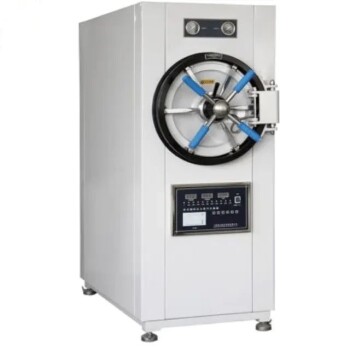
The high-pressure reactor (autoclave) is the essential vessel for the hydrothermal synthesis of NiV hydroxide precursors on nickel foam. This reactor creates a sealed, constant-temperature, and high-pressure environment that forces metal ions to undergo uniform nucleation and oriented growth directly onto the three-dimensional nickel foam skeleton. This initial stage is critical because it establishes the vertically aligned nanosheet structure that serves as the physical foundation for all subsequent doping and phosphorization steps.
The autoclave acts as a precision engineering environment that transforms raw metal salts into organized nano-arrays. By facilitating in-situ growth under high pressure, it ensures the formation of a high-surface-area framework that is permanently bonded to the conductive substrate.
The Engineering of a Controlled Hydrothermal Environment
Surpassing Atmospheric Limits
A high-pressure reactor allows the solvent to reach temperatures significantly higher than its standard boiling point. This elevated energy state accelerates the dissolution and recrystallization processes of the precursor metal salts.
Maintaining Constant Reaction Kinetics
The sealed nature of the autoclave ensures that pressure and temperature remain stable throughout the synthesis period. This stability is vital for achieving uniform reaction kinetics, which prevents the formation of irregular clusters or bulk precipitates.
Inducing Precise Crystal Planes
By regulating the internal pressure, the reactor encourages the growth of specific crystal morphologies and nano-sizes. This precision allows researchers to expose the most active crystal planes for better catalytic performance.
Morphological Development and Precursor Growth
Facilitating Oriented Nanosheet Growth
The reactor's environment promotes oriented growth, where metal ions align into vertically oriented nanosheets. This specific geometry is favored under high-pressure conditions because it minimizes surface energy while maximizing exposure to the surrounding medium.
Establishing the Morphological Foundation
The nanosheets created in the autoclave serve as the structural scaffold for the final B, V-Ni2P catalyst. Without this initial high-surface-area framework, the subsequent doping of Boron (B) and the phosphorization process would lack a stable host structure.
Improving Material Crystallinity
The high-pressure conditions within the autoclave lead to high crystallinity in the hydroxide precursors. Greater crystallinity often translates to better structural stability and electrical conductivity in the final electrocatalytic electrode.
Engineering the Substrate-Precursor Interface
Ensuring In-Situ Growth and Adhesion
The autoclave facilitates heterogeneous nucleation, where the precursors grow directly on the nickel foam rather than just in the solution. This in-situ growth creates a "firmly attached" interface that is essential for long-term durability during seawater electrolysis.
Penetration of Complex Three-Dimensional Scaffolds
The high pressure forces the reactive solution into the deep pores of the three-dimensional nickel foam skeleton. This ensures that the entire internal surface area of the foam is utilized, not just the outer layers.
Creating Built-In Electric Fields
The intimate contact promoted by the pressurized environment can induce tight heterojunction interfaces. This contact can lead to band bending and the creation of built-in electric fields, which eventually helps in the efficient transport of electrons during catalysis.
Understanding the Trade-offs and Pitfalls
Sensitivity to Temperature Fluctuations
The morphology of the NiV hydroxide is highly sensitive; even minor deviations in the autoclave's temperature can lead to collapsed nanosheets or non-uniform coverage. Precision in thermal control is more critical here than in open-system chemistry.
Scaling and Throughput Limitations
While autoclaves provide superior control, they are batch-process tools that limit the speed of production. Transitioning from small laboratory autoclaves to industrial-scale high-pressure reactors introduces significant engineering challenges regarding heat distribution.
Safety and Equipment Maintenance
Operating at high pressures and temperatures carries inherent risks and requires specialized stainless steel equipment. Regular inspection for stress corrosion or seal failure is mandatory to prevent hazardous venting or reactor failure.
Applying This to Your Catalyst Synthesis
How to Apply This to Your Project
- If your primary focus is maximizing surface area: Prioritize the optimization of the hydrothermal residence time within the autoclave to ensure the nanosheets are fully developed but not overgrown.
- If your primary focus is long-term electrode stability: Focus on the cleaning of the nickel foam substrate before it enters the reactor to ensure the strongest possible in-situ bond during the high-pressure growth phase.
- If your primary focus is catalytic activity (OER/HER): Use the reactor to precisely control the cooling rate after synthesis, as this can influence the crystallinity and defect density of the hydroxide precursors.
The high-pressure reactor is the foundational tool that dictates the physical architecture and eventual efficiency of the B, V-Ni2P electrocatalyst.
Summary Table:
| Feature of Reactor | Mechanism in Synthesis | Impact on Electrocatalyst |
|---|---|---|
| High-Pressure Environment | Forces uniform nucleation on 3D foam | Creates high-surface-area nanosheets |
| Elevated Temperature | Accelerates dissolution/recrystallization | Ensures high crystallinity and conductivity |
| Sealed System | Maintains constant reaction kinetics | Prevents irregular clusters/precipitates |
| In-Situ Growth | Facilitates heterogeneous nucleation | Ensures firm adhesion for long-term durability |
| Deep Penetration | Forces solution into 3D scaffold pores | Maximizes utilization of the substrate surface |
Elevate Your Electrocatalysis Research with KINTEK
Achieving the perfect vertically aligned nanosheet structure requires precision-engineered equipment. KINTEK specializes in high-performance laboratory solutions, offering the high-pressure reactors and autoclaves essential for the successful hydrothermal synthesis of advanced catalysts like B, V-Ni2P.
Beyond reactors, our comprehensive portfolio supports every stage of your workflow—from electrolytic cells and electrodes for performance testing to high-temperature furnaces, crushing systems, and hydraulic presses for material preparation. Whether you are focusing on seawater electrolysis or battery research, KINTEK provides the reliability and technical excellence you need to ensure repeatable, high-quality results.
Ready to optimize your synthesis process? Contact our experts today to find the ideal equipment for your laboratory!
References
- Tingwen Zhao, Chuan Zhao. Cooperative Boron and Vanadium Doping of Nickel Phosphides for Hydrogen Evolution in Alkaline and Anion Exchange Membrane Water/Seawater Electrolyzers. DOI: 10.1002/smll.202208076
This article is also based on technical information from Kintek Solution Knowledge Base .
Related Products
- Stainless High Pressure Autoclave Reactor Laboratory Pressure Reactor
- Mini SS High Pressure Autoclave Reactor for Laboratory Use
- High Pressure Laboratory Autoclave Reactor for Hydrothermal Synthesis
- Customizable High Pressure Reactors for Advanced Scientific and Industrial Applications
- Portable High Pressure Laboratory Autoclave Steam Sterilizer for Lab Use
People Also Ask
- Why is a laboratory high-pressure reactor necessary for synthesizing fly ash-based zeolite? Achieve Pure Crystallization
- Why is a laboratory high-pressure reactor used in the hydrothermal synthesis of hydroxyapatite catalysts?
- What role does a laboratory high-pressure reactor play in the leaching process of spent cathode materials? Optimize Recovery
- What conditions do laboratory high-pressure reactors provide for HTC? Optimize Your Biochar Production Processes
- How are high-pressure reactors used to prepare metaphosphate electrocatalysts? Master In-Situ Precursor Growth