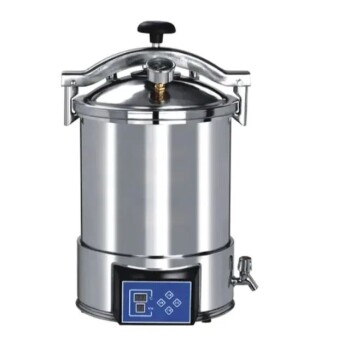
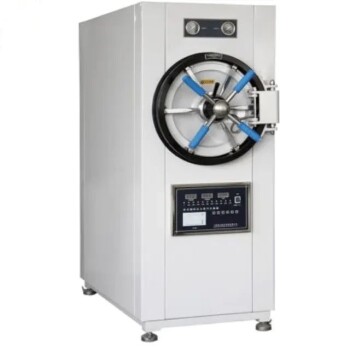
The high-pressure reactor, or autoclave, acts as the critical environment for the hydrothermal synthesis of pencil-like cobalt vanadate. It provides a sealed, high-temperature chamber (typically 180 °C) that enables internal condensation reactions and drives the directional growth of hexagonal nanosheets into unique, micron-scale pencil structures while ensuring structural stability.
The autoclave enables the transition from simple raw materials to complex morphologies by maintaining subcritical conditions that are impossible at atmospheric pressure. This controlled environment is the fundamental driver for the precise crystal growth and morphological uniformity required for high-performance cobalt vanadate precursors.
Creating the Hydrothermal Reaction Environment
Achieving Subcritical Conditions
The primary function of the autoclave is to maintain a sealed environment where solvents can be heated beyond their atmospheric boiling points. In the case of cobalt vanadate, reaching temperatures like 180 °C creates high internal pressure, facilitating "subcritical" hydrothermal conditions.
Accelerating Chemical Kinetics
Under these high-pressure conditions, the solubility of raw materials increases, and the rate of internal condensation reactions accelerates. This allows the precursor components to interact more vigorously than they would in an open-system reflux, leading to the formation of specialized phases.
Facilitating Dissolution and Recrystallization
The high-pressure environment promotes a continuous process of dissolution and recrystallization. This cycle is essential for refining the chemical purity of the cobalt vanadate and ensuring that the resulting crystals possess high crystallinity and uniform size distribution.
Driving Morphological Evolution and Growth
Directional Growth of Hexagonal Nanosheets
The autoclave’s controlled environment is what forces the cobalt vanadate to grow in specific directions. It facilitates the assembly of hexagonal nanosheets, which serve as the building blocks for the more complex final structure.
Formation of Pencil-Like Micron Structures
As the reaction progresses, the high-pressure conditions drive these nanosheets to stack and extend into unique pencil-like micron-scale structures. Without the constant pressure and temperature of the autoclave, the material would likely settle into less organized, irregular shapes like random aggregates.
Ensuring Morphological Uniformity
The sealed nature of the reactor ensures that the temperature and concentration gradients remain stable throughout the synthesis. This stability is critical for achieving morphological uniformity, meaning the "pencils" produced are consistent in size and shape across the entire batch.
Understanding the Technical Constraints
Material Compatibility and Linings
High-pressure reactors often require a PTFE (Teflon) liner to handle the synthesis of metal vanadates. This liner is chemically inert, preventing the reaction solution from corroding the metal outer shell of the autoclave and ensuring no metallic impurities leach into the precursor.
Pressure and Temperature Limits
While high pressure is beneficial, it requires precise monitoring to avoid safety hazards or over-pressurization. If the temperature fluctuates or exceeds the design limits of the vessel, the structural stability of the cobalt vanadate can be compromised, leading to fragmented or collapsed morphologies.
Solvent and Diffusion Control
The choice of solvent (such as water or methanol) interacts with the pressure to control the diffusion depth of metal ions. In complex synthesis, this control is vital to prevent the precursors from becoming too dense or brittle, which would reduce their effectiveness in subsequent applications like catalysis.
How to Optimize Your Synthesis Goal
Applying This to Your Material Research
- If your primary focus is Morphological Precision: Ensure your autoclave is equipped with a high-quality PTFE liner and a digital temperature controller to maintain a steady 180 °C for the duration of the growth phase.
- If your primary focus is High Catalytic Activity: Utilize the hydrothermal environment to maximize the specific surface area, ensuring the "pencil" structures are hollow or highly porous to expose more electrochemical active sites.
- If your primary focus is Structural Stability: Prioritize the "dissolution-recrystallization" phase within the reactor to eliminate internal defects in the crystal lattice of the cobalt vanadate.
The high-pressure autoclave is the indispensable tool that transforms basic chemical precursors into the sophisticated, pencil-like architectures required for modern materials science.
Summary Table:
| Feature | Function in Synthesis | Impact on Cobalt Vanadate |
|---|---|---|
| Subcritical Environment | Maintains temp (~180°C) above boiling point | Increases solubility and accelerates kinetics |
| Directional Growth | Guides nanosheet assembly | Forms unique, pencil-like micron structures |
| Sealed Chamber | Ensures stable temp/concentration gradients | Guarantees morphological uniformity across batches |
| Dissolution-Recrystallization | Continuous refining of the crystal lattice | High crystallinity and enhanced chemical purity |
| PTFE (Teflon) Lining | Provides a chemically inert barrier | Prevents corrosion and metallic impurity leaching |
Elevate Your Material Research with KINTEK Precision
Are you looking to achieve flawless morphological control in your hydrothermal synthesis? KINTEK specializes in high-performance laboratory equipment designed for the most demanding research environments. Whether you are synthesizing pencil-like cobalt vanadate or advanced catalysts, our high-temperature high-pressure reactors and autoclaves provide the stability and safety you need.
Our comprehensive portfolio includes:
- Advanced Reactors: CVD, PECVD, and high-pressure autoclaves with precise temperature control.
- Essential Consumables: Chemically inert PTFE products, ceramics, and high-purity crucibles.
- Material Processing: Crushing, milling, and hydraulic pellet presses for post-synthesis analysis.
Unlock superior structural stability and crystallinity in your precursors. Contact KINTEK today to consult with our experts and find the ideal equipment configuration for your lab!
References
- Haiyang Chang, Cheng Wang. Pencil-like Hollow Carbon Nanotubes Embedded CoP-V4P3 Heterostructures as a Bifunctional Catalyst for Electrocatalytic Overall Water Splitting. DOI: 10.3390/nano13101667
This article is also based on technical information from Kintek Solution Knowledge Base .
Related Products
- Stainless High Pressure Autoclave Reactor Laboratory Pressure Reactor
- Mini SS High Pressure Autoclave Reactor for Laboratory Use
- High Pressure Laboratory Autoclave Reactor for Hydrothermal Synthesis
- Customizable High Pressure Reactors for Advanced Scientific and Industrial Applications
- Portable High Pressure Laboratory Autoclave Steam Sterilizer for Lab Use
People Also Ask
- Why is a laboratory high-pressure reactor necessary for synthesizing fly ash-based zeolite? Achieve Pure Crystallization
- Why is a laboratory high-pressure reactor used in the hydrothermal synthesis of hydroxyapatite catalysts?
- What role does a laboratory high-pressure reactor play in the leaching process of spent cathode materials? Optimize Recovery
- What conditions do laboratory high-pressure reactors provide for HTC? Optimize Your Biochar Production Processes
- How are high-pressure reactors used to prepare metaphosphate electrocatalysts? Master In-Situ Precursor Growth