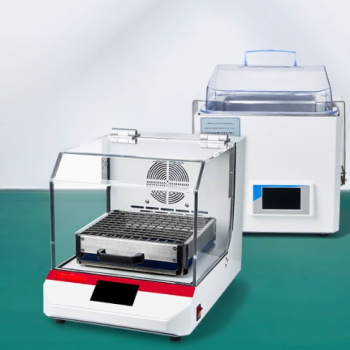
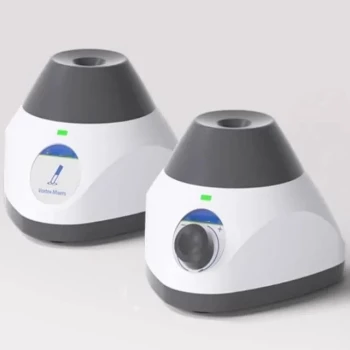
In the preparation of contaminated silicone substrates, the incubator shaker serves as the primary mechanism for ensuring consistency and adherence. By maintaining a constant rotational speed and a precise temperature (specifically 310 K), it facilitates the uniform distribution of fungal suspensions, such as Candida albicans, promoting stable microbial attachment to the silicone surface.
The incubator shaker transforms random microbial growth into a standardized contamination model. By strictly controlling movement and thermal conditions, it ensures that every silicone sample presents an identical biological challenge during subsequent sterilization testing.
The Mechanics of Standardized Contamination
To understand why the incubator shaker is indispensable, one must look at the specific physical and biological requirements of creating a reliable test sample.
Achieving Uniform Distribution
In a static environment, microorganisms in a suspension will settle due to gravity, leading to uneven concentrations.
The incubator shaker provides constant rotational speed, which keeps the fungal suspension in a homogenous state.
This ensures that the silicone substrate is exposed to a consistent density of microorganisms across its entire surface area.
Optimizing Thermal Conditions for Growth
Temperature is the defining variable for microbial metabolism and reproduction.
The device maintains a precise temperature of 310 K (approximately 37°C), which is optimal for fungal species like Candida albicans.
This specific thermal environment promotes vigorous growth, ensuring the contamination is robust enough to serve as a valid challenge for sterilization processes.
Facilitating Surface Attachment
Merely exposing silicone to fungi is often insufficient for creating a durable contamination model; the microbes must actively attach to the material.
The dynamic movement of the shaker promotes stable attachment and colonization of the silicone surface.
This interaction is essential for simulating real-world scenarios where medical devices become contaminated through contact and biofilm formation.
Critical Variables and Considerations
While the incubator shaker automates the process, the setup requires careful attention to detail to avoid compromising the study.
The Importance of Constant Rotation
Variable speed can lead to inconsistent shear forces on the silicone surface.
If the rotation is too slow, the suspension may settle; if it is too fast, shear stress could prevent the fungi from attaching properly.
Maintaining a constant speed is the only way to guarantee that the physical forces acting on the substrate remain reproducible.
Temperature Precision
Even minor deviations from the 310 K target can significantly alter the growth rate of Candida albicans.
A drop in temperature may result in insufficient contamination, while a spike could stress or kill the culture.
Reliable sterilization studies depend on the assurance that the biological load on the substrate is exactly as intended.
Ensuring Reliability in Sterilization Studies
The ultimate goal of using an incubator shaker is not just growth, but standardization. Without a standardized contamination model, it is impossible to accurately compare the efficacy of different sterilization methods.
- If your primary focus is Experimental Consistency: Ensure the rotational speed remains constant throughout the incubation period to prevent variability in microbial density.
- If your primary focus is Biological Validity: Verify that the temperature is strictly maintained at 310 K to optimize the attachment and growth of Candida albicans.
By controlling the physical environment of the substrate, you transform a variable biological process into a reliable scientific baseline.
Summary Table:
| Key Feature | Parameter Value | Scientific Purpose |
|---|---|---|
| Temperature Control | 310 K (approx. 37°C) | Optimizes metabolic growth of Candida albicans |
| Mechanical Motion | Constant Rotational Speed | Prevents sedimentation; ensures homogenous suspension |
| Substrate Interaction | Dynamic Movement | Promotes stable microbial attachment & biofilm formation |
| Target Outcome | Standardized Bio-load | Enables reproducible baseline for sterilization efficacy |
Elevate Your Research Precision with KINTEK
Achieving repeatable results in sterilization studies requires more than just a shaker—it requires total environmental control. KINTEK specializes in high-performance laboratory equipment, providing the advanced incubator shakers, homogenizers, and thermal solutions necessary to create standardized biological models.
Whether you are preparing silicone substrates for medical research or developing complex biofilms, our precision-engineered systems ensure constant rotational speeds and perfect thermal stability. From shakers and cooling solutions to high-temperature furnaces and specialized consumables like PTFE products, KINTEK is your partner in laboratory excellence.
Ready to standardize your scientific baseline? Contact us today to find the perfect equipment for your lab!
References
- Ligia Satiko Simomura, Rodrigo Sávio Pessoa. Action of an Argon/Water Vapor Plasma Jet in the Sterilization of Silicone Contaminated with Candida albicans. DOI: 10.1615/plasmamed.2017019495
This article is also based on technical information from Kintek Solution Knowledge Base .
Related Products
- Shaking Incubators for Diverse Laboratory Applications
- Laboratory Vibratory Sieve Shaker Machine for Dry and Wet Three-Dimensional Sieving
- Laboratory Test Sieves and Vibratory Sieve Shaker Machine
- Vibratory Sieve Shaker Machine Dry Three-Dimensional Vibrating Sieve
- Laboratory Wet Three-Dimensional Vibratory Sieve Shaker Machine
People Also Ask
- What physical conditions does a shaking incubator provide for bioethanol fermentation? Optimize Yeast Productivity
- Why is the mechanical agitation provided by a shaking incubator necessary for the enzymatic hydrolysis of biomass?
- What critical reaction conditions does a shaking incubator provide? Optimize Cassava Cellulose Enzymatic Hydrolysis
- What are the primary functions of a shaking incubator? Optimize Biomass Fenton Pretreatment Efficiency
- What function does a laboratory shaking incubator serve for halophilic archaea? Optimize Your Seed Cultivation Today