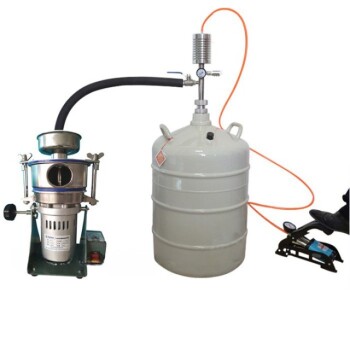
An industrial dry grinder functions as a critical surface engineering tool by mechanically altering the top layer of 304L stainless steel through intense shear deformation. Instead of simply polishing or finishing the material, this process forcefully removes material via the interaction between the grinding wheel and the workpiece. This results in fundamental changes to the steel's physical and mechanical properties at the surface level.
By inducing high residual compressive stress and creating an ultrafine grain layer, industrial dry grinding transforms the microstructure of 304L stainless steel, serving as a vital variable for understanding its subsequent passivation and corrosion behavior.
Mechanisms of Surface Alteration
Material Removal via Shear
The primary action of the dry grinder involves shear deformation occurring at the contact point between the abrasive wheel and the steel. This mechanical interaction physically strips away material to achieve the desired surface profile. The process relies on high-friction cutting forces rather than chemical or thermal etching.
Severe Plastic Deformation
Beyond mere shaping, the grinding process subjects the immediate surface layer to severe plastic deformation. The energy transfer is high enough to permanently distort the crystal lattice structure of the steel. This creates a distinct "mechanically treated" zone that differs significantly from the bulk material underneath.
Microstructural and Mechanical Changes
Formation of Ultrafine Grains
A defining characteristic of this process is the generation of an ultrafine grain layer. The intense mechanical stress fractures and refines the existing grain structure at the surface. This modification creates a gradient where surface grains are significantly smaller than those in the core of the workpiece.
High Residual Compressive Stress
Dry grinding induces a state of high residual compressive stress within the surface layer. This stress is trapped in the material as a result of the severe deformation forces applied during the operation. Compressive stress is often desirable in engineering as it can impede the propagation of surface cracks.
Understanding the Trade-offs
Increased Surface Roughness
A notable trade-off of industrial dry grinding is a significant increase in surface roughness. While the process refines the grain structure internally, the exterior topography becomes more irregular due to the abrasive action. This increased surface area can influence how the material reacts with the surrounding environment.
Impact on Passivation Behavior
The combination of roughness and microstructural changes makes this process essential for studying passivation behavior. Passivation is the steel's ability to form a protective oxide layer, and grinding alters the baseline conditions for this chemical reaction. Therefore, dry grinding is not just a shaping method, but a critical variable in assessing how machining impacts corrosion resistance.
Implications for Material Analysis
To effectively utilize industrial dry grinding data for 304L stainless steel, consider the following applications:
- If your primary focus is Surface Hardening: Recognize that the severe plastic deformation and ultrafine grain layer will likely alter the surface hardness compared to the bulk material.
- If your primary focus is Corrosion Research: Use the dry grinding process to establish a baseline of high roughness and compressive stress to test the limits of the material's passivation capability.
Industrial dry grinding is a transformative mechanical treatment that redefines the surface microstructure to enable rigorous study of material performance.
Summary Table:
| Feature | Surface Modification Effect | Impact on 304L Stainless Steel |
|---|---|---|
| Mechanism | Shear & Severe Plastic Deformation | Mechanically alters the crystal lattice structure |
| Microstructure | Ultrafine Grain Layer | Refines grain size at the surface vs. the bulk core |
| Stress State | High Residual Compressive Stress | Improves resistance to surface crack propagation |
| Topography | Increased Surface Roughness | Enhances surface area for passivation studies |
| Core Goal | Surface Engineering | Prepares material for hardening and corrosion testing |
Elevate Your Material Research with KINTEK Precision Solutions
Unlock the full potential of your surface engineering and material analysis workflows with KINTEK. Whether you are investigating the passivation behavior of 304L stainless steel or performing rigorous mechanical testing, our premium laboratory equipment ensures consistent and reliable results.
From high-performance crushing and milling systems to advanced high-temperature furnaces and hydraulic presses, KINTEK provides the specialized tools needed for demanding research environments. We empower laboratory professionals and researchers with the technology to achieve precise material transformations and accurate data every time.
Ready to optimize your lab's performance? Contact us today to discuss our comprehensive range of equipment and consumables tailored to your specific application needs!
References
- Kathleen Jaffré, Yutaka Watanabe. Effect of Mechanical Surface Treatments on the Surface State and Passive Behavior of 304L Stainless Steel. DOI: 10.3390/met11010135
This article is also based on technical information from Kintek Solution Knowledge Base .
Related Products
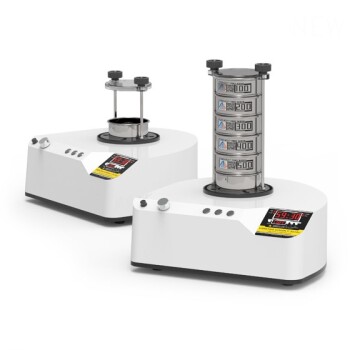
- Three-dimensional electromagnetic sieving instrument
- High Energy Vibratory Laboratory Ball Mill Grinding Mill Single Tank Type
- Stainless Steel Laboratory Ball Mill for Dry Powder and Liquid with Ceramic Polyurethane Lining
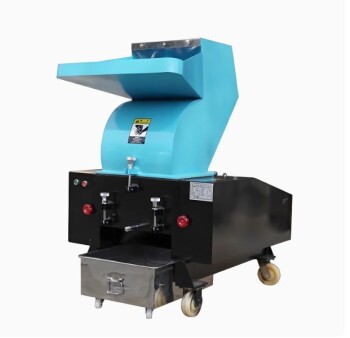
- Powerful Plastic Crusher Machine
- Laboratory Hybrid Tissue Grinding Mill
People Also Ask
- Why is sieving equipment essential for the classification of processed bio-activated carbon? Optimize Performance
- What are the limitations of sieving? Understanding the Constraints of Particle Size Analysis
- What are advantages and disadvantages of sieving method? A Guide to Reliable & Cost-Effective Particle Sizing
- How is sieving important? The Critical Role of Particle Size Analysis in Quality Control
- What is sieving and how does it work? A Guide to Accurate Particle Size Analysis