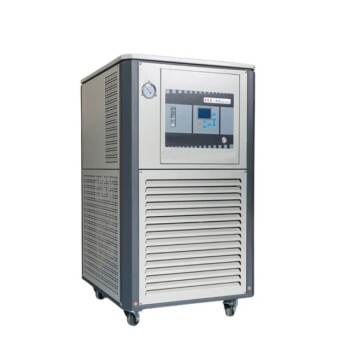
High-temperature and high-pressure reactors act as the precise thermodynamic engines required to overcome the structural recalcitrance of wheat straw. By maintaining temperatures typically between 170°C and 196°C within a sealed vessel, these reactors force the dissolution of hemicellulose and break down the dense lignocellulosic matrix. Furthermore, they provide the controlled environment necessary to adjust reaction time and pH, facilitating the study of how mineral elements redistribute between solid and liquid phases.
The core function of these reactors is to maintain water in a subcritical liquid state at elevated temperatures, transforming it into a highly effective solvent that penetrates and dismantles wheat straw without the need for external chemical catalysts.
Creating the Necessary Thermodynamic Conditions
Achieving Subcritical States
The primary role of the reactor is to generate a specific thermodynamic environment that cannot exist under ambient conditions.
By sealing the vessel, the reactor allows the internal pressure to rise autogenously as temperatures reach the 170°C to 196°C range.
This pressure prevents the water from turning into steam, maintaining it in a liquid (subcritical) state which is essential for effective biomass penetration.
Precision Control of Variables
The reactor design allows for the independent manipulation of critical variables, specifically reaction time and pH values.
This control is vital because the breakdown of wheat straw is non-linear; slight deviations in time or acidity can significantly alter the yield.
Operators use these controls to fine-tune the severity of the treatment, ensuring the biomass is degraded sufficiently without destroying valuable components.
Structural Deconstruction of Wheat Straw
Dissolution of Hemicellulose
Wheat straw possesses a rigid structure composed of cellulose, hemicellulose, and lignin.
The high-temperature environment promoted by the reactor specifically targets the dissolution of hemicellulose.
Removing this component increases the porosity of the remaining solid, making the cellulose more accessible for subsequent processing steps.
Breaking the Lignocellulosic Matrix
Beyond hemicellulose, the reactor facilitates the general disruption of the dense lignocellulosic structure.
The thermal energy and pressure work together to sever the bonds holding the biomass architecture together.
This converts a resistant raw material into a substrate that is chemically receptive to further modification or extraction.
Mineral Redistribution and Chemical Dynamics
Facilitating Phase Transfer
A unique capability of these reactors, as highlighted in current research, is their ability to influence where mineral elements end up.
The thermodynamic conditions enable the migration of minerals from the solid straw matrix into the liquid phase.
This redistribution is critical for applications where the ash content or mineral composition of the final solid product must be controlled.
Altering Solvent Properties
While the primary reference focuses on the structural breakdown, supplementary context clarifies that the reactor alters the properties of water itself.
Under these high-pressure conditions, water acts as an acid-base catalytic medium.
This allows for effective hydrolysis and deacetylation reactions to occur purely through the physical state of the water, reducing reliance on added chemicals.
Understanding the Trade-offs
The Risk of Over-Processing
While high temperatures facilitate breakdown, exceeding the optimal range (above 196°C) can lead to detrimental secondary reactions.
Excessive heat or pressure may cause the polymerization of reactive fragments, leading to the formation of "hydrochar" rather than a clean pretreated substrate.
Equipment Complexity and Safety
Operating at these temperatures and pressures requires robust, rated vessels that are significantly more expensive than standard atmospheric reactors.
The sealed nature of the process makes real-time sampling difficult, meaning the "precisely controlled environment" relies heavily on accurate predictive modeling and sensor data.
Making the Right Choice for Your Goal
To maximize the effectiveness of hydrothermal pretreatment, tailor your reactor settings to your specific objective:
- If your primary focus is increasing enzymatic digestibility: Target the upper temperature range (near 196°C) to maximize hemicellulose removal and pore generation.
- If your primary focus is mineral element analysis: Prioritize the control of pH and reaction time to accurately track the migration of elements between solid and liquid phases.
- If your primary focus is preserving cellulose integrity: Operate at the lower end of the temperature spectrum (around 170°C) to prevent the degradation of glucose chains.
Success in hydrothermal pretreatment lies not just in applying heat and pressure, but in utilizing the reactor to precisely balance structural deconstruction against chemical degradation.
Summary Table:
| Feature | Role in Hydrothermal Pretreatment | Key Impact |
|---|---|---|
| Temperature (170°C-196°C) | Facilitates hemicellulose dissolution | Increases biomass porosity and accessibility |
| High Pressure | Maintains water in a subcritical liquid state | Acts as an effective solvent without catalysts |
| Variable Control (pH/Time) | Fine-tunes treatment severity | Prevents over-processing and secondary reactions |
| Phase Migration | Enables mineral redistribution | Facilitates transfer of minerals from solid to liquid phase |
Maximize Your Biomass Research Potential with KINTEK
Unlock the full power of hydrothermal pretreatment with KINTEK’s high-temperature high-pressure reactors and autoclaves. Our precision-engineered systems provide the exact thermodynamic control required to overcome the structural recalcitrance of wheat straw and other lignocellulosic materials.
Whether you are focusing on mineral redistribution, enzymatic digestibility, or advanced bio-oil research, KINTEK offers a comprehensive range of laboratory equipment—from high-pressure vessels and crushing systems to cooling solutions (ULT freezers) and specialized ceramics.
Ready to elevate your lab’s efficiency and scientific accuracy? Contact KINTEK today for a customized equipment solution!
References
- Duy Michael Le, Anne S. Meyer. Biorefining of wheat straw: accounting for the distribution of mineral elements in pretreated biomass by an extended pretreatment-severity equation. DOI: 10.1186/s13068-014-0141-7
This article is also based on technical information from Kintek Solution Knowledge Base .
Related Products
- Customizable Laboratory High Temperature High Pressure Reactors for Diverse Scientific Applications
- High Pressure Laboratory Autoclave Reactor for Hydrothermal Synthesis
- Mini SS High Pressure Autoclave Reactor for Laboratory Use
- Stainless High Pressure Autoclave Reactor Laboratory Pressure Reactor
- Customizable High Pressure Reactors for Advanced Scientific and Industrial Applications
People Also Ask
- How do high-pressure and high-temperature reactors ensure the effective treatment of lignocellulosic wastewater in WAO?
- What equipment is required for high-pressure high-temperature reactions? Master Extreme Chemistry Safely
- How do you control high pressure in a reactor? A Guide to Safe & Stable Operation
- Why is argon better than nitrogen for inert atmosphere? Ensure Absolute Reactivity & Stability
- How does initial oxygen pressure affect the wet oxidation of pharmaceutical sludge? Master Your Oxidation Depth