The primary role of stirring equipment in the sol-gel coating process is to provide continuous mechanical power that maintains a state of high suspension. By keeping the titanium source precursor and pigment particles in constant motion within the aqueous phase, the equipment prevents the natural sedimentation of the heavier pigment particles. This ensures that the particles remain fully dispersed and in contact with the coating solution throughout the entire reaction.
The mechanical action of stirring is not merely for mixing; it is the critical control mechanism for ensuring a consistent core-shell structure. By preventing sedimentation, it facilitates the uniform nucleation and growth of the coating layer on every individual particle surface.
Mechanisms of Action
Maintaining High Suspension
Gravity naturally causes solid pigment particles to settle at the bottom of a reaction vessel. Stirring equipment counteracts this by applying continuous mechanical power.
This action creates a stable slurry system where the pigment particles remain suspended in the liquid. This suspension is the prerequisite for any uniform chemical reaction to take place on the particle surface.
Ensuring Full Contact
For a coating to be effective, the coating agent (the titanium precursor) must physically reach the surface of the pigment (the core).
Stirring ensures full contact between the aqueous phase and the pigment particles. It prevents the particles from clumping together, which would otherwise hide surface areas and result in uncoated or partially coated spots.
The Impact on Coating Quality
Uniform Nucleation and Growth
The formation of the coating layer begins with a process called nucleation. Stirring ensures that the chemical conditions (concentration and temperature) are uniform throughout the tank.
This uniformity allows nucleation to occur evenly across all suspended particles. Consequently, the growth of the coating layer proceeds at a consistent rate, preventing some particles from developing thick shells while others remain thin.
Achieving the Core-Shell Structure
The ultimate goal of this process is to create a specific geometric arrangement known as a core-shell structure.
The pigment acts as the core, and the sol-gel material forms the shell. Consistent mechanical agitation is the key variable that guarantees this shell is applied evenly, creating a precise and reproducible product.
Understanding the Trade-offs
The Risk of Localized Concentrations
While stirring is essential, the flow dynamics must be managed carefully. If the stirring is inadequate or the mixing zones are uneven, you risk creating local high concentrations of the precursor solution.
When this occurs, the precursor may precipitate onto itself rather than onto the pigment. This wastes raw materials and introduces impurities into the final product.
The Consequence of Sedimentation
If mechanical power fails or is interrupted, sedimentation occurs immediately.
This disrupts the coating process, as particles at the bottom of the reactor will experience different chemical environments than those at the top. This leads to a batch with high variability, rendering the photocatalytic pigments unreliable for commercial use.
Optimizing Your Process Strategy
To achieve the best results in sol-gel coating, align your stirring parameters with your specific quality goals:
- If your primary focus is Batch Homogeneity: Ensure the mechanical power is sufficient to prevent any sedimentation, maintaining a perfectly stable slurry throughout the reaction time.
- If your primary focus is Structural Precision: Prioritize flow patterns that ensure full contact between the precursor and the pigment to guarantee uniform nucleation and core-shell formation.
Mastering the mechanics of suspension is the only way to ensure the chemical precision of your final coating.
Summary Table:
| Mechanism | Function in Sol-Gel Process | Impact on Final Quality |
|---|---|---|
| Mechanical Power | Maintains high suspension of pigment particles | Prevents sedimentation and batch variability |
| Full Contact | Ensures precursor reaches every particle surface | Prevents clumping and uncoated spots |
| Uniform Nucleation | Balances concentration and temperature zones | Facilitates even growth of the coating layer |
| Agitation Control | Prevents localized high concentrations | Avoids precursor self-precipitation and impurities |
| Structural Control | Promotes consistent shell application | Guarantees precise and reproducible core-shell geometry |
Elevate Your Materials Synthesis with KINTEK Precision
Achieving a flawless core-shell structure requires more than just chemistry—it requires superior mechanical control. KINTEK specializes in advanced laboratory equipment designed to handle the most demanding sol-gel and material science applications.
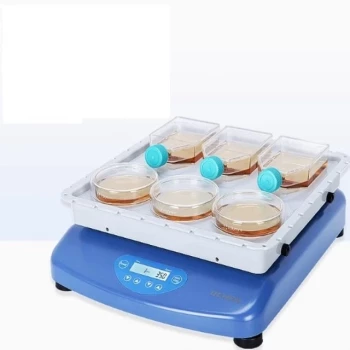
Whether you need high-performance homogenizers and shakers to maintain perfect pigment suspension, or high-temperature high-pressure reactors for precise coating growth, our comprehensive portfolio has you covered. We also offer specialized crushing and milling systems, centrifuges, and essential ceramic crucibles to support your entire workflow from preparation to final heat treatment in our muffle and tube furnaces.
Ready to optimize your coating uniformity and batch consistency? Contact KINTEK today to discover how our tailored laboratory solutions can enhance your research and production efficiency.
References
- Estíbaliz Aranzabe, José Cubillo. Preparation and characterisation of photocatalytic pigments for architectural mortar based on ultramarine blue. DOI: 10.1007/s10971-019-05116-x
This article is also based on technical information from Kintek Solution Knowledge Base .
Related Products
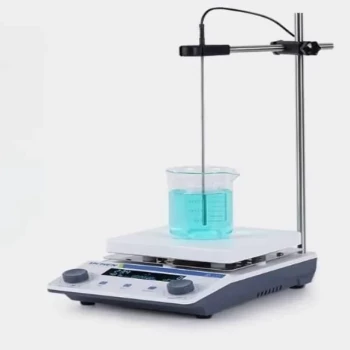
- Laboratory Small Constant Temperature Heated Magnetic Stirrer Heater and Stirrer
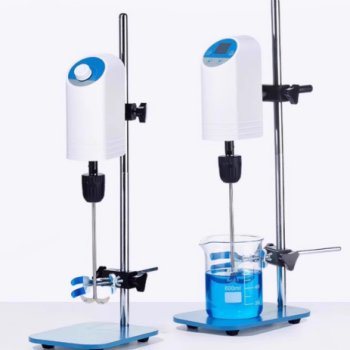
- High Performance Laboratory Stirrers for Diverse Applications
- Custom PTFE Teflon Parts Manufacturer for Magnetic Stirring Bar
- Laboratory Vibratory Sieve Shaker Machine Slap Vibrating Sieve
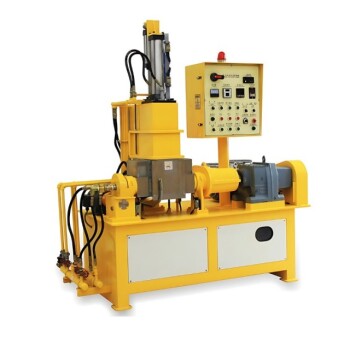
- Lab Internal Rubber Mixer Rubber Kneader Machine for Mixing and Kneading
People Also Ask
- What role does a magnetic stirrer with heating play in ZnO nanoparticle synthesis? Precision Control for Quality Results
- What role does a constant temperature heating magnetic stirrer play in MFC-HAp synthesis? Achieve Material Homogeneity
- What is the function of a laboratory magnetic stirrer in Ni–Cr–P electrodeposition? Optimize Ion Transport & Coating
- Why is a laboratory magnetic stirrer required for benzoic acid esters? Boost Reaction Speed & Yield with High RPM
- What role does a laboratory magnetic stirrer play in TiO2 and TiO2-Ag sol preparation? Master Chemical Kinetics