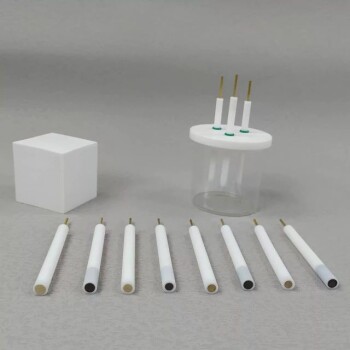
The high-purity Platinum electrode serves as the critical "silent partner" in your electrochemical setup. In the testing of Zircaloy-2, it functions as the counter electrode (or auxiliary electrode) responsible for completing the electrical circuit. Its primary role is to facilitate the flow of current without participating in the reaction, ensuring that the data collected reflects only the behavior of the Zircaloy-2 specimen.
Core Takeaway Platinum is selected specifically for its exceptional chemical inertness and high conductivity. By resisting oxidative dissolution, it prevents impurity ions from contaminating the electrolyte, guaranteeing that current measurements and polarization data remain accurate and strictly specific to the Zircaloy-2 sample.
The Mechanics of the Counter Electrode
Completing the Circuit
In a three-electrode system, current must flow between the working electrode (Zircaloy-2) and a secondary point to enable polarization.
Facilitating Charge Exchange
The Platinum electrode acts as a highly conductive carrier for this charge exchange. It allows electrons to flow freely through the system, enabling the potentiostat to control the potential difference effectively.
Why Platinum is Non-Negotiable
Absolute Chemical Inertness
The defining characteristic of Platinum in this context is its stability. It does not undergo chemical changes or react with the electrolyte, even under electrical load.
Preventing Oxidative Dissolution
During anodic polarization, lesser materials might corrode or dissolve. Platinum resists this oxidative dissolution completely.
Maintaining Electrolyte Purity
Because the Platinum does not dissolve, it does not release impurity ions into the solution. This ensures the chemical properties of the electrolyte remain constant throughout the duration of the test.
Ensuring Data Integrity
Accuracy of Current Measurements
If a counter electrode reacts, it can introduce "noise" or false signals into the current readings. Platinum ensures the measured current is solely the result of reactions occurring at the Zircaloy-2 surface.
Isolating the Working Electrode
By remaining passive, the Platinum electrode prevents side reactions. This ensures that the polarization curves generated are a true representation of the Zircaloy-2's corrosion characteristics.
Understanding the Trade-offs
Surface Area Implications
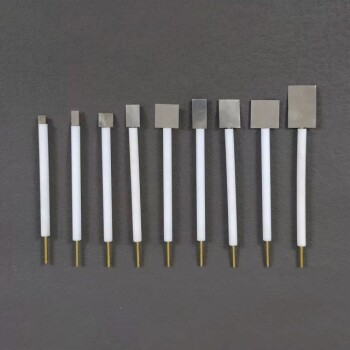
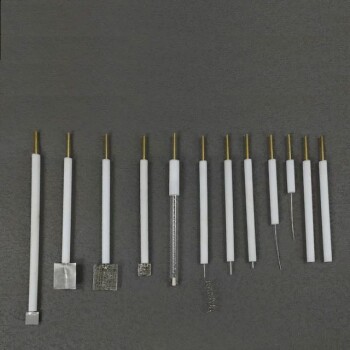
While Platinum is chemically ideal, its physical geometry matters. As noted in broader electrochemical principles, a Platinum plate is often preferred over a wire because a larger surface area reduces polarization resistance at the counter electrode itself.
The Risk of Geometry Mismatch
If the Platinum counter electrode is too small compared to the Zircaloy-2 sample, it may limit the current flow. This can bottleneck the system, leading to inaccurate data during high-current experiments.
Making the Right Choice for Your Goal
To ensure the validity of your Zircaloy-2 testing, consider the following recommendations based on your specific experimental needs:
- If your primary focus is signal purity: Prioritize high-purity Platinum to strictly eliminate any risk of ionic contamination in the electrolyte.
- If your primary focus is high-current testing: Ensure you use a Platinum plate rather than a wire to maximize surface area and minimize circuit resistance.
By using a high-purity Platinum counter electrode, you ensure that your results are a definitive measure of the Zircaloy-2 material, not an artifact of the testing equipment.
Summary Table:
| Feature | Role of Platinum in Zircaloy-2 Testing |
|---|---|
| Function | Completes the electrical circuit as the counter electrode |
| Key Property | Exceptional chemical inertness and high conductivity |
| Advantage | Prevents oxidative dissolution and ionic contamination |
| Data Impact | Ensures current measurements reflect only Zircaloy-2 behavior |
| Recommended Form | Platinum plate (to maximize surface area vs. wire) |
Elevate Your Electrochemical Research with KINTEK
Precision in Zircaloy-2 testing starts with the highest quality components. KINTEK specializes in premium laboratory equipment and consumables, providing the high-purity Platinum electrodes, electrolytic cells, and electrodes essential for noise-free electrochemical analysis.
Whether you are conducting corrosion studies or advanced battery research, our comprehensive portfolio—including high-temperature furnaces, hydraulic presses, and specialized ceramics—is designed to meet the rigorous demands of your lab.
Don't let equipment impurities compromise your data. Contact KINTEK today to discover how our high-performance solutions can enhance your research accuracy and efficiency!
References
- Takafumi Motooka, Masahiro Yamamoto. Effect of gamma radiolysis on pit initiation of zircaloy-2 in water containing sea salt. DOI: 10.1080/00223131.2014.907550
This article is also based on technical information from Kintek Solution Knowledge Base .
Related Products
- High Purity Gold Platinum Copper Iron Metal Sheets
- Platinum Sheet Electrode for Laboratory and Industrial Applications
- Platinum Sheet Electrode for Battery Lab Applications
- Platinum Auxiliary Electrode for Laboratory Use
- Rotating Platinum Disk Electrode for Electrochemical Applications
People Also Ask
- What general precaution should be taken regarding the electrolyte? Ensure Your Gold & Platinum Electrodes Stay Inert
- What are the guidelines for using gold or platinum sheets during an experiment? Ensure Precise and Reliable Results
- What is the purity of the gold and platinum sheets used for experiments? Ensuring 99.99% Purity for Reliable Results
- What substances should be avoided to prevent damage to gold or platinum sheets? Protect Your Precious Metals
- What are the main maintenance and care instructions for gold and platinum sheets? Ensure Longevity and Pristine Performance