Knowledge What is the role of the Teflon-lined autoclave in TiO2 synthesis? Unlock Precise Crystal Facet Control
Author avatar

Tech Team · Kintek Solution

Updated 17 hours ago

What is the role of the Teflon-lined autoclave in TiO2 synthesis? Unlock Precise Crystal Facet Control


The Teflon-lined autoclave serves as the primary reaction vessel for creating the controlled, high-pressure hydrothermal environment necessary to synthesize anatase TiO2 nanocrystals. By maintaining a constant temperature of 180 °C within a sealed system, it enables the precise, oriented growth of precursors along specific crystal axes to expose targeted facets.

The autoclave acts as an engineered containment system that combines high-pressure capability with extreme chemical resistance. It facilitates the critical interaction between precursors and mineralizers, enforcing the directionality required to selectively expose specific crystal surfaces, such as the {001} or {101} facets.

Creating the Hydrothermal Environment

The Necessity of High Pressure

The synthesis of specific anatase crystals requires conditions that cannot be achieved at standard atmospheric pressure. The autoclave creates a sealed environment where internal pressure builds significantly as the temperature rises to 180 °C.

Enforcing Oriented Growth

This enclosed, high-energy environment drives the reorganization of material. It forces the precursors to grow in a specific direction rather than randomly aggregating. This oriented growth is essential for defining the final shape and surface properties of the nanocrystals.

Role of the Teflon Liner

While the stainless steel exterior handles the structural stress of high pressure, the Teflon liner provides critical chemical isolation. Synthesizing these specific facets often requires aggressive mineralizers, such as Hydrogen Fluoride (HF) or Ammonium Chloride (NH4Cl). The liner protects the steel vessel from corrosion and prevents metallic contamination of the TiO2 crystals.

Controlling Crystal Facets

Targeting the 101 and 001 Surfaces

The primary purpose of using this setup is to manipulate the thermodynamics of crystal growth to expose specific faces. The autoclave environment allows researchers to selectively synthesize anatase TiO2-101 and TiO2-001 nanocrystals.

The Interaction with Mineralizers

In this sealed system, mineralizers function as shape-controlling agents. For example, the presence of HF or NH4Cl in the hydrothermal fluid stabilizes specific facets during growth. The autoclave ensures these volatile chemicals remain in contact with the TiO2 precursors throughout the reaction duration.

Implications for Catalysis

The precision provided by the autoclave is not merely structural; it is functional. By controlling whether the 101 or 001 facets are exposed, researchers can optimize the material for subsequent applications, such as the loading of gold catalysts.

Understanding the Trade-offs

Chemical Hazards vs. Facet Purity

To achieve high percentages of specific facets like the {001}, aggressive mineralizers (e.g., HF) are often required inside the autoclave. While the Teflon liner provides resistance, the handling of these toxic agents presents significant safety risks compared to milder synthesis routes.

Batch Processing Limitations

The autoclave process is inherently a batch operation. While it offers excellent control over crystallinity and facet orientation, scaling this high-pressure, high-temperature method for industrial mass production is more complex than continuous flow processes.

Making the Right Choice for Your Goal

The Teflon-lined autoclave is a tool for precision, specifically designed for tailoring material properties at the atomic level.

  • If your primary focus is Facet Selectivity: Prioritize the precise control of mineralizer concentration (HF/NH4Cl) and temperature stability, as the autoclave's enclosed environment amplifies these variables to define the crystal surface.
  • If your primary focus is Equipment Longevity: Ensure the Teflon liner is inspected regularly for deformation or permeation, as the aggressive chemical environment required for facet engineering attacks even resistant materials over time.

By leveraging the high-pressure containment of the autoclave, you convert simple precursors into highly engineered catalytic supports.

Summary Table:

Feature Role in TiO2 Nanocrystal Synthesis
Hydrothermal Environment Creates high-pressure conditions for oriented crystal growth at 180°C.
Teflon (PTFE) Liner Provides chemical resistance against aggressive mineralizers like HF or NH4Cl.
Facet Engineering Facilitates selective exposure of catalytic 101 and 001 surfaces.
Safety & Purity Prevents metallic contamination and contains volatile reagents under pressure.

Elevate Your Materials Synthesis with KINTEK

Precision at the atomic level requires uncompromising equipment. KINTEK specializes in high-performance laboratory solutions, providing the high-temperature high-pressure reactors and autoclaves essential for advanced hydrothermal synthesis.

Whether you are engineering specific crystal facets for catalysis or developing next-generation battery materials, our Teflon-lined vessels ensure chemical purity and structural integrity under the most demanding conditions.

Our value to you:

  • Advanced Reactor Systems: Durable autoclaves and pressure vessels designed for facet-specific TiO2 growth.
  • Comprehensive Lab Support: From crushing systems to ultra-low temperature freezers and ceramic crucibles.
  • Expertise in Extremes: Equipment built to handle aggressive mineralizers and high thermal stress.

Contact us today to optimize your research workflow!

References

  1. Bin Zhao, Xinwen Guo. Crystal-Plane-Dependent Guaiacol Hydrodeoxygenation Performance of Au on Anatase TiO2. DOI: 10.3390/catal13040699

This article is also based on technical information from Kintek Solution Knowledge Base .

Related Products

People Also Ask

Related Products

Customizable Laboratory High Temperature High Pressure Reactors for Diverse Scientific Applications

Customizable Laboratory High Temperature High Pressure Reactors for Diverse Scientific Applications

High-pressure lab reactor for precise hydrothermal synthesis. Durable SU304L/316L, PTFE liner, PID control. Customizable volume & materials. Contact us!

Stainless High Pressure Autoclave Reactor Laboratory Pressure Reactor

Stainless High Pressure Autoclave Reactor Laboratory Pressure Reactor

Discover the versatility of Stainless High Pressure Reactor - a safe and reliable solution for direct and indirect heating. Built with stainless steel, it can withstand high temperatures and pressures. Learn more now.

High Pressure Laboratory Autoclave Reactor for Hydrothermal Synthesis

High Pressure Laboratory Autoclave Reactor for Hydrothermal Synthesis

Discover the applications of Hydrothermal Synthesis Reactor - a small, corrosion-resistant reactor for chemical labs. Achieve rapid digestion of insoluble substances in a safe and reliable way. Learn more now.

Mini SS High Pressure Autoclave Reactor for Laboratory Use

Mini SS High Pressure Autoclave Reactor for Laboratory Use

Mini SS High Pressure Reactor - Ideal for medicine, chemical, and scientific research industries. Programmed heating temp and stirring speed, up to 22Mpa pressure.

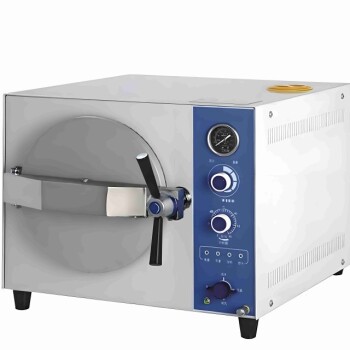
Laboratory High Pressure Horizontal Autoclave Steam Sterilizer for Lab Use

Laboratory High Pressure Horizontal Autoclave Steam Sterilizer for Lab Use

The horizontal autoclave steam sterilizer adopts the gravity displacement method to remove the cold air in the inner chamber, so that the inner steam and cold air content is less, and the sterilization is more reliable.

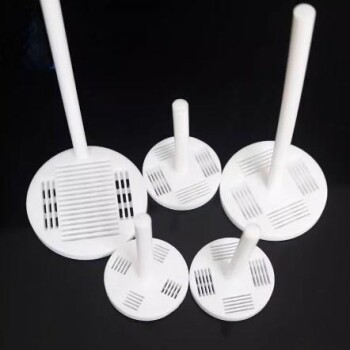
Custom PTFE Teflon Parts Manufacturer for PTFE Mesh F4 Sieve

Custom PTFE Teflon Parts Manufacturer for PTFE Mesh F4 Sieve

PTFE mesh sieve is a specialized test sieve designed for particle analysis in various industries, featuring a non-metallic mesh woven from PTFE filament. This synthetic mesh is ideal for applications where metal contamination is a concern . PTFE sieves are crucial for maintaining the integrity of samples in sensitive environments, ensuring accurate and reliable results in particle size distribution analysis.

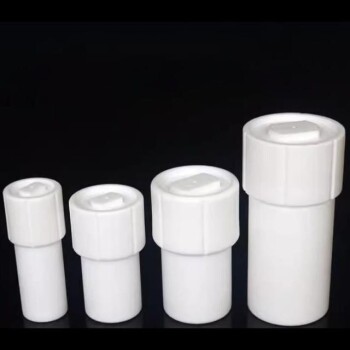
Custom PTFE Teflon Parts Manufacturer for PTFE Measuring Cylinder 10/50/100ml

Custom PTFE Teflon Parts Manufacturer for PTFE Measuring Cylinder 10/50/100ml

PTFE measuring cylinder are a rugged alternative to traditional glass cylinders. They are chemically inert over a wide temperature range (up to 260º C), have excellent corrosion resistance and maintain a low coefficient of friction, ensuring ease of use and cleaning.

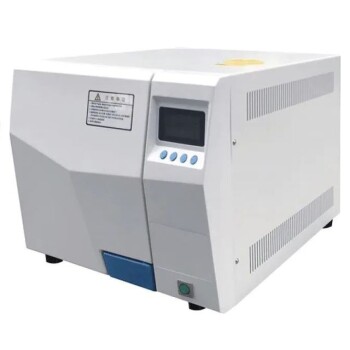
Desktop Fast Laboratory Autoclave Sterilizer 35L 50L 90L for Lab Use

Desktop Fast Laboratory Autoclave Sterilizer 35L 50L 90L for Lab Use

The desktop fast steam sterilizer is a compact and reliable device used for rapid sterilization of medical, pharmaceutical, and research items. It efficiently sterilizes surgical instruments, glassware, medicines, and resistant materials, making it suitable for various applications.

Custom PTFE Teflon Parts Manufacturer Grinding Bowl

Custom PTFE Teflon Parts Manufacturer Grinding Bowl

PTFE is renowned for its exceptional chemical resistance, thermal stability, and low friction properties, making it a versatile material in various industries. The PTFE grinding bowl, specifically, finds applications where these properties are crucial.

Custom PTFE Teflon Parts Manufacturer for Magnetic Stirring Bar

Custom PTFE Teflon Parts Manufacturer for Magnetic Stirring Bar

The PTFE magnetic stirring bar, made from high-quality PTFE, offers exceptional resistance to acids, alkalis, and organic solvents, coupled with high-temperature stability and low friction. Ideal for laboratory use, these stirring bars are compatible with standard flask ports, ensuring stability and safety during operations.

Custom PTFE Teflon Parts Manufacturer for Acid and Alkali Resistant Chemical Powder Material Scoops

Custom PTFE Teflon Parts Manufacturer for Acid and Alkali Resistant Chemical Powder Material Scoops

Known for its excellent thermal stability, chemical resistance and electrical insulating properties, PTFE is a versatile thermoplastic material.

Visual High-Pressure Reactor for In-Situ Observation

Visual High-Pressure Reactor for In-Situ Observation

The visual high-pressure reactor uses transparent sapphire or quartz glass, maintaining high strength and optical clarity under extreme conditions for real-time reaction observation.

Square Bidirectional Pressure Mold for Lab Use

Square Bidirectional Pressure Mold for Lab Use

Discover precision in molding with our Square Bidirectional Pressure Mold. Ideal for creating diverse shapes and sizes, from squares to hexagons, under high pressure and uniform heating. Perfect for advanced material processing.

Special Shape Press Mold for Lab

Special Shape Press Mold for Lab

Discover high-pressure special shape press molds for diverse applications, from ceramics to automotive parts. Ideal for precise, efficient molding of various shapes and sizes.

Small Vacuum Heat Treat and Tungsten Wire Sintering Furnace

Small Vacuum Heat Treat and Tungsten Wire Sintering Furnace

The small vacuum tungsten wire sintering furnace is a compact experimental vacuum furnace specially designed for universities and scientific research institutes. The furnace features a CNC welded shell and vacuum piping to ensure leak-free operation. Quick-connect electrical connections facilitate relocation and debugging, and the standard electrical control cabinet is safe and convenient to operate.

Round Bidirectional Press Mold for Lab

Round Bidirectional Press Mold for Lab

The round bidirectional press mold is a specialized tool used in high-pressure molding processes, particularly for creating intricate shapes from metal powders.

915MHz MPCVD Diamond Machine Microwave Plasma Chemical Vapor Deposition System Reactor

915MHz MPCVD Diamond Machine Microwave Plasma Chemical Vapor Deposition System Reactor

915MHz MPCVD Diamond Machine and its multi-crystal effective growth, the maximum area can reach 8 inches, the maximum effective growth area of single crystal can reach 5 inches. This equipment is mainly used for the production of large-size polycrystalline diamond films, the growth of long single crystal diamonds, the low-temperature growth of high-quality graphene, and other materials that require energy provided by microwave plasma for growth.

Double Layer Five-Port Water Bath Electrolytic Electrochemical Cell

Double Layer Five-Port Water Bath Electrolytic Electrochemical Cell

Experience optimal performance with our Water Bath Electrolytic Cell. Our double-layer, five-port design boasts corrosion resistance and longevity. Customizable to fit your specific needs. View specs now.

Microwave Plasma Chemical Vapor Deposition MPCVD Machine System Reactor for Lab and Diamond Growth

Microwave Plasma Chemical Vapor Deposition MPCVD Machine System Reactor for Lab and Diamond Growth

Get high-quality diamond films with our Bell-jar Resonator MPCVD machine designed for lab and diamond growth. Discover how Microwave Plasma Chemical Vapor Deposition works for growing diamonds using carbon gas and plasma.

Split Chamber CVD Tube Furnace with Vacuum Station Chemical Vapor Deposition System Equipment Machine

Split Chamber CVD Tube Furnace with Vacuum Station Chemical Vapor Deposition System Equipment Machine

Efficient split chamber CVD furnace with vacuum station for intuitive sample checking and quick cooling. Up to 1200℃ max temperature with accurate MFC mass flowmeter control.


Leave Your Message