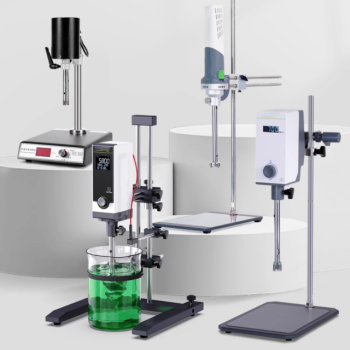
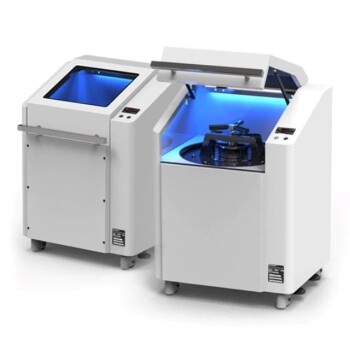
The regulation of shaker speed is the critical variable that bridges hydrodynamic force and surface chemistry. In the biosorption phase, a laboratory shaker provides the necessary mechanical agitation to ensure consistent contact between the Na₂PdCl₄ solution and microbial cells. This motion drives convective diffusion, ensuring palladium ions are delivered efficiently to the cell surface rather than relying on slow, passive diffusion.
Core Takeaway
The laboratory shaker is not merely mixing fluids; it is actively determining the quality of the final nanomaterial. By maximizing convective diffusion, the shaker ensures a uniform distribution of palladium ions across the carrier’s binding sites, which directly dictates the dispersion and loading efficiency of the resulting nanoparticles.
The Mechanism of Agitation
Driving Convective Diffusion
In a static solution, ions move slowly via passive diffusion. This is insufficient for efficient biosorption.
The laboratory shaker introduces convective diffusion efficiency. By physically moving the fluid, the shaker minimizes the boundary layer surrounding the microbial cells, forcing the palladium ions (from the Na₂PdCl₄ solution) into immediate proximity with the cell walls.
Ensuring Homogeneity
Without continuous agitation, concentration gradients form. This means some cells would be exposed to high concentrations of palladium while others see very little.
The shaker eliminates these gradients. It maintains a homogeneous suspension where every microbial cell has equal access to the palladium ions in the solution.
Chemical Implications at the Cell Surface
Targeting Functional Groups
The success of biosorption relies on the interaction between palladium ions and specific chemical anchors on the cell walls.
These anchors are primarily nitrogen-containing and sulfur-containing functional groups. The shaker's agitation ensures that ions are constantly presented to these active sites, maximizing the probability of a successful binding event.
Controlling Particle Dispersion
The way ions land on the cell surface determines the structure of the final material.
If mixing is poor, ions may cluster in specific areas. Thorough agitation ensures a uniform distribution across the binding sites. This uniformity is the defining factor for the final dispersion of palladium nanoparticles on the carrier.
Understanding the Trade-offs
Optimization vs. Aggression
While the primary reference highlights the necessity of "increasing convective diffusion," there is a balance to be struck in practical application.
The Risk of Under-Agitation
If the speed is too low, the system relies on diffusion rather than convection. This leads to uneven loading, where some cells are saturated and others are empty, resulting in a poor-quality, inconsistent catalyst.
The Risk of Shear Stress
While not explicitly detailed in the reference, a technical advisor must note that "microbial cells" are biological entities. Extremely high speeds can generate shear forces capable of rupturing cell walls, potentially releasing intracellular components that could contaminate the biosorption process.
Making the Right Choice for Your Goal
To optimize the biosorption of palladium ions, align your shaker settings with your specific objectives:
- If your primary focus is Maximum Loading: Ensure the speed is sufficient to suspend all cells fully, exposing every available nitrogen and sulfur functional group to the solution.
- If your primary focus is Nanoparticle Uniformity: Prioritize continuous, steady agitation to prevent localized ion concentration gradients that lead to particle clustering.
Ultimately, the shaker speed is a control parameter that directly translates the mechanical energy of mixing into the structural quality of your palladium biocatalyst.
Summary Table:
| Factor | Role in Biosorption Phase | Impact on Final Material |
|---|---|---|
| Convective Diffusion | Drives ions to microbial cell surfaces | Increases loading efficiency |
| Fluid Homogeneity | Eliminates concentration gradients | Ensures uniform nanoparticle dispersion |
| Functional Group Access | Maximizes contact with N & S anchors | Optimizes binding site utilization |
| Speed Optimization | Balances agitation vs. shear stress | Protects cell integrity and catalyst quality |
Elevate Your Material Research with KINTEK Precision
At KINTEK, we understand that the quality of your palladium biocatalyst depends on the precision of your laboratory environment. Whether you are optimizing biosorption, synthesizing nanomaterials, or conducting complex chemical reactions, our high-performance laboratory shakers, homogenizers, and cooling solutions provide the stability and control you need for reproducible results.
From rotary and vacuum furnaces for material processing to hydraulic presses for sample preparation, KINTEK offers a comprehensive range of equipment tailored for advanced research labs. Our portfolio also features high-temperature high-pressure reactors, electrolytic cells, and essential consumables like PTFE products and ceramics.
Ready to optimize your lab's performance? Contact us today to discover how KINTEK's expert-grade equipment can enhance your research outcomes and streamline your workflow.
References
- Jingwen Huang, Yili Liang. The Effect of a Hydrogen Reduction Procedure on the Microbial Synthesis of a Nano-Pd Electrocatalyst for an Oxygen-Reduction Reaction. DOI: 10.3390/min12050531
This article is also based on technical information from Kintek Solution Knowledge Base .
Related Products
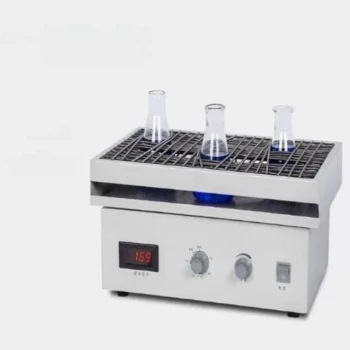
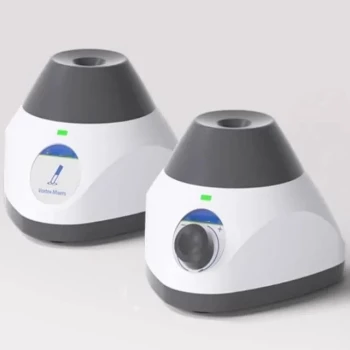
- Laboratory Multifunctional Small Speed-Adjustable Horizontal Mechanical Shaker for Lab
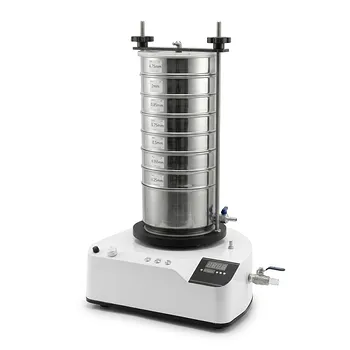
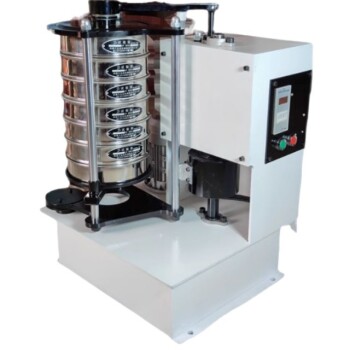
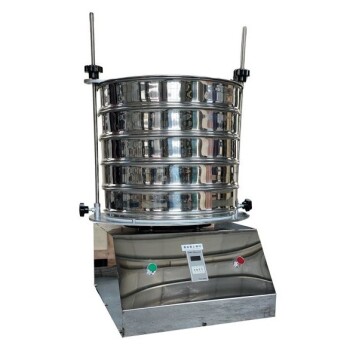
- Laboratory Vibratory Sieve Shaker Machine for Dry and Wet Three-Dimensional Sieving
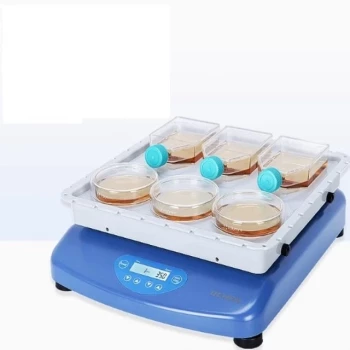
- Laboratory Oscillating Orbital Shaker
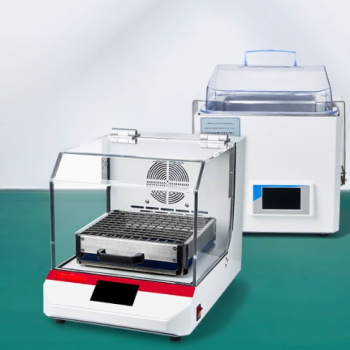
- Shaking Incubators for Diverse Laboratory Applications
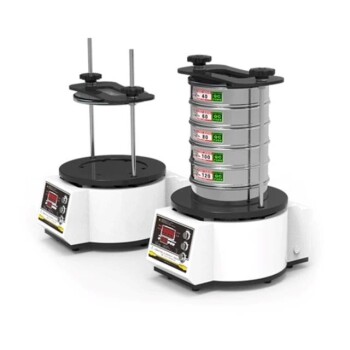
- Laboratory Vibratory Sieve Shaker Machine Slap Vibrating Sieve
People Also Ask
- How do static culture and shaking culture affect the morphology of BC? Optimize Lab Shaker Results
- What is the role of a laboratory shaker in silane sol preparation? Master Uniform Aramid Fabric Coating
- Why is a laboratory shaker required for continuous 24-hour catalyst treatment? Achieve Deep Uniform Impregnation
- What is the function of a laboratory shaker in evaluating Fe-C@C nanoparticles? Optimize Methylene Blue Adsorption
- How do laboratory shakers or stirrers influence the efficiency of hydrogen production during dark fermentation?