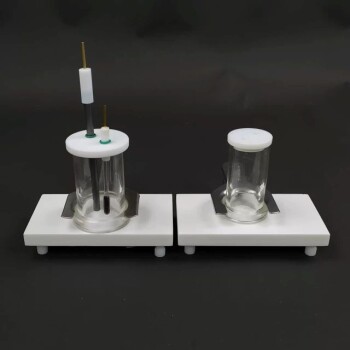
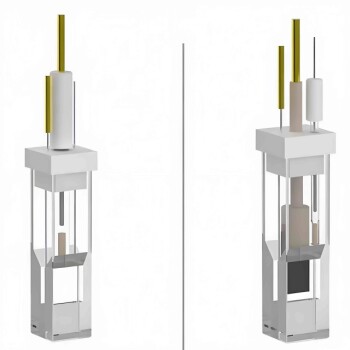
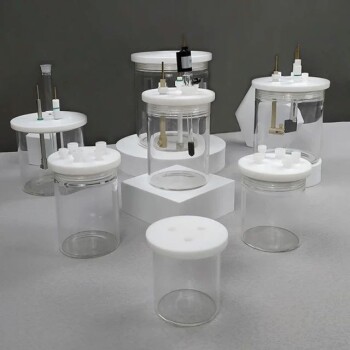
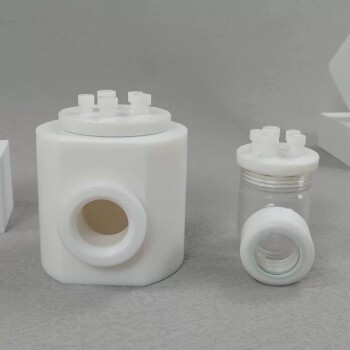
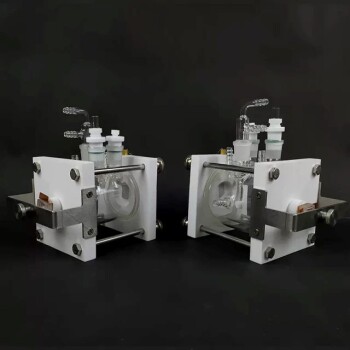
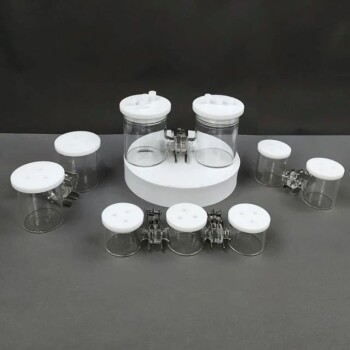
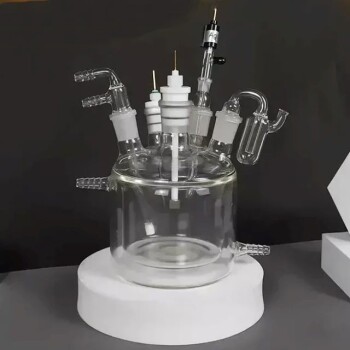
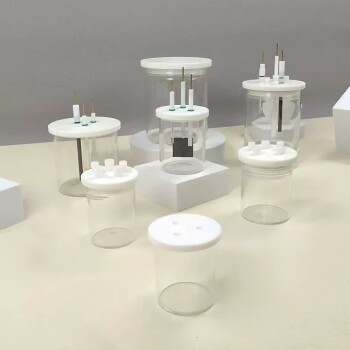
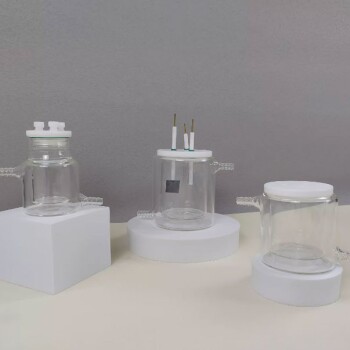
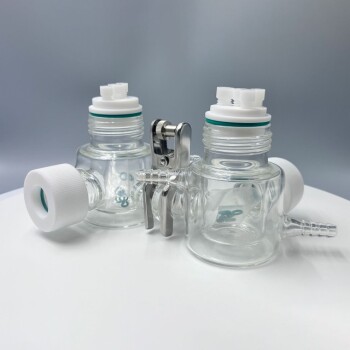
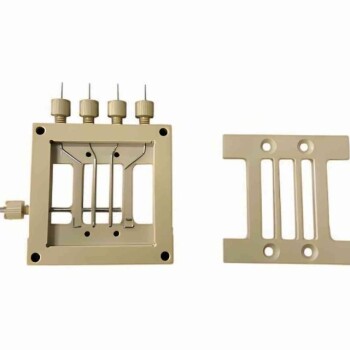
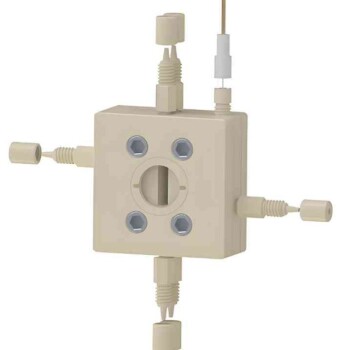
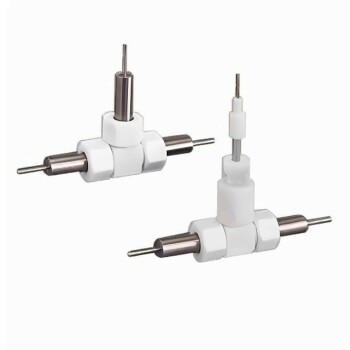
The standard volume is 20 ml. This is the typical capacity for an in-situ Raman electrolytic cell designed for a standard three-electrode system. While this 20ml specification is the industry baseline, manufacturers frequently offer customization options to adjust the size and specifications to fit specific experimental constraints.
The 20ml standard serves as a general-purpose baseline for ensuring stable electrochemical measurements, but the physical geometry of the cell is often adjustable to accommodate scarce electrolytes or unique electrode configurations.
System Specifications and Configuration
The Standard Volume Context
The 20ml volume is optimized for the widely used three-electrode configuration.
This capacity ensures there is sufficient electrolyte to submerge the counter and reference electrodes without creating a crowded environment that interferes with the optical path of the Raman laser.
Port Dimensions and Access
The cell's physical structure is defined by specific openings designed to accommodate standard probes and inputs.
For the electrode section, the cell typically features three openings with a diameter of Φ6.2mm.
For gas and liquid management (inlets and outlets), there are generally four openings with a diameter of Φ3.2mm.
Electrode Compatibility
The standard volume is designed to house a specific electrode arrangement.
This typically includes a micro platinum sheet electrode clamp (working electrode), a platinum wire ring (counter electrode), and an Ag/AgCl electrode (reference electrode).
The Purpose of This Geometry
Real-Time Surface Analysis
The volume and geometry are engineered to enable real-time Raman spectroscopy detection.
This allows researchers to analyze substances directly on the electrode surface during electrolysis, such as observing the reduction of metal ions or the formation of deposition layers.
Electrolyte Monitoring
Beyond surface analysis, the cell design permits the detection of changes within the electrolyte itself.
The multiple Φ3.2mm openings facilitate the flow of gas and liquid, ensuring the chemical environment remains dynamic and measurable throughout the experiment.
Understanding the Trade-offs
Sample Volume vs. Cost
While 20ml is standard, it may be excessive for experiments involving expensive ionic liquids or scarce catalysts.
Using a standard cell for high-value electrolytes can lead to unnecessary waste.
Customization vs. Standardization
Standard 20ml cells are generally readily available and calibrated for standard probes.
Requesting custom sizes to reduce volume or alter port numbers allows for precision but may introduce lead times or require non-standard electrode fittings.
Making the Right Choice for Your Goal
To ensure your equipment matches your experimental needs, evaluate your resources against the standard specifications.
- If your primary focus is standard aqueous electrochemistry: The 20ml standard cell is the optimal choice, providing ample volume for stable readings and compatibility with standard Φ6.2mm electrode probes.
- If your primary focus is conserving expensive electrolytes: You should request a customized cell with a reduced volume to minimize sample consumption while retaining the necessary optical ports.
Select the cell geometry that balances your analytical requirements with the practical constraints of your material resources.
Summary Table:
| Specification | Standard Detail |
|---|---|
| Standard Volume | 20 ml |
| Electrode Openings | 3 x Φ6.2mm |
| Gas/Liquid Ports | 4 x Φ3.2mm |
| Electrode System | Standard Three-Electrode (Working, Counter, Reference) |
| Key Applications | Real-time surface analysis, electrolyte monitoring, metal ion reduction |
| Customization | Available for volume reduction or specialized geometries |
Elevate Your Electrochemical Spectroscopy with KINTEK
Precision in volume and geometry is critical for successful real-time Raman analysis. Whether you require our standard 20ml in-situ Raman electrolytic cell or a custom-engineered solution to conserve expensive electrolytes, KINTEK delivers the specialized tools you need.
Our extensive portfolio supports every stage of your research, from electrolytic cells and electrodes to high-temperature furnaces, crushing and milling systems, and high-pressure reactors. We empower laboratories worldwide with high-quality consumables like PTFE products and ceramics, alongside advanced battery research tools.
Ready to optimize your experimental setup? Contact KINTEK today to discuss our customization options and find the perfect fit for your laboratory's unique requirements.
Related Products
- Electrolytic Electrochemical Cell for Coating Evaluation
- Thin-Layer Spectral Electrolysis Electrochemical Cell
- Super Sealed Electrolytic Electrochemical Cell
- Customizable PEM Electrolysis Cells for Diverse Research Applications
- Electrolytic Electrochemical Cell with Five-Port
People Also Ask
- What is the volume range of the coating evaluation electrolytic cell? A Guide to Choosing the Right Size
- How does the design of an electrochemical electrolytic cell influence the coating uniformity? Optimize Your Catalysts
- What is the correct shutdown and disassembly procedure after an experiment? Ensure Safety and Protect Your Equipment
- How do the electrochemical cell and three-electrode testing system collaborate? Optimize Zinc Anode Deposition Control
- What is the difference between a voltaic cell and an electrochemical cell? Understand the Two Types of Energy Conversion