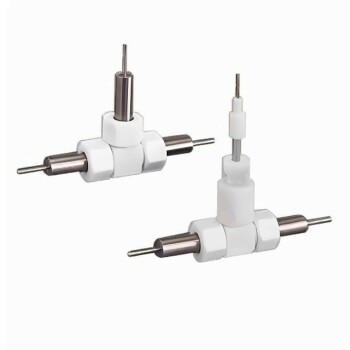
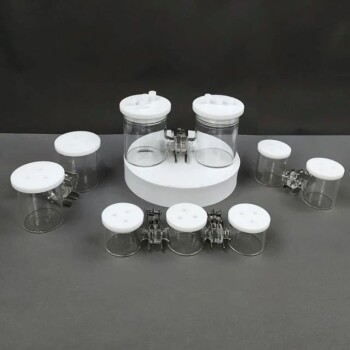
Proper preparation of a thin-layer spectroelectrochemical cell is a multi-step process that prioritizes optical clarity and electrochemical stability. You must begin by inspecting all components for physical damage, followed by a rigorous cleaning of the cell body using a suitable solvent and distilled water. Once dried, the specific working, counter, and reference electrodes must be securely installed, and the electrolyte solution must be prepared with necessary pre-treatments, such as de-oxygenation, before introduction into the cell.
Success in spectroelectrochemistry relies heavily on the purity of the optical path and the stability of the electrical interface. Rigorous cleaning and precise electrode alignment prevent signal interference and protect the delicate integrated ground quartz structure.
Component Inspection and Cleaning
Verifying Physical Integrity
Before any chemical work begins, you must visually inspect the cell components for cracks or chips. Because the cell body is manufactured from integrated ground quartz to ensure four-sided light transmission, even minor damage can disrupt optical measurements.
The Cleaning Protocol
To ensure a baseline free of contaminants, clean the cell body with a solvent appropriate for your specific experiment to remove organic impurities. Follow this immediately by rinsing with distilled water.
Drying and Final Prep
After rinsing, the cell must be thoroughly dried. Any residual solvent or water can alter the concentration of your electrolyte or introduce background noise in your spectroscopic data.
Electrode Configuration and Installation
Selecting the Correct Components
Ensure you are using the specific electrodes designed for this cell architecture. This typically requires a Platinum (Pt) mesh working electrode (6 x 7mm), a Platinum (Pt) wire counter electrode (0.5mm diameter), and a Silver/Silver Chloride (Ag/AgCl) reference electrode (3.8mm diameter).
Secure Installation
Install the working, counter, and reference electrodes securely into the cell. Loose connections can lead to noise in the electrochemical signal or a complete loss of circuit continuity during the experiment.
Electrolyte Preparation and Filling
Ensuring Chemical Purity
Prepare your electrolyte using high-purity chemical reagents and deionized or distilled water. Impurities in the reagents can cause side reactions that obscure the electrochemical behavior of your analyte.
Pre-treatment Processes
Perform necessary pre-treatments on the electrolyte solution before filling the cell. The most critical step is often de-oxygenation, which prevents oxygen reduction currents from interfering with your data.
Managing Volume Limits
Pour the prepared electrolyte into the electrolytic cell carefully. You must ensure the volume does not exceed the maximum capacity to prevent spills or contact with non-conductive parts of the lid assembly.
Common Pitfalls and Safety Trade-offs
Polarity and Voltage Risks
It is essential to verify that the anode and cathode are correctly connected to prevent reverse polarity. Furthermore, applied voltage must be strictly controlled; excessive voltage can cause electrolyte decomposition or physical damage to the electrodes.
Handling Integrated Quartz
The cell utilizes integrated ground quartz to avoid adhesives and ensure high purity. While this improves chemical resistance and optical quality, it makes the cell body mechanically fragile compared to composite alternatives, requiring extreme care during cleaning and assembly.
Ensuring Experimental Success
To maximize the quality of your data and the lifespan of your equipment, tailor your final check to your specific goals:
- If your primary focus is high-sensitivity spectroscopy: Prioritize the cleaning of the quartz body and the use of high-purity reagents to minimize optical background noise.
- If your primary focus is electrochemical kinetics: Ensure the electrodes are securely fastened and the electrolyte is thoroughly de-oxygenated to prevent diffusion-limited oxygen interference.
By methodically verifying component integrity and solution purity, you ensure that your results reflect the true properties of your analyte rather than experimental artifacts.
Summary Table:
| Preparation Step | Key Action | Critical Requirement |
|---|---|---|
| Component Inspection | Visual check for cracks/chips | Ensure integrity of integrated ground quartz |
| Cleaning & Drying | Solvent rinse + distilled water | Eliminate organic impurities and baseline noise |
| Electrode Setup | Pt mesh, Pt wire, and Ag/AgCl | Secure installation for stable electrical signal |
| Electrolyte Prep | High-purity reagents & de-oxygenation | Prevent side reactions and oxygen interference |
| Final Assembly | Polarity & voltage verification | Avoid reverse polarity and cell decomposition |
Elevate Your Spectroelectrochemistry with KINTEK
Precision in the lab starts with high-quality equipment. At KINTEK, we specialize in providing researchers with the advanced tools needed for complex analysis, including high-purity electrolytic cells, electrodes, and specialized consumables like PTFE products and ceramics. Whether you are working on battery research, material synthesis, or electrochemical kinetics, our comprehensive range of high-temperature furnaces, crushing systems, and hydraulic presses ensures your experimental integrity.
Ready to achieve superior optical clarity and electrochemical stability?
Contact our technical experts today to find the perfect thin-layer cell configuration for your research needs!
Related Products
- Thin-Layer Spectral Electrolysis Electrochemical Cell
- Side Window Optical Electrolytic Electrochemical Cell
- H-Type Double-Layer Optical Electrolytic Electrochemical Cell with Water Bath
- Double Layer Five-Port Water Bath Electrolytic Electrochemical Cell
- Double-Layer Water Bath Electrolytic Electrochemical Cell
People Also Ask
- What are the recommended post-experiment procedures for cleaning and storing the thin-layer spectroelectrochemical cell?
- What operational environments and sealing options are available for the thin-layer spectroelectrochemical cell?
- For what types of systems, temperature ranges, and sealing configurations is the thin-layer spectroelectrochemical cell designed? Ideal for Aqueous and Non-Aqueous Analysis
- What are the necessary preparation steps before using a thin-layer spectroelectrochemical cell? A Guide to Reliable Results
- What are the physical dimensions of the thin-layer spectroelectrochemical cell body and its slit? Key Specs for Your Lab