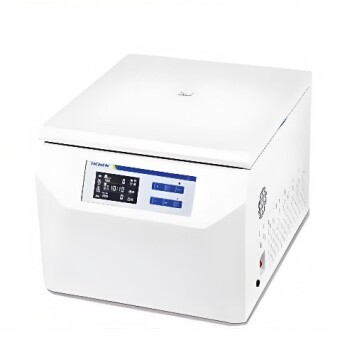
High-pressure reactors serve as the fundamental control chambers in the solvo-hydrothermal preparation of catalytic thin films. By creating a sealed, high-temperature, and high-pressure environment, they enable the use of organic solvents to drive chemical reactions that are impossible under standard atmospheric conditions. This extreme environment is the key mechanism for synthesizing highly active nanocatalytic materials with specific structural properties.
The Core Insight The primary function of the high-pressure reactor is not just to contain the reaction, but to fundamentally alter the behavior of the solvent and precursors. This enables precise regulation of grain size, geometric morphology, and crystalline phases, which directly dictates the final catalytic performance of the material.
The Mechanics of the Environment
Establishing Extreme Physical Conditions
The reactor functions as a closed system capable of reaching temperatures significantly above the boiling point of the solvent.
Because the system is sealed, this heat generation creates autogenous pressure.
This combination allows organic solvents to operate in subcritical or supercritical states, enhancing their ability to dissolve reactants and facilitate crystal growth.
Controlling Diffusion Rates
Within this pressurized environment, the reactor allows for the precise control of diffusion rates.
Regulating how fast reactants move and interact is essential for uniform particle growth.
This control ensures that the synthesized nanocatalysts achieve high uniformity, avoiding the irregularities common in open-system synthesis.
Regulating Material Properties
Determining Geometric Morphology
The high-pressure environment allows engineers to dictate the physical shape of the growing particles.
By manipulating the temperature and pressure, specific geometric morphologies can be achieved, such as nanorods, nanocubes, or octahedra.
This is critical because different shapes expose different crystal planes, which can significantly enhance the interaction between the support material and the active metal components.
Controlling Crystalline Phases
One of the reactor's most vital roles is determining the crystalline phase of the material.
For example, in titanium dioxide synthesis, the reactor conditions determine whether the material forms the anatase or rutile phase.
Achieving the correct phase is non-negotiable, as it defines the material's photocatalytic activity and stability.
Facilitating In-Situ Growth
The reactor accelerates reaction rates, facilitating the in-situ growth of secondary nanostructures on substrate surfaces.
This is particularly useful for loading active substances, such as semiconductor nanoparticles, onto nanofibers or thin films.
The high-pressure conditions ensure these substances are uniformly distributed and securely loaded, preventing detachment during catalytic operations.
Critical Considerations and Constraints
The Necessity of Parameter Precision
While high-pressure reactors offer control, they also demand exactitude; the environment is highly sensitive to parameter changes.
Slight deviations in temperature or pressure distribution can lead to inconsistent phase compositions or "mixed" morphologies.
Therefore, the quality of the final thin film is entirely dependent on the reactor's ability to maintain a constant-temperature and pressure distribution throughout the entire reaction timeline.
Phase Purity vs. Reaction Speed
The accelerated reaction rates provided by high pressure must be balanced against the need for orderly crystallization.
If the reaction proceeds too quickly without adequate diffusion control, the material may suffer from defects or low crystallinity.
Success requires tuning the reactor to find the "sweet spot" where accelerated dissolution leads to high crystallinity and phase purity rather than chaotic precipitation.
Making the Right Choice for Your Goal
To maximize the effectiveness of a high-pressure reactor in your specific application, align your parameters with your desired material outcome:
- If your primary focus is Maximizing Catalytic Activity: Prioritize temperature control to enforce specific crystalline phases (e.g., pure anatase TiO2) that are known for higher reactivity.
- If your primary focus is Structural Stability: Focus on pressure regulation to control diffusion rates, ensuring secure, uniform loading of particles onto the thin film substrate.
- If your primary focus is Surface Selectivity: Manipulate the reaction time and pressure to grow specific geometric morphologies (like nanocubes) that expose the most active crystal planes.
Mastering the pressure and temperature variables within the reactor is the definitive step in transitioning from theoretical chemistry to high-performance catalytic application.
Summary Table:
| Key Reactor Function | Impact on Material Synthesis | Primary Benefit |
|---|---|---|
| Environment Control | Enables sub/supercritical states | Enhances solubility and facilitates crystal growth |
| Diffusion Regulation | Controls particle growth speed | Ensures high uniformity and prevents irregularities |
| Morphology Tuning | Dictates geometric shapes | Exposes active crystal planes for better catalysis |
| Phase Selection | Determines crystalline structure | Defines material stability and photocatalytic activity |
| In-Situ Growth | Securely loads active substances | Prevents catalyst detachment during operations |
Elevate Your Catalytic Research with KINTEK
Precision is the difference between chaotic precipitation and high-performance thin films. KINTEK specializes in advanced laboratory equipment, providing the high-temperature high-pressure reactors and autoclaves essential for mastering the solvo-hydrothermal method.
Our comprehensive portfolio is designed to meet the rigorous demands of material science, featuring:
- Advanced Reactors: High-pressure reactors and autoclaves for precise phase and morphology control.
- Thermal Solutions: Muffle, tube, vacuum, CVD, and PECVD furnaces.
- Sample Prep: Precision crushing, milling, and hydraulic pellet presses.
- Lab Essentials: Specialized electrolytic cells, electrodes, and high-purity ceramics.
Ready to achieve superior crystallinity and phase purity in your research? Contact KINTEK Experts Today to find the perfect equipment solution for your laboratory!
References
- Suzan Biran Ay, Nihan Kosku Perkgöz. Nanotechnological Advances in Catalytic Thin Films for Green Large‐Area Surfaces. DOI: 10.1155/2015/257547
This article is also based on technical information from Kintek Solution Knowledge Base .
Related Products
- Customizable Laboratory High Temperature High Pressure Reactors for Diverse Scientific Applications
- Customizable High Pressure Reactors for Advanced Scientific and Industrial Applications
- Stainless High Pressure Autoclave Reactor Laboratory Pressure Reactor
- Mini SS High Pressure Autoclave Reactor for Laboratory Use
- High Pressure Laboratory Autoclave Reactor for Hydrothermal Synthesis
People Also Ask
- How do high-pressure and high-temperature reactors ensure the effective treatment of lignocellulosic wastewater in WAO?
- What equipment is required for high-pressure high-temperature reactions? Master Extreme Chemistry Safely
- How do you control high pressure in a reactor? A Guide to Safe & Stable Operation
- How does initial oxygen pressure affect the wet oxidation of pharmaceutical sludge? Master Your Oxidation Depth
- Why is argon better than nitrogen for inert atmosphere? Ensure Absolute Reactivity & Stability