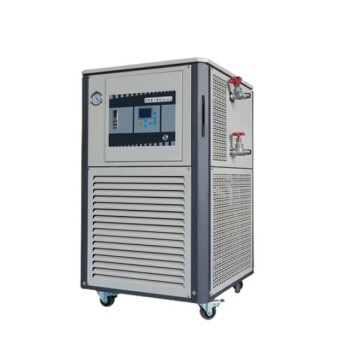
High-temperature reactors act as the central processing vessel in the Kroll process, facilitating the critical reduction of zirconium tetrachloride (ZrCl4) vapor using magnesium. By maintaining precise thermal conditions and a controlled chemical environment, these reactors convert raw chemical inputs into high-purity zirconium sponge. This specific control is essential for ensuring the resulting metal possesses the ductility and plasticity required for industrial and nuclear applications.
The reactor’s primary function is to provide the exact environment needed to strip chlorine from zirconium using magnesium. This precision is what differentiates a usable, ductile metal capable of being shaped from a brittle, low-quality byproduct.
The Mechanism of Chemical Reduction
Facilitating Vapor-Phase Interaction
The reactor is designed to handle zirconium tetrachloride in a vapor state. It creates the physical space where this vapor can effectively interact with magnesium, the reducing agent.
Driving the Reaction
Inside the vessel, the high temperatures drive the chemical reaction that separates zirconium from chlorine. This process, known as reduction, is the fundamental step in transforming chemical compounds into metallic zirconium.
Precision Control and Environment
Exact Temperature Regulation
The success of the Kroll process relies on precise temperature control. The reactor maintains specific thermal levels that are high enough to sustain the reaction but controlled enough to prevent adverse effects on the metal's structure.
Specific Chemical Atmosphere
Beyond heat, the reactor maintains a strict chemical reduction environment. This isolation ensures that the reduction proceeds efficiently without the introduction of external variables that could destabilize the process.
Ensuring Material Quality
Achieving High Purity
The controlled environment within the reactor is directly responsible for the high purity of the final product. By strictly managing the reduction parameters, the reactor minimizes the inclusion of impurities in the zirconium sponge.
Guaranteeing Ductility and Plasticity
Purity is the precursor to performance. The reactor's ability to produce pure zirconium ensures the metal retains its ductility and plasticity. This makes the sponge suitable for complex downstream processing, including nuclear-grade fabrication.
Understanding the Operational Constraints
Dependency on Precision
The system is intolerant of deviation. Because the reactor must provide a "precise" environment, any fluctuation in temperature or atmospheric control risks compromising the ductility of the entire batch.
Complexity of Environment Maintenance
Creating a specific chemical reduction environment requires robust engineering. The reactor must simultaneously contain volatile vapors and maintain high heat, making the system mechanically complex to operate effectively.
Implications for Material Production
To evaluate the effectiveness of a Kroll process setup, consider your end-use requirements for the zirconium sponge.
- If your primary focus is Nuclear-Grade Application: The reactor's ability to maintain a contaminant-free environment is the critical factor for success.
- If your primary focus is Industrial Fabrication: The precision of temperature control is paramount to ensuring the metal is plastic enough to be worked without fracturing.
The high-temperature reactor is the definitive checkpoint that ensures raw zirconium chloride becomes a pliable, high-performance metal.
Summary Table:
| Feature | Role in Kroll Process | Impact on Zirconium Quality |
|---|---|---|
| Thermal Control | Regulates reduction temperature | Ensures optimal crystal structure and ductility |
| Vapor Management | Facilitates ZrCl4 and Magnesium interaction | Maximizes conversion efficiency and purity |
| Atmosphere Control | Maintains a strict reduction environment | Prevents contamination and brittle byproducts |
| Structural Support | Acts as the central processing vessel | Enables consistent, high-volume material output |
Elevate Your Advanced Material Production with KINTEK
Precision is the difference between brittle byproducts and high-purity, ductile zirconium. At KINTEK, we specialize in the high-performance laboratory equipment essential for complex chemical processes. Our industry-leading high-temperature high-pressure reactors and autoclaves provide the exact thermal and atmospheric control required for the Kroll process and other critical reduction reactions.
Whether you are focused on nuclear-grade fabrication or industrial material research, KINTEK offers a comprehensive range of solutions, including:
- Advanced Furnaces: Muffle, tube, vacuum, and atmosphere-controlled systems.
- Precision Processing: Crushing, milling, and hydraulic presses for material preparation.
- Specialized Labware: High-purity ceramics, crucibles, and PTFE products.
Ready to optimize your lab’s efficiency and product purity? Contact our experts today to discover how KINTEK’s specialized tools can transform your research and production outcomes.
References
- Afrin Mehjabeen, Ma Qian. Zirconium Alloys for Orthopaedic and Dental Applications. DOI: 10.1002/adem.201800207
This article is also based on technical information from Kintek Solution Knowledge Base .
Related Products
- Customizable Laboratory High Temperature High Pressure Reactors for Diverse Scientific Applications
- High Temperature Constant Temperature Heating Circulator Water Bath Chiller Circulator for Reaction Bath
- High Pressure Laboratory Autoclave Reactor for Hydrothermal Synthesis
- 5L Heating Chilling Circulator Cooling Water Bath Circulator for High and Low Temperature Constant Temperature Reaction
- 100L Heating Chilling Circulator Cooling Water Bath Circulator for High and Low Temperature Constant Temperature Reaction
People Also Ask
- How do high-pressure and high-temperature reactors ensure the effective treatment of lignocellulosic wastewater in WAO?
- What equipment is required for high-pressure high-temperature reactions? Master Extreme Chemistry Safely
- How do you control high pressure in a reactor? A Guide to Safe & Stable Operation
- How does initial oxygen pressure affect the wet oxidation of pharmaceutical sludge? Master Your Oxidation Depth
- Why is argon better than nitrogen for inert atmosphere? Ensure Absolute Reactivity & Stability