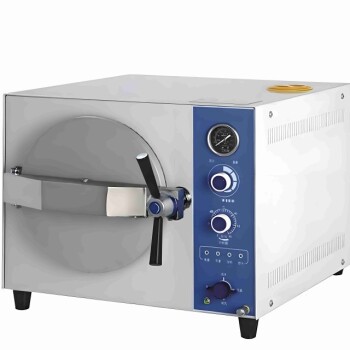
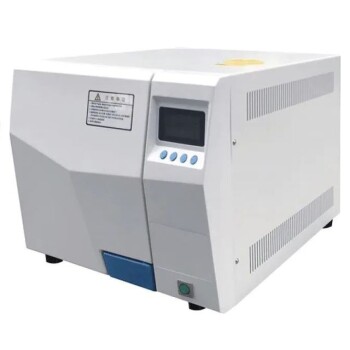
The high-pressure autoclave serves as the foundational vessel for controlling the micro-structure of iron-nickel (NiFe) oxides. It creates a sealed environment that allows reactions to occur at temperatures and pressures far exceeding atmospheric limits. This unique physical state facilitates the complete dissolution and precise recrystallization of raw materials, which is essential for synthesizing high-performance catalysts.
The core function of the autoclave is to regulate crystal growth; by controlling the pressure and temperature, you can force the material to expose specific active sites—such as the (100) crystal planes—which directly maximizes catalytic efficiency for the Oxygen Evolution Reaction.
Engineering the Reaction Environment
Exceeding Solvent Limitations
In a standard open vessel, reaction temperatures are capped by the boiling point of the solvent. A high-pressure autoclave creates a sealed system that allows solvents to remain liquid at temperatures well above their natural boiling points. This drastic increase in thermal energy accelerates reaction rates significantly.
Enhancing Solubility and Diffusion
The high-pressure conditions created within the vessel increase the solubility of precursors, specifically nickel and iron salts. This ensures that the raw materials are fully dissolved rather than precipitating prematurely. Furthermore, the environment boosts diffusion rates, promoting the uniform movement of ions throughout the solvent.
Facilitating Uniform Nucleation
Because solubility and diffusion are optimized, particle nucleation occurs more uniformly. Instead of erratic growth, the autoclave environment ensures that the initial formation of the crystal structure is consistent, which is a prerequisite for high-performance materials.
Controlling Crystal Growth and Morphology
Regulating Growth Direction
The most critical role of the autoclave in this specific synthesis is its ability to dictate the preferred growth direction of nanoparticles. By manipulating the internal pressure and temperature parameters, you act as an architect for the atomic structure.
Exposing Active Crystal Planes
For NiFe oxides to function as effective catalysts, specific atomic arrangements must be accessible on the surface. The solvothermal process within the autoclave induces the exposure of (100) crystal planes. These specific planes are known to possess higher catalytic activity, making the final material significantly more effective for the Oxygen Evolution Reaction (OER).
Ensuring Material Purity
The Role of the Teflon Liner
Most high-pressure autoclaves utilize a Teflon (PTFE) liner within a stainless steel shell. This liner provides exceptional chemical inertness. It acts as a barrier, preventing aggressive reducing agents in the solvent from corroding the steel outer shell.
Preventing Contamination
By isolating the reaction mixture from the metallic vessel walls, the liner ensures the high purity of the synthesized nickel-iron nanoparticles. Maintaining this purity is vital, as even trace metallic contaminants from the vessel wall could alter the catalytic properties of the final oxide.
Understanding the Trade-offs
Sensitivity to Parameters
While the autoclave allows for precise control, the process is highly sensitive. Slight deviations in temperature or pressure can lead to unintended crystal morphologies, failing to expose the desired (100) planes.
Throughput Limitations
The nature of a sealed, high-pressure vessel generally restricts this process to batch synthesis. Unlike continuous flow reactors, autoclaves require defined heating and cooling cycles, which can limit the speed of production for large-scale industrial applications.
Making the Right Choice for Your Goal
To maximize the utility of a high-pressure autoclave for NiFe oxide synthesis, align your process parameters with your specific performance targets:
- If your primary focus is catalytic efficiency: Prioritize precise temperature control to ensure the exposure of (100) crystal planes, as this directly dictates performance in the Oxygen Evolution Reaction.
- If your primary focus is material consistency: Ensure the use of a high-quality Teflon liner and maintain sufficient pressure to maximize the diffusion rates of nickel salts for uniform nucleation.
By leveraging the high-pressure environment to control atomic-level growth, you transform raw chemical precursors into highly structured, high-performance catalytic tools.
Summary Table:
| Feature | Role in NiFe Synthesis | Benefit to Material Performance |
|---|---|---|
| High Pressure | Enhances precursor solubility & diffusion | Ensures uniform nucleation and consistent structure |
| Thermal Control | Exceeds solvent boiling points | Accelerates reaction rates and thermal energy |
| Growth Regulation | Directs crystal orientation | Exposes high-activity (100) crystal planes for OER |
| PTFE Liner | Chemical inertness and isolation | Prevents metallic contamination for high-purity oxides |
Elevate Your Materials Synthesis with KINTEK
Ready to achieve precision in your solvothermal reactions? KINTEK specializes in providing high-performance high-temperature high-pressure reactors and autoclaves designed for the rigorous demands of battery research and catalyst synthesis. From PTFE-lined vessels to advanced crushing and milling systems, we offer the tools necessary to ensure uniform nucleation and peak catalytic efficiency.
Empower your lab with precision equipment—Contact us today to find your solution!
References
- Jean Marie Vianney Nsanzimana, Vito Di Noto. Tailoring Chemical Microenvironment of Iron‐Triad Electrocatalysts for Hydrogen Production by Water Electrolysis. DOI: 10.1002/aenm.202501686
This article is also based on technical information from Kintek Solution Knowledge Base .
Related Products
- Mini SS High Pressure Autoclave Reactor for Laboratory Use
- High Pressure Laboratory Autoclave Reactor for Hydrothermal Synthesis
- Stainless High Pressure Autoclave Reactor Laboratory Pressure Reactor
- Desktop Fast High Pressure Laboratory Autoclave Sterilizer 16L 24L for Lab Use
- Laboratory High Pressure Horizontal Autoclave Steam Sterilizer for Lab Use
People Also Ask
- Why use high-pressure reactors for molecular sieve synthesis? Unlock Superior Crystallinity and Framework Control
- What are the advantages of using a high-pressure reactor like an autoclave? Maximize Liquefaction Speed & Yield
- What is the function of a high-pressure reactor autoclave? Enhancing Cu/N Co-Doped Carbon Catalyst Synthesis
- Why are high-pressure reactors or autoclaves necessary for the synthesis of new functional materials? Unlock Precision.
- How are high-pressure reactors used to prepare metaphosphate electrocatalysts? Master In-Situ Precursor Growth