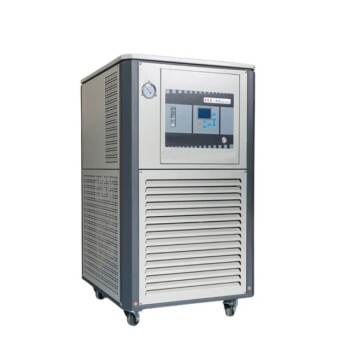
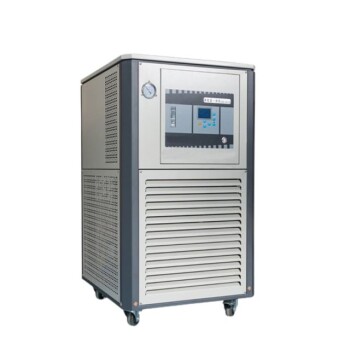
The high-pressure hydrothermal reactor acts as the central processing vessel that enables the precise synthesis of mesoporous hydroxyapatite (HA) powders. By establishing a sealed, high-temperature, and high-pressure liquid environment, the reactor facilitates the precipitation of single-phase HA crystals with controlled structural properties essential for bone defect repair and biological coatings.
The reactor’s defining value is its ability to maintain a constant, subcritical or supercritical thermodynamic state, allowing for the exact regulation of particle dispersibility, phase composition, and mesoporous architecture through the manipulation of temperature, time, and dopant concentrations.
Establishing the Reaction Environment
Creating a Sealed Liquid System
The fundamental role of the high-pressure hydrothermal reactor is to provide a closed system that isolates the chemical reaction. This sealed environment creates high-pressure conditions that prevent the solvent from boiling off, maintaining a liquid phase even at elevated temperatures.
Enhancing Reactivity and Solubility
Inside the reactor, the reaction liquid can be brought to a subcritical or near-supercritical state. This significantly enhances the solubility and reactivity of the raw materials used to generate hydroxyapatite.
Ensuring Thermodynamic Stability
The reactor creates a constant thermodynamic environment. This stability is critical for the "precipitation method," ensuring that the chemical reactions proceed uniformly to form high-quality crystals.
Controlling Material Structure and Performance
Regulating Phase Composition
The reactor allows technicians to precisely control the "phase purity" of the final product. By managing the internal conditions, the system ensures the formation of single-phase hydroxyapatite crystals, avoiding the creation of unwanted calcium phosphate byproducts.
Engineering the Mesoporous Structure
The specific distribution of mesopores (pores within the material) is dictated by the temperature and pressure distribution within the reactor. Proper regulation of these variables determines the specific surface area and particle morphology, which are vital for the material's interaction with biological tissues.
The Role of Molybdate Anions
A key control lever within the reactor is the concentration of molybdate anions. Adjusting the concentration of these anions, along with the processing time, allows for the customization of the HA lattice, directly influencing the powder's dispersibility and structural formation.
Achieving High Reproducibility
Because the reactor provides a closed and constant environment, it offers extremely high repeatability. This ensures that every batch of HA powder maintains consistent properties, a non-negotiable requirement for medical-grade materials used in bone repair.
Understanding the Trade-offs
Sensitivity to Process Parameters
While the reactor allows for precision, it also introduces high sensitivity. Slight deviations in "exposure time" or "temperature" can significantly alter the phase composition or dispersibility of the powder.
Complexity of Dopant Regulation
Regulating the incorporation of molybdate anions is effective but complex. Incorrect concentrations can lead to suboptimal mesoporous structures, potentially reducing the material's bioactivity or mechanical suitability for coatings.
Making the Right Choice for Your Goal
When utilizing a high-pressure hydrothermal reactor for HA synthesis, your operational parameters must align with your specific end-use requirements.
- If your primary focus is Biological Coatings (Bone Repair): Prioritize precise control over phase composition and particle dispersibility to ensure the coating adheres uniformly and mimics natural bone mineral.
- If your primary focus is Ion Exchange/Catalysis: Focus on optimizing the mesoporous structure and specific surface area to maximize the number of active sites available for adsorption.
The high-pressure hydrothermal reactor is not just a heating vessel; it is a precision instrument for engineering the microscopic architecture of bone-repair materials.
Summary Table:
| Feature | Role in HA Synthesis | Benefit for Bone Repair |
|---|---|---|
| Sealed Environment | Prevents solvent boiling at high temps | Ensures uniform chemical precipitation |
| Phase Regulation | Controls single-phase crystal formation | Eliminates unwanted calcium phosphate byproducts |
| Thermodynamic Control | Manages subcritical/supercritical states | Precise engineering of mesoporous architecture |
| Dopant Customization | Regulates molybdate anion incorporation | Customizes HA lattice and particle dispersibility |
Elevate Your Biomaterial Research with KINTEK
Precision is paramount when synthesizing medical-grade materials like hydroxyapatite. KINTEK specializes in high-performance laboratory equipment, offering industry-leading high-temperature high-pressure reactors and autoclaves designed to maintain the exact thermodynamic stability your research requires.
From high-temperature furnaces and crushing systems to specialized hydrothermal reactors and dental equipment, KINTEK provides the comprehensive tools needed for advanced material engineering. Our solutions ensure high reproducibility and superior structural control for target customers in bone repair, battery research, and catalysis.
Ready to achieve superior particle morphology and phase purity? Contact our specialists today to find the perfect reactor for your lab.
References
- Aleksandra Maletin, Ivan Ristić. Degree of monomer conversion in dual cure resin-based dental cements material. DOI: 10.21175/rad.abstr.book.2023.5.1
This article is also based on technical information from Kintek Solution Knowledge Base .
Related Products
- Customizable Laboratory High Temperature High Pressure Reactors for Diverse Scientific Applications
- High Pressure Laboratory Autoclave Reactor for Hydrothermal Synthesis
- Customizable High Pressure Reactors for Advanced Scientific and Industrial Applications
- Stainless High Pressure Autoclave Reactor Laboratory Pressure Reactor
- Mini SS High Pressure Autoclave Reactor for Laboratory Use
People Also Ask
- How do high-pressure and high-temperature reactors ensure the effective treatment of lignocellulosic wastewater in WAO?
- What equipment is required for high-pressure high-temperature reactions? Master Extreme Chemistry Safely
- How do you control high pressure in a reactor? A Guide to Safe & Stable Operation
- How does initial oxygen pressure affect the wet oxidation of pharmaceutical sludge? Master Your Oxidation Depth
- Why is argon better than nitrogen for inert atmosphere? Ensure Absolute Reactivity & Stability