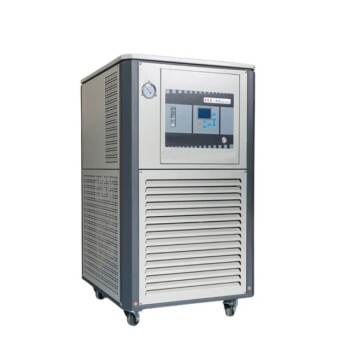
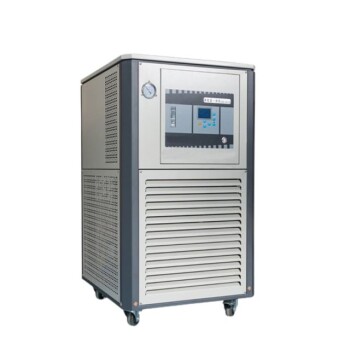
A high-pressure hydrothermal reactor acts as the essential vessel for controlling the physical architecture of the material. It creates a sealed environment capable of maintaining 200 °C, which generates autogenous pressure to drive the synthesis of Mg2+ doped CaCO3. This specific environment is required to transform liquid precursors into solid carriers with the precise structural characteristics needed for future applications.
The reactor's role extends beyond simply mixing chemicals; it provides the thermodynamic conditions necessary to force the formation of nanocrystalline structures with high porosity, which are critical for the effective adsorption of phase change materials.
Creating the Reaction Environment
Generating Autogenous Pressure
The reactor functions as a closed system. As the temperature is raised to 200 °C, the liquid solvent inside cannot evaporate away.
Instead, the solvent generates autogenous pressure (pressure created by the substance itself) within the sealed vessel. This pressure forces the precursors to interact in ways that are impossible under standard atmospheric conditions.
Enhancing Reactivity
The combination of high heat and pressure significantly alters the properties of the solvent and the reactants.
This environment increases the reactivity of the precursor solution. It promotes the dissolution and subsequent recrystallization of materials, ensuring that the chemical reaction proceeds efficiently toward the desired solid state.
Impact on Material Properties
Achieving High Crystallinity
The primary output of this process is the formation of nanocrystalline carriers.
The controlled high-pressure environment regulates crystal growth. This results in carriers with high crystallinity, meaning the atomic structure is highly ordered rather than amorphous or random.
Engineering Porosity for Adsorption
The ultimate goal of synthesizing Mg2+ doped CaCO3 is often to use it as a carrier for other substances, specifically phase change materials.
The hydrothermal reactor allows for the formation of a specific porous structure. This internal porosity is the defining feature that enables the material to act as an effective "sponge" or host for subsequent adsorption processes.
Understanding the Trade-offs
Process Complexity and Safety
While effective, hydrothermal synthesis requires specialized, robust equipment to handle high pressures safely.
Operators must carefully manage the sealed nature of the vessel. Unlike open-air reactions, the internal conditions cannot be easily adjusted once the heating process begins, requiring precise calculation of initial parameters.
Energy and Scalability
The requirement to maintain high temperatures (200 °C) for extended periods makes this an energy-intensive process.
Additionally, because these reactors are typically batch-processing vessels, scaling up production to industrial levels is generally more complex than with continuous flow synthesis methods.
Making the Right Choice for Your Goal
When deciding if a high-pressure hydrothermal reactor is necessary for your synthesis, consider your structural requirements:
- If your primary focus is Adsorption Capacity: You must use this reactor type, as the high-pressure environment is the primary driver for creating the specific porous structure needed to hold phase change materials.
- If your primary focus is Crystal Quality: The reactor is essential, as the autogenous pressure promotes the formation of highly ordered nanocrystalline structures that standard precipitation methods may not achieve.
The high-pressure hydrothermal reactor is the definitive tool for engineering the internal architecture of Mg2+ doped CaCO3, turning simple raw materials into highly functional, porous carriers.
Summary Table:
| Key Role | Impact on Mg2+ Doped CaCO3 Synthesis |
|---|---|
| Autogenous Pressure | Generated at 200°C to force precursor interaction and dissolution. |
| Crystallinity Control | Promotes highly ordered nanocrystalline structures over amorphous forms. |
| Pore Engineering | Creates specific internal porosity essential for phase change material adsorption. |
| Reactive Environment | Enhances solvent reactivity for efficient solid-state transformation. |
Elevate Your Material Research with KINTEK Precision
Ready to engineer the next generation of porous carriers and nanocrystalline structures? KINTEK specializes in advanced laboratory solutions designed for rigorous synthesis environments. From high-temperature high-pressure reactors and autoclaves to precision crushing, milling, and hydraulic presses, we provide the robust equipment needed to maintain stable autogenous pressure and precise thermal control.
Whether you are synthesizing Mg2+ doped CaCO3 or developing complex battery materials, our high-performance reactors ensure safety, reliability, and superior material properties. Contact KINTEK today to find the perfect hydrothermal solution for your laboratory!
References
- Md. Hasan Zahir, Mohammad M. Hossain. Preparation of a Sustainable Shape-Stabilized Phase Change Material for Thermal Energy Storage Based on Mg2+-Doped CaCO3/PEG Composites. DOI: 10.3390/nano11071639
This article is also based on technical information from Kintek Solution Knowledge Base .
Related Products
- Customizable Laboratory High Temperature High Pressure Reactors for Diverse Scientific Applications
- High Pressure Laboratory Autoclave Reactor for Hydrothermal Synthesis
- Customizable High Pressure Reactors for Advanced Scientific and Industrial Applications
- Stainless High Pressure Autoclave Reactor Laboratory Pressure Reactor
- Mini SS High Pressure Autoclave Reactor for Laboratory Use
People Also Ask
- How do high-pressure and high-temperature reactors ensure the effective treatment of lignocellulosic wastewater in WAO?
- What equipment is required for high-pressure high-temperature reactions? Master Extreme Chemistry Safely
- How do you control high pressure in a reactor? A Guide to Safe & Stable Operation
- Why is argon better than nitrogen for inert atmosphere? Ensure Absolute Reactivity & Stability
- How does initial oxygen pressure affect the wet oxidation of pharmaceutical sludge? Master Your Oxidation Depth