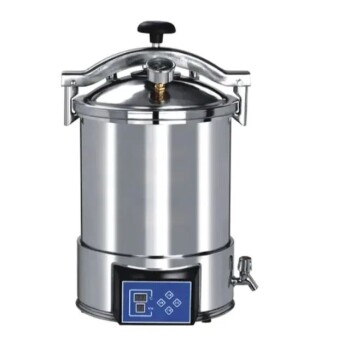
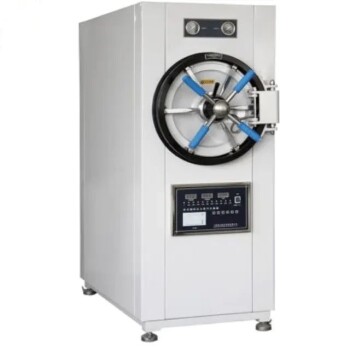
A high-pressure reactor (autoclave) acts as the fundamental catalyst for the solvothermal synthesis of Cu-MOF nanolayers by providing a sealed, high-energy environment. This specialized equipment allows solvents to reach temperatures well above their boiling points, which significantly increases the solubility of organic ligands and drives the coordination of copper ions ($Cu^{2+}$) onto the surface of precursor structures.
The high-pressure reactor creates the specific physicochemical conditions necessary to transform dissolved precursors into uniform, 20 nm honeycomb-shaped Cu-MOF layers, directly enhancing the material’s structural stability and electrocatalytic performance.
Facilitating the Solvothermal Environment
Overcoming the Boiling Point Barrier
The primary function of the high-pressure reactor is to maintain a sealed heating condition. This allows the reaction solvent to remain in a liquid state even when heated to temperatures (such as 150°C to 160°C) that far exceed its atmospheric boiling point.
Reaching Subcritical and Supercritical States
Under these conditions, solvents can reach subcritical or supercritical states. This transition alters the physical properties of the solvent, making it more effective at dissolving stubborn precursors and facilitating the thorough mixing of components.
Accelerating Reaction Kinetics
The combination of high temperature and autogenous pressure lowers the reaction activation energy. This acceleration is vital for the coordination reaction between copper ions and organic ligands, ensuring the process occurs efficiently and completely.
Driving Precision in Nanostructure Formation
Increasing Ligand Solubility
In MOF synthesis, organic ligands often have limited solubility at room temperature. The high-pressure environment effectively increases the solubility of these ligands, ensuring a high concentration of reactive species is available to interact with the copper source.
Promoting Surface Coordination
For nanolayer preparation, the reactor promotes the coordination of $Cu^{2+}$ ions specifically onto the surface of templates, such as $Cu_2O$ nanoboxes. This targeted reaction is what enables the growth of a thin, uniform layer rather than bulk, disorganized crystals.
Controlled Nucleation and Growth
The reactor allows for the effective separation of nucleation and growth processes. This control is essential for achieving a precise thickness—approximately 20 nm—and a specific honeycomb morphology that provides high conductivity and surface area.
Understanding the Trade-offs
The Risk of Over-Crystallization
While high pressure promotes growth, excessive time or temperature in the reactor can lead to over-crystallization. This may result in the nanolayers becoming too thick or losing their specific honeycomb morphology, which reduces electrocatalytic efficiency.
Equipment and Safety Constraints
Operating high-pressure autoclaves requires strict adherence to safety protocols and precise temperature control. Small fluctuations in the thermal gradient can lead to non-uniform nanolayers or, in extreme cases, mechanical failure of the reactor seals.
Sensitivity to Solvent Ratios
The internal pressure is highly dependent on the "fill degree" of the reactor and the specific solvent mix (e.g., DMF and ethanol). An incorrect ratio can alter the internal kinetics, leading to incomplete coordination or the formation of unwanted secondary phases.
How to Apply This to Your Project
To successfully prepare Cu-MOF nanolayers using a high-pressure reactor, align your parameters with your specific material requirements:
- If your primary focus is high electrocatalytic activity: Maintain a precise temperature (typically 160°C) to ensure the formation of the conductive honeycomb structure, which maximizes active sites for hydrogen evolution.
- If your primary focus is morphological uniformity: Closely monitor the heating duration (e.g., 16 hours) to prevent the 20 nm nanolayers from aggregating into bulkier, less efficient structures.
- If your primary focus is structural integrity: Ensure the reactor is properly sealed to maintain constant autogenous pressure, which is critical for the "oriented growth" needed to stabilize the MOF on its precursor template.
By mastering the high-pressure environment, you can move beyond simple mixing to achieve the precise atomic coordination required for advanced nanomaterials.
Summary Table:
| Function | Impact on Cu-MOF Synthesis | Critical Parameter |
|---|---|---|
| Sealed Heating | Enables subcritical solvent states above boiling point | Solvent Fill Degree |
| Enhanced Solubility | Increases ligand solubility for rapid coordination | Temperature (150-160°C) |
| Controlled Nucleation | Ensures uniform 20nm honeycomb nanolayers | Reaction Time (e.g., 16h) |
| Kinetic Acceleration | Lowers activation energy for surface growth | Autogenous Pressure |
Elevate Your Nanomaterial Synthesis with KINTEK Precision
Achieving the perfect 20nm honeycomb structure for Cu-MOF nanolayers requires absolute control over your thermal environment. KINTEK specializes in high-performance laboratory equipment designed to meet the rigorous demands of advanced material science. Our high-pressure reactors and autoclaves provide the stability and safety needed for complex solvothermal reactions.
Our laboratory solutions include:
- Reactors & Furnaces: High-pressure reactors, autoclaves, and a full range of high-temperature furnaces (muffle, tube, vacuum, CVD).
- Processing Equipment: Hydraulic presses (pellet, hot, isostatic), crushing and milling systems, and homogenizers.
- Research Tools: Battery research consumables, electrolytic cells, and cooling solutions like ULT freezers.
- Essential Consumables: High-quality PTFE products, ceramics, and crucibles.
Ready to optimize your lab's efficiency and ensure repeatable results? Contact our experts today to find the ideal high-pressure system for your research needs!
References
- Zhehua Du. Research progress of Cu/Fe-MOF composites applied in water treatment process. DOI: 10.1051/e3sconf/202338504002
This article is also based on technical information from Kintek Solution Knowledge Base .
Related Products
- High Pressure Laboratory Autoclave Reactor for Hydrothermal Synthesis
- Stainless High Pressure Autoclave Reactor Laboratory Pressure Reactor
- Mini SS High Pressure Autoclave Reactor for Laboratory Use
- Customizable High Pressure Reactors for Advanced Scientific and Industrial Applications
- Portable High Pressure Laboratory Autoclave Steam Sterilizer for Lab Use
People Also Ask
- What role does a high-pressure reactor (autoclave) play in the synthesis of NiCuFe-LDH? Master Hydrothermal Growth
- What Role Does a High-Pressure Reactor or Autoclave Play in HA Catalyst Synthesis? Achieve High Surface Area Materials
- What equipment is required for hydrothermal synthesis of Ga0.25Zn4.67S5.08? Optimize Your Semiconductor Production
- What is the function of a high-pressure reactor in the hydrothermal synthesis of boehmite? Expert Process Insights
- What role does an autoclave play in the synthesis of MnO2 nanofibers? Mastering Hydrothermal Growth