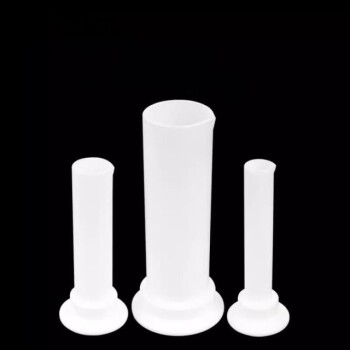
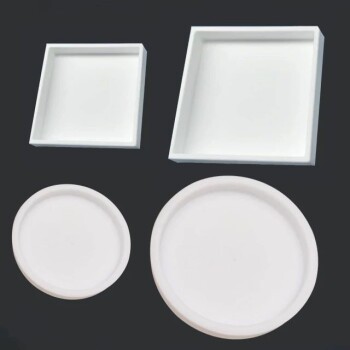
The high-pressure reactor with a PTFE liner serves as the critical reaction chamber that enables the solvothermal synthesis of tin disulfide (SnS2) nanosheets. By sealing reactants like SnCl4 and thioacetamide (TAA) at elevated temperatures (typically 100 °C), the vessel harnesses the solvent's autogenous pressure to drive a complete chemical reaction and physically direct the crystal growth onto the Carbon Cloth.
The reactor’s primary function is to create a controlled, high-pressure microenvironment that forces SnS2 to grow in a vertical, honeycomb-like array. This structural guidance is what ultimately endows the material with an open porous structure and a high specific surface area.
The Mechanics of Solvothermal Synthesis
Generating Autogenous Pressure
The reactor is designed to heat solvents above their boiling points within a sealed volume. As the temperature rises to levels such as 100 °C, the confined solvent generates autogenous pressure.
This internal pressure is vital for the synthesis process. It forces the reactants—specifically the tin and sulfur sources—to interact more effectively than they would under standard atmospheric conditions.
The Role of the PTFE Liner
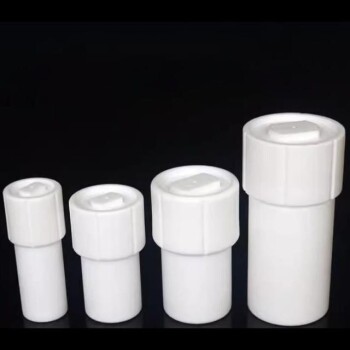
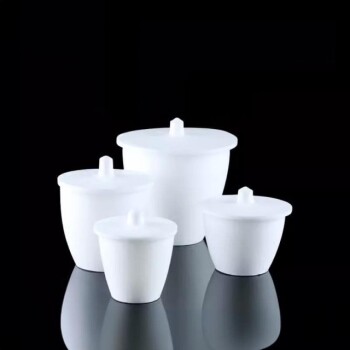
The Polytetrafluoroethylene (PTFE) liner acts as an inert chemical barrier. It withstands the harsh chemical environment created by the precursors and solvents.
By preventing the reactants from contacting the outer steel shell, the liner ensures the purity of the SnS2 nanosheets and protects the reactor hardware from corrosion.
Impact on Material Morphology
Guiding Vertical Growth
The physical environment created by the reactor does more than just accelerate chemistry; it influences the geometry of the final product. The high-temperature, high-pressure conditions guide the SnS2 to nucleate and grow in a specific orientation.
Instead of forming random aggregates, the SnS2 develops into a honeycomb-like vertical array directly on the Carbon Cloth surface. This vertical alignment is a distinct signature of this synthesis method.
Maximizing Surface Area
The resulting vertical architecture creates an "open porous structure." Because the nanosheets stand perpendicular to the substrate, they do not stack flatly on top of one another.
This arrangement significantly increases the specific surface area of the material. A higher surface area is critical for electrochemical applications, as it provides more active sites for reactions.
Understanding the Trade-offs
Process Visibility
A major limitation of steel high-pressure reactors is the lack of visibility. Because the reaction is enclosed in steel and PTFE, you cannot monitor the crystal growth or color changes in real-time.
Scalability Constraints
Solvothermal synthesis in these reactors is inherently a batch process. Scaling up requires either larger vessels, which present safety and thermal gradient challenges, or a parallel array of smaller reactors, which impacts throughput efficiency.
Safety Considerations
The generation of autogenous pressure turns the reactor into a potential pressure bomb if not managed correctly. Precise temperature control is required to ensure the pressure remains within the safe operating limits of the PTFE liner and the steel casing.
Optimizing Synthesis for Your Goals
To achieve the best results with SnS2 nanosheet precursors, align your process parameters with your specific structural requirements:
- If your primary focus is maximizing surface area: Ensure the temperature is sufficient to generate the pressure required for vertical "honeycomb" alignment, preventing the nanosheets from collapsing.
- If your primary focus is substrate adhesion: Verify that the Carbon Cloth is properly positioned within the liner to allow uniform exposure to the pressurized reactants.
The high-pressure reactor is not merely a container; it is a shaping tool that leverages pressure to engineer the microscopic architecture of your material.
Summary Table:
| Feature | Role in SnS2 Synthesis on Carbon Cloth |
|---|---|
| Autogenous Pressure | Drives reactants to interact at 100°C; forces vertical crystal growth. |
| PTFE Liner | Provides an inert, corrosion-resistant barrier ensuring material purity. |
| Vertical Orientation | Creates a honeycomb-like array to prevent stacking and maximize surface area. |
| Substrate Interaction | Ensures uniform precursor deposition directly onto the Carbon Cloth fibers. |
Elevate Your Material Research with KINTEK
Precision is the backbone of successful solvothermal synthesis. At KINTEK, we specialize in high-performance laboratory equipment designed to meet the rigorous demands of advanced material science. Whether you are synthesizing SnS2 nanosheets or exploring next-generation energy storage, our premium high-temperature high-pressure reactors and autoclaves and chemical-resistant PTFE products provide the controlled environment you need for consistent, high-yield results.
Our value to your lab:
- Durability: Robust reactor designs engineered for safe autogenous pressure generation.
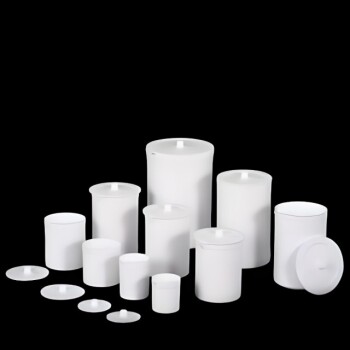
- Purity: High-quality PTFE liners and crucibles that eliminate cross-contamination.
- Expertise: A comprehensive portfolio including crushing systems, hydraulic presses, and battery research tools.
Ready to optimize your honeycomb-like material structures? Contact KINTEK today for a custom consultation and find the perfect reactor solution for your research goals!
References
- Kun Huang, Fangzhi Huang. Super-stable SnO<sub>2</sub>/MoS<sub>2</sub> enhanced the electrocatalytic hydrogen evolution in acidic environments. DOI: 10.1039/d2ra03627d
This article is also based on technical information from Kintek Solution Knowledge Base .
Related Products
- Custom PTFE Teflon Parts Manufacturer for Hydrothermal Synthesis Reactor Polytetrafluoroethylene Carbon Paper and Carbon Cloth Nano-growth
- Stainless High Pressure Autoclave Reactor Laboratory Pressure Reactor
- High Pressure Laboratory Autoclave Reactor for Hydrothermal Synthesis
- Customizable High Pressure Reactors for Advanced Scientific and Industrial Applications
- Custom PTFE Teflon Parts Manufacturer for Microwave Digestion Tank
People Also Ask
- What is the function of a PTFE reactor in MXene etching? Ensure Safe, High-Purity MAX Phase Conversion
- Why is a PTFE reactor required for titanium-based nano-ceramic coating solutions? Ensure Chemical Inertness & Purity
- Why must a Polytetrafluoroethylene (PTFE) reactor be used for Ti3C2TX MXene etching? Ensure Safety and Purity
- Why are PTFE reactors preferred for silver phosphate glass testing? Ensure Purity and Kinetic Accuracy
- What are the advantages of using polytetrafluoroethylene (PTFE) liners in hydrothermal synthesis reactors? High Purity