A hydrothermal reactor with precision stirring acts as the definitive control environment for synthesizing magnesium and zinc borates. By combining high-temperature thermodynamics with constant mechanical agitation, it ensures complete uniformity in both temperature and solute concentration. This prevents common failure points like local overheating or reactant sedimentation, which are detrimental to material quality.
The core value of this system lies in transforming a chaotic mixture into a homogenous solution. This uniformity is the prerequisite for controlling crystallization kinetics and directing precise phase transformations.
Establishing Thermodynamic Stability
Creating a Consistent Environment
The synthesis of borates from boric acid, zinc oxide, and magnesium oxide requires a high-temperature setting. The hydrothermal reactor provides the stable thermodynamic environment necessary to initiate and sustain these reactions efficiently.
Eliminating Solute Gradients
Without intervention, solutes in a mixture tend to cluster or settle. The integrated stirring system ensures a uniform distribution of solute concentration throughout the entire vessel. This guarantees that the reactants are available in the correct stoichiometric ratios at every point in the solution.
The Role of Precision Stirring
Preventing Thermal Hotspots
In static heating environments, temperature differences can create "hotspots." The reactor's stirring mechanism circulates the fluid continuously, preventing local overheating. This ensures that the thermal energy driving the reaction is identical across the entire batch.
Avoiding Sedimentation
Magnesium and zinc oxides can settle out of suspension if left undisturbed. Stirring physically prevents sedimentation, keeping solid reactants suspended and interacting with the liquid phase. This is critical for maintaining the reaction rate and ensuring complete consumption of raw materials.
Impact on Material Quality
Controlling Crystallization Kinetics
The rate at which crystals form and grow is heavily influenced by local conditions. By maintaining a uniform environment, the reactor allows for decisive control over crystallization kinetics. This leads to more consistent crystal sizes and morphologies.
Directing Phase Transformations
Borate synthesis often involves complex phase changes. The stability provided by the reactor is decisive for managing these phase transformation processes. It ensures the final product adopts the correct structural phase rather than an unwanted intermediate form.
Common Pitfalls in Static Synthesis
The Risk of Inconsistency
If the stirring mechanism is absent or insufficient, the synthesis process becomes vulnerable to thermodynamic variance. Local overheating can degrade the product or alter the crystal structure in specific zones of the reactor.
Incomplete Reactions
Lack of agitation leads to sedimentation, effectively removing reactants from the active chemical process. This results in lower yields and a final product contaminated with unreacted raw materials.
Making the Right Choice for Your Goal
To maximize the quality of your magnesium and zinc borate synthesis, consider how you operate the reactor based on your specific objectives:
- If your primary focus is Phase Purity: Ensure the stirring speed is sufficient to prevent all sedimentation, as this guarantees the uniform stoichiometry required for accurate phase transformation.
- If your primary focus is Crystal Uniformity: Prioritize the stability of the heating element alongside stirring to eliminate thermal gradients that cause irregular growth rates.
Control the environment, and you control the crystal.
Summary Table:
| Feature | Impact on Borate Synthesis | Key Benefit |
|---|---|---|
| Precision Stirring | Prevents reactant sedimentation | Ensures complete consumption of raw materials |
| Thermal Circulation | Eliminates local overheating/hotspots | Maintains uniform crystallization kinetics |
| High-Pressure Vessel | Creates stable thermodynamic environment | Facilitates efficient phase transformations |
| Homogenization | Removes solute concentration gradients | Guarantees precise stoichiometric ratios |
Elevate Your Advanced Material Synthesis with KINTEK
Precision is the difference between a failed batch and a breakthrough. KINTEK specializes in high-performance laboratory equipment designed for the rigorous demands of material science. Our industry-leading high-temperature high-pressure reactors and autoclaves—equipped with precision stirring systems—are engineered to provide the stable thermodynamic control required for the synthesis of pure magnesium and zinc borates.
Whether you are refining crystallization kinetics or managing complex phase transformations, KINTEK offers a comprehensive range of solutions, including:
- Advanced Reactors: Hydrothermal, CVD, PECVD, and vacuum systems.
- Sample Preparation: Crushing, milling, and hydraulic presses (pellet, hot, isostatic).
- Thermal Processing: Muffle, tube, rotary, and induction melting furnaces.
- Support Tools: Cooling solutions, homogenizers, and high-purity ceramics/PTFE consumables.
Ready to achieve superior crystal uniformity and phase purity? Contact our technical experts today to find the perfect reactor configuration for your laboratory.
References
- Azmi Seyhun Kıpçak, Sabriye Pişkin. Effect of Magnesium Borates on the Fire-Retarding Properties of Zinc Borates. DOI: 10.1155/2014/512164
This article is also based on technical information from Kintek Solution Knowledge Base .
Related Products
- High Pressure Laboratory Autoclave Reactor for Hydrothermal Synthesis
- Customizable Laboratory High Temperature High Pressure Reactors for Diverse Scientific Applications
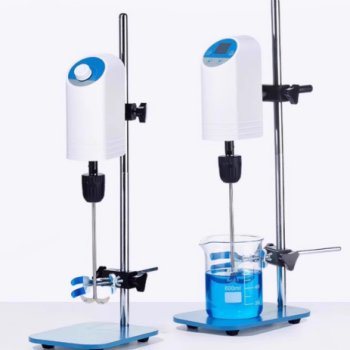
- High Performance Laboratory Stirrers for Diverse Applications
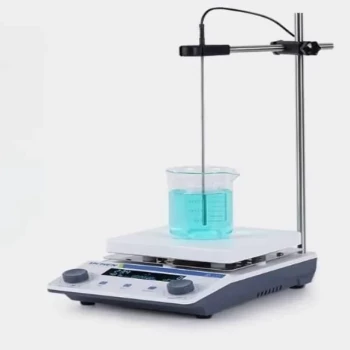
- Laboratory Small Constant Temperature Heated Magnetic Stirrer Heater and Stirrer
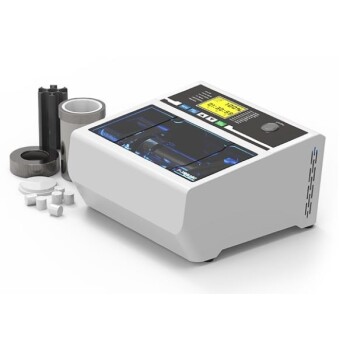
- Laboratory Micro Horizontal Jar Mill for Precision Sample Preparation in Research and Analysis
People Also Ask
- What role does a high-pressure reactor (autoclave) play in the synthesis of NiCuFe-LDH? Master Hydrothermal Growth
- What Role Does a High-Pressure Reactor or Autoclave Play in HA Catalyst Synthesis? Achieve High Surface Area Materials
- What equipment is required for hydrothermal synthesis of Ga0.25Zn4.67S5.08? Optimize Your Semiconductor Production
- What is the function of a high-pressure reactor in the hydrothermal synthesis of boehmite? Expert Process Insights
- What role does an autoclave play in the synthesis of MnO2 nanofibers? Mastering Hydrothermal Growth