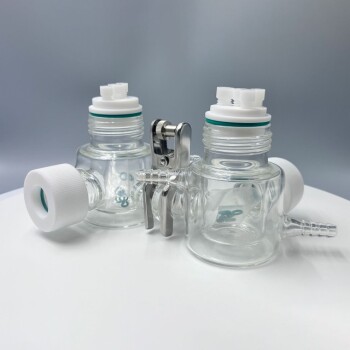
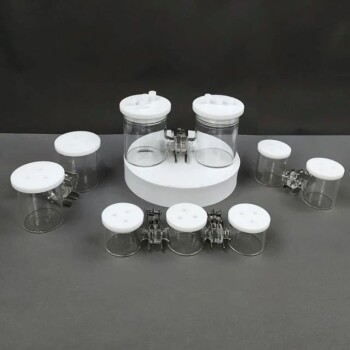
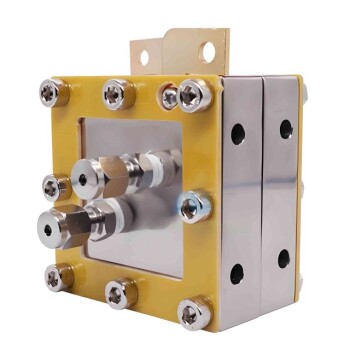
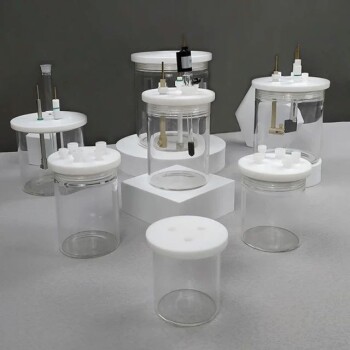
Routine maintenance for an H-type electrolytic cell centers on preserving the integrity of its active components and the purity of the environment. You must strictly adhere to a schedule of periodically cleaning, polishing, and calibrating the electrodes, while also monitoring and replacing the ion-exchange membrane as required.
The goal of routine maintenance is to prevent cross-contamination and signal drift. Regular care of electrodes and membranes ensures that your electrochemical data remains reproducible and accurate over time.
Preserving Electrode Performance
Cleaning and Polishing
Electrodes naturally degrade, wear, and corrode during electrochemical processes. To maintain optimal electrical conductivity, you must regularly clean and polish the electrode surfaces.
Calibration and Inspection
Routine calibration is essential to ensure experimental accuracy. Inspect electrodes frequently for signs of contamination or physical wear; if polishing does not restore performance, prompt replacement is necessary.
Component Integrity and Membranes
Managing the Ion-Exchange Membrane
The ion-exchange membrane is a critical consumable. You must inspect it regularly for signs of aging or clogging, replacing it immediately if its function is compromised.
Structural Inspections
Periodically inspect the physical components, including the glass body, lid, and sealing rings. Check for cracks, damage, or loose seals that could lead to electrolyte leakage or atmospheric contamination.
Proper Cleaning Protocols
Pre-Experiment Preparation
Before use, rinse all components with tap water followed by multiple rinses with deionized or distilled water. If the cell is brand new, soak it in an acid or alkali solution to strip away manufacturing residues.
Post-Experiment Care
After every experiment, rinse the cell thoroughly with tap water and then deionized water. To prevent water spots or mineral deposits, dry the interior using nitrogen gas.
Common Pitfalls to Avoid
Handling Fragile Materials
The H-type cell is constructed from glass, making it inherently fragile. Extreme care must be taken during installation, removal, and cleaning to prevent breakage.
Chemical Compatibility
While stubborn dirt may require cleaning agents, you must ensure the agent is non-corrosive to the cell body. Using overly aggressive chemicals can permanently damage the structural components.
Safety Violations
Never neglect safety protocols during maintenance. Always wear gloves and safety goggles, and regularly inspect the setup for wiring issues or sealing leaks to prevent accidents.
Making the Right Choice for Your Goal
- If your primary focus is Data Precision: Prioritize the frequent calibration and polishing of electrodes to eliminate resistance variables.
- If your primary focus is Equipment Longevity: Focus on gentle handling during cleaning and the use of nitrogen drying to prevent mineral buildup and glass stress.
Treat your electrolytic cell as a precision instrument, not just a container; rigorous maintenance is the only way to guarantee valid scientific results.
Summary Table:
| Component | Maintenance Action | Frequency | Purpose |
|---|---|---|---|
| Electrodes | Cleaning, Polishing & Calibration | Periodic / Per Use | Maintain conductivity and prevent signal drift |
| Ion-Exchange Membrane | Inspection & Replacement | Regular | Prevent clogging and ensure ion transport |
| Cell Body (Glass) | Rinsing (DI Water) & Nitrogen Drying | After Every Use | Remove residues and prevent mineral deposits |
| Seals & Lids | Integrity Inspection | Pre-Experiment | Prevent electrolyte leakage and contamination |
| Structural Body | Acid/Alkali Soaking | When New | Remove manufacturing residues |
Maximize Your Research Precision with KINTEK
Don't let equipment wear compromise your scientific results. KINTEK specializes in high-performance laboratory solutions, offering a comprehensive range of electrolytic cells, electrodes, and ion-exchange membranes designed for durability and accuracy.
Whether you are conducting advanced battery research or routine electrochemical analysis, our team provides the expert support and premium consumables—including PTFE products, ceramics, and high-temperature reactors—needed to keep your lab running at peak efficiency.
Ready to upgrade your electrochemical setup? Contact us today to discover how KINTEK’s precision-engineered equipment can enhance your experimental reproducibility!
Related Products
- H-Type Double-Layer Optical Electrolytic Electrochemical Cell with Water Bath
- H Type Electrolytic Cell Triple Electrochemical Cell
- Customizable PEM Electrolysis Cells for Diverse Research Applications
- Electrolytic Electrochemical Cell with Five-Port
- Super Sealed Electrolytic Electrochemical Cell
People Also Ask
- What is the overall structure of the H-type double-layer optical water bath electrolytic cell? Precision Design for Controlled Experiments
- How is the electrolyte managed in H-type electrolytic cells for specific reactions? Achieve Precise Control and High Purity
- What checks should be performed on the H-type electrolytic cell before use? Ensure Accurate Electrochemical Data
- What is important regarding temperature control for the H-type electrolytic cell? Ensure Precision and Data Integrity
- What is the overall structure of the H-type electrolytic cell? Understanding Dual-Chamber Electrochemical Designs