Knowledge test sieve What type of materials can be separated using the method of sieving? A Guide to Efficient Particle Size Separation
Author avatar

Tech Team · Kintek Solution

Updated 2 months ago

What type of materials can be separated using the method of sieving? A Guide to Efficient Particle Size Separation


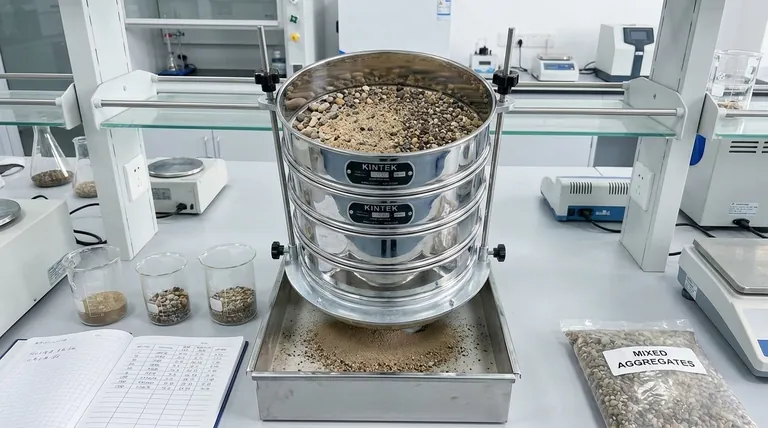
In principle, sieving can separate any mixture composed of solid particles of different sizes. This technique is widely used for materials ranging from sand, soil, and gravel in construction to flour, sugar, and spices in the food industry, as well as powders and granules in chemical and pharmaceutical manufacturing.

The suitability of a material for sieving is not determined by its chemical identity, but by its physical properties. The method works only on heterogeneous mixtures of solid particles where there is a meaningful difference in size between the components.
What type of materials can be separated using the method of sieving? A Guide to Efficient Particle Size Separation

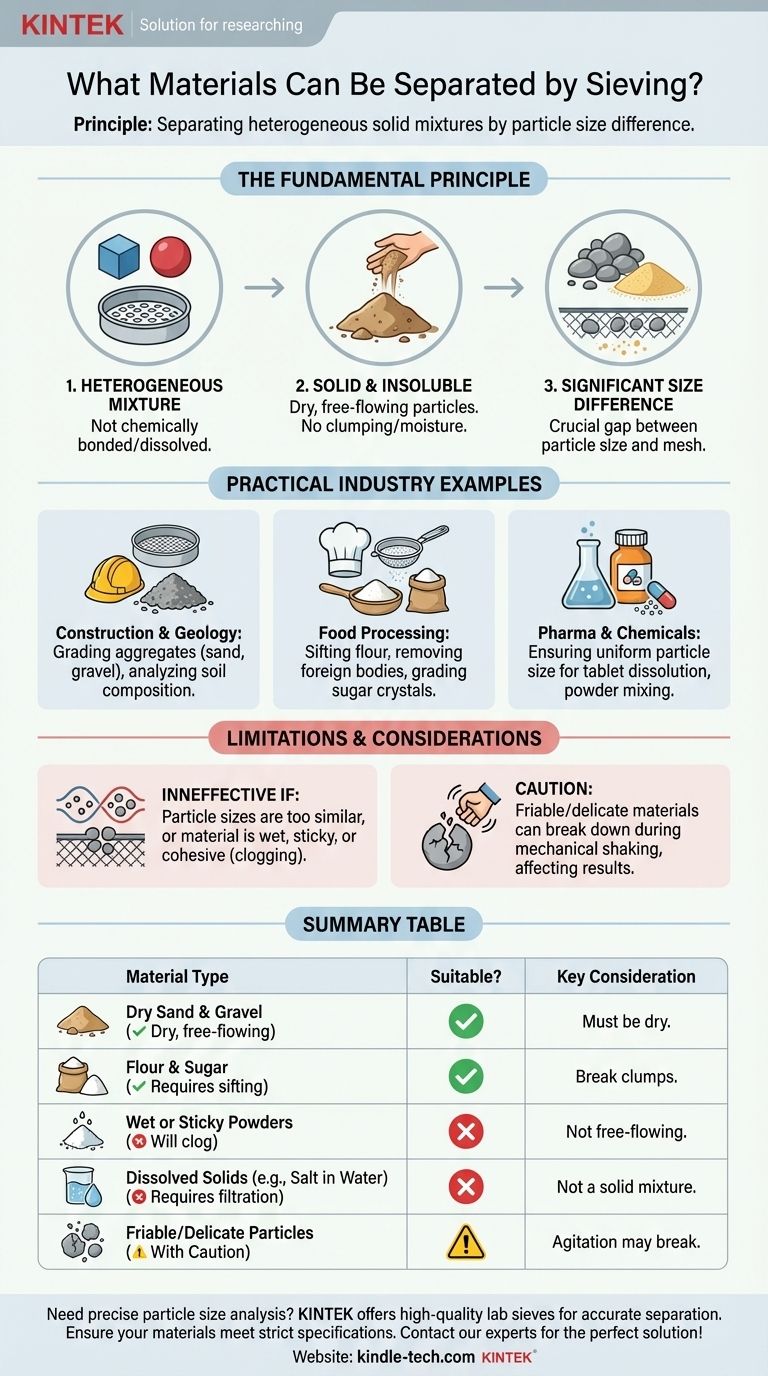
The Fundamental Principle of Sieving

Sieving is a mechanical sorting process. Its success hinges entirely on the physical characteristics of the mixture you are trying to separate.

It Must Be a Heterogeneous Mixture

Sieving works by physically blocking larger particles while allowing smaller ones to pass through. This is only possible if the components are not chemically bonded or dissolved into one another.

For example, you can separate sand from gravel because they are two distinct components mixed together. You cannot, however, separate salt that has been dissolved in water using a sieve.

Components Must Be Solid and Insoluble

The method is designed for dry, solid particles. The components should not stick together, dissolve, or react with each other.

Materials must be free-flowing to move across the sieve mesh. Any moisture or stickiness will cause particles to clump together, preventing an effective separation and potentially clogging the sieve.

A Significant Size Difference is Crucial

The effectiveness of sieving is directly related to the difference in particle size between the components and the mesh size of the sieve.

If you are separating fine sand from large pebbles, a sieve with an intermediate mesh size will work perfectly. If you are trying to separate two types of powder with very similar particle sizes, sieving will be ineffective.

Practical Examples Across Industries

The principle of sieving is applied in nearly every industry that handles solid materials.

Construction and Geology

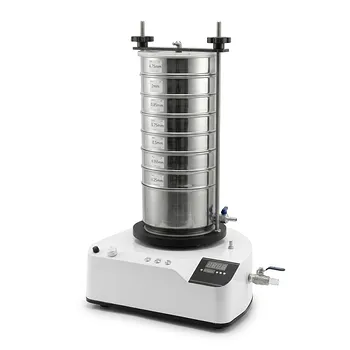
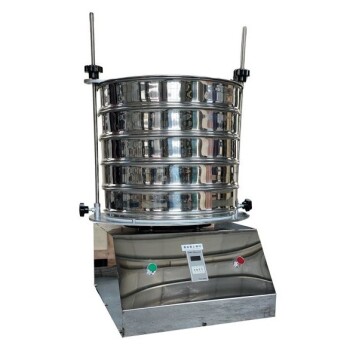
This is the classic application. Sieving is used to analyze soil composition and to grade aggregates like sand, gravel, and crushed rock for use in concrete and asphalt. A stack of sieves with progressively smaller mesh sizes can determine the particle size distribution of a sample.

Food Processing

In baking, flour is sifted to break up clumps and remove any foreign bodies, ensuring a uniform texture. In large-scale production, sieves separate different-sized grains, remove husks from seeds, or grade sugar crystals.

Pharmaceuticals and Chemicals

Uniform particle size is critical for many chemical products and medicines. Sieving ensures that powders or granules meet strict specifications, which affects everything from how quickly a tablet dissolves to how evenly a chemical powder mixes.

Understanding the Limitations

Sieving is a powerful but specific tool. It is the wrong choice for many separation tasks.

When Particle Sizes are Too Similar

If the components of your mixture have overlapping size ranges, a sieve cannot reliably separate them. Many particles of both types will either be retained or pass through together.

The Problem with Moisture and Stickiness

Wet sand, clumpy flour, or oily powders are poor candidates for sieving. The material will not flow properly and will blind the sieve mesh, halting the separation process entirely. The material must be dry and non-cohesive.

Delicate or Friable Materials

The mechanical shaking involved in sieving can break down fragile particles. If your goal is to analyze the original particle size, this agitation can damage the sample and give you inaccurate results.

Making the Right Choice for Your Application

To determine if sieving is the correct method, evaluate your material and your goal.

  • If your primary focus is quality control for particle size: Sieving is the standard method for analyzing the size distribution of dry powders, aggregates, and granules.
  • If your primary focus is bulk material purification: Sieving is highly effective for removing large contaminants from a finer product, such as stones from grain or clumps from a powder.
  • If your mixture contains wet, sticky, or dissolved components: You must use a different method, such as filtration, evaporation, or centrifugation.

Ultimately, the success of sieving depends not on the material's name, but on its physical structure and the goal of your separation.

Summary Table:

Material Type Suitable for Sieving? Key Consideration
Dry Sand & Gravel Yes Must be dry and free-flowing
Flour & Sugar Yes Requires sifting to break clumps
Wet or Sticky Powders No Will clog the sieve mesh
Dissolved Solids (e.g., Salt in Water) No Requires filtration or evaporation
Friable/Delicate Particles With Caution Agitation may break particles

Need precise particle size analysis or reliable sieving equipment for your lab? KINTEK specializes in high-quality lab sieves and consumables designed for accurate separation of materials like aggregates, chemicals, and food products. Ensure your materials meet strict specifications—contact our experts today to find the perfect solution for your application!

Visual Guide
What type of materials can be separated using the method of sieving? A Guide to Efficient Particle Size Separation Visual Guide

Related Products

People Also Ask

Related Products

Three-dimensional electromagnetic sieving instrument

Three-dimensional electromagnetic sieving instrument

KT-VT150 is a desktop sample processing instrument for both sieving and grinding. Grinding and sieving can be used both dry and wet. The vibration amplitude is 5mm and the vibration frequency is 3000-3600 times/min.

Laboratory Vibratory Sieve Shaker Machine for Dry and Wet Three-Dimensional Sieving

Laboratory Vibratory Sieve Shaker Machine for Dry and Wet Three-Dimensional Sieving

KT-VD200 can be used for sieving tasks of dry and wet samples in the laboratory. The screening quality is 20g-3kg. The product is designed with a unique mechanical structure and an electromagnetic vibrating body with a vibration frequency of 3000 times per minute.

Laboratory Test Sieves and Sieving Machines

Laboratory Test Sieves and Sieving Machines

Precision lab test sieves & sieving machines for accurate particle analysis. Stainless steel, ISO-compliant, 20μm-125mm range. Request specs now!

Laboratory Wet Three-Dimensional Vibratory Sieve Shaker Machine

Laboratory Wet Three-Dimensional Vibratory Sieve Shaker Machine

The wet three-dimensional vibrating sieving instrument focuses on solving the sieving tasks of dry and wet samples in the laboratory. It is suitable for sieving 20g - 3kg dry, wet or liquid samples.

Laboratory Test Sieves and Vibratory Sieve Shaker Machine

Laboratory Test Sieves and Vibratory Sieve Shaker Machine

Efficiently process powders, granules, and small blocks with a high-frequency vibration sieve. Control vibration frequency, screen continuously or intermittently, and achieve accurate particle size determination, separation, and classification.

Vibratory Sieve Shaker Machine Dry Three-Dimensional Vibrating Sieve

Vibratory Sieve Shaker Machine Dry Three-Dimensional Vibrating Sieve

The KT-V200 product focuses on solving common sieving tasks in the laboratory. It is suitable for sieving 20g-3kg dry samples.

Laboratory Vibratory Sieve Shaker Machine Slap Vibrating Sieve

Laboratory Vibratory Sieve Shaker Machine Slap Vibrating Sieve

KT-T200TAP is a slapping and oscillating sieving instrument for laboratory desktop use, with 300 rpm horizontal circular motion and 300 vertical slapping motions to simulate manual sieving to help sample particles pass through better.

Custom PTFE Teflon Parts Manufacturer for PTFE Mesh F4 Sieve

Custom PTFE Teflon Parts Manufacturer for PTFE Mesh F4 Sieve

PTFE mesh sieve is a specialized test sieve designed for particle analysis in various industries, featuring a non-metallic mesh woven from PTFE filament. This synthetic mesh is ideal for applications where metal contamination is a concern . PTFE sieves are crucial for maintaining the integrity of samples in sensitive environments, ensuring accurate and reliable results in particle size distribution analysis.

Professional Cutting Tools for Carbon Paper Cloth Diaphragm Copper Aluminum Foil and More

Professional Cutting Tools for Carbon Paper Cloth Diaphragm Copper Aluminum Foil and More

Professional tools for cutting lithium sheets, carbon paper, carbon cloth, separators, copper foil, aluminum foil, etc., with round and square shapes and different sizes of blades.

Mini Planetary Ball Mill Machine for Laboratory Milling

Mini Planetary Ball Mill Machine for Laboratory Milling

Discover the KT-P400 desktop planetary ball mill, ideal for grinding and mixing small samples in the lab. Enjoy stable performance, long service life, and practicality. Functions include timing and overload protection.

Laboratory Single Horizontal Jar Mill

Laboratory Single Horizontal Jar Mill

KT-JM3000 is a mixing and grinding instrument for placing a ball milling tank with a volume of 3000ml or less. It adopts frequency conversion control to realize timing, constant speed, direction change, overload protection and other functions.

12 Inch 24 Inch High Precision Automatic Diamond Wire Cutting Machine Laboratory Saw Precision Wire EDM Cutting Machine

12 Inch 24 Inch High Precision Automatic Diamond Wire Cutting Machine Laboratory Saw Precision Wire EDM Cutting Machine

The high precision automatic diamond wire cutting machine is a versatile cutting tool that uses a diamond wire to cut through a wide range of materials, including conductive and non-conductive materials, ceramics, glass, rocks, gems, jade, meteorites, monocrystalline silicon, silicon carbide, polycrystalline silicon, refractory bricks, epoxy boards, and ferrite bodies. It is especially suitable for cutting various brittle crystals with high hardness, high value, and easy to break.

High-Energy Omnidirectional Planetary Ball Mill Milling Machine for Laboratory

High-Energy Omnidirectional Planetary Ball Mill Milling Machine for Laboratory

The KT-P4000E is a new product derived from the vertical high-energy planetary ball mill with a 360° swivel function. Experience faster, uniform, and smaller sample output results with 4 ≤1000ml ball mill jars.

Laboratory High Throughput Tissue Grinding Mill Grinder

Laboratory High Throughput Tissue Grinding Mill Grinder

KT-MT is a high-quality, small, and versatile tissue grinder used for crushing, grinding, mixing, and cell wall breaking in various fields, including food, medical, and environmental protection. It is equipped with 24 or 48 2ml adapters and ball grinding tanks and is widely employed for DNA, RNA, and protein extraction.

Laboratory Ball Mill Jar Mill with Metal Alloy Grinding Jar and Balls

Laboratory Ball Mill Jar Mill with Metal Alloy Grinding Jar and Balls

Grind and mill with ease using metal alloy grinding jars with balls. Choose from 304/316L stainless steel or tungsten carbide and optional liner materials. Compatible with various mills and features optional functions.

High Energy Planetary Ball Mill Milling Machine for Laboratory

High Energy Planetary Ball Mill Milling Machine for Laboratory

The biggest feature is that the high energy planetary ball mill can not only perform fast and effective grinding, but also has good crushing ability

High Energy Planetary Ball Mill Milling Machine for Laboratory

High Energy Planetary Ball Mill Milling Machine for Laboratory

Experience fast and effective sample processing with the F-P2000 high-energy planetary ball mill. This versatile equipment offers precise control and excellent grinding capabilities. Perfect for laboratories, it features multiple grinding bowls for simultaneous testing and high output. Achieve optimal results with its ergonomic design, compact structure, and advanced features. Ideal for a wide range of materials, it ensures consistent particle size reduction and low maintenance.

Lab Internal Rubber Mixer Rubber Kneader Machine for Mixing and Kneading

Lab Internal Rubber Mixer Rubber Kneader Machine for Mixing and Kneading

Lab internal rubber mixer is suitable for mixing, kneading and dispersing various chemical raw materials such as plastics, rubber, synthetic rubber, hot melt adhesive and various low-viscosity materials.

Laboratory Jar Mill with Agate Grinding Jar and Balls

Laboratory Jar Mill with Agate Grinding Jar and Balls

Grind your materials with ease using Agate Grinding Jars with Balls. Sizes from 50ml to 3000ml, perfect for planetary and vibration mills.

Vibrating Disc Mill Small Laboratory Grinding Machine

Vibrating Disc Mill Small Laboratory Grinding Machine

Discover the versatile Vibrating Disc Mill for efficient laboratory grinding. Ideal for geology, metallurgy, biology, and more. Explore now!


Leave Your Message