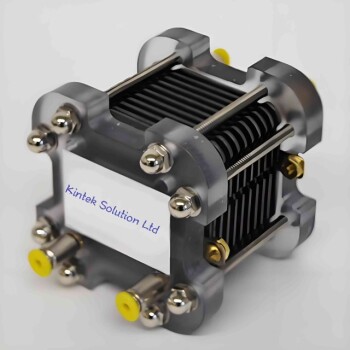
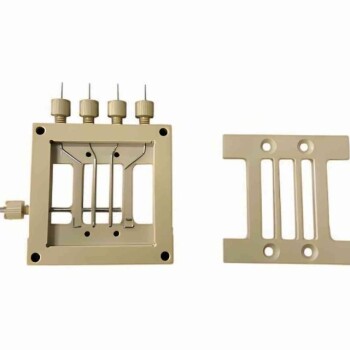
The standard configuration for an all-PTFE electrolytic cell typically utilizes a three-electrode system: a working electrode, a counter electrode, and a reference electrode. This specific triad is essential for separating the role of current flow from the role of potential measurement, ensuring high-precision electrochemical analysis.
The core advantage of this system lies in its ability to isolate specific electrochemical variables; the working electrode drives the reaction, the counter electrode balances the current, and the reference electrode provides a stable baseline for measurement.
The Three-Electrode Architecture
To understand why this specific combination is used, it is necessary to look at the distinct function each electrode serves within the PTFE cell.
The Working Electrode
This is the primary site of interest in your experiment. It is where the specific electrochemical reaction you are studying—whether oxidation or reduction—actually takes place.
Because the cell body is made of PTFE (Polytetrafluoroethylene), it provides a chemically inert background. This ensures that the reactions occurring at the working electrode are not contaminated by the container itself.
The Counter Electrode
The counter electrode (sometimes called the auxiliary electrode) acts as the partner to the working electrode. Its main purpose is to complete the electrical circuit.
Current flows between the working electrode and the counter electrode. By separating this current path, the system prevents large currents from destabilizing the reference measurement.
The Reference Electrode
The reference electrode maintains a stable, known potential that does not change during the experiment. It serves as the benchmark against which the potential of the working electrode is measured.
In an all-PTFE system, the reference electrode is crucial for accuracy. It ensures that the voltage readings reflect the true activity at the working electrode, rather than fluctuations in the overall system.
Understanding the Trade-offs
While the three-electrode setup described is the standard for precision, it introduces specific complexities compared to simpler systems.
Complexity vs. Control
Using three electrodes requires more sophisticated instrumentation, typically a potentiostat, to manage the different connections. A simpler two-electrode system is easier to set up but sacrifices the ability to control voltage and measure current independently.
Space and Seal Integrity
Fitting three distinct electrodes into a cell requires precise engineering, especially when dealing with PTFE. While PTFE offers excellent chemical resistance, ensuring a leak-proof seal around all three electrode ports is critical to maintaining the integrity of the inert environment.
Making the Right Choice for Your Goal
Selecting the correct electrode configuration depends on the precision required by your specific application.
- If your primary focus is fundamental research: Utilize the full three-electrode system to decouple current flow from potential measurement for maximum accuracy.
- If your primary focus is simple electrolysis: You may only require the working and counter electrodes to drive the reaction, though this sacrifices analytical precision.
The three-electrode design transforms the PTFE cell from a simple container into a high-precision analytical tool.
Summary Table:
| Electrode Type | Primary Function | Role in All-PTFE System |
|---|---|---|
| Working Electrode | Reaction Site | Where the oxidation/reduction of interest occurs. |
| Counter Electrode | Circuit Completion | Balances current flow to avoid destabilizing the reference. |
| Reference Electrode | Potential Baseline | Provides a stable, known potential for accurate measurement. |
Elevate Your Electrochemical Research with KINTEK
Precision in the lab starts with high-quality equipment. At KINTEK, we specialize in providing advanced electrolytic cells and electrodes, alongside a comprehensive range of laboratory solutions—from high-temperature furnaces and vacuum systems to high-pressure reactors and precision hydraulic presses.
Whether you are conducting fundamental battery research or complex chemical synthesis, our all-PTFE systems ensure a chemically inert environment for maximum accuracy. Don't settle for less than industrial-grade reliability.
Ready to upgrade your laboratory setup? Contact our experts today to find the perfect electrochemical tools tailored to your specific application!
Related Products
- PTFE Electrolytic Cell Electrochemical Cell Corrosion-Resistant Sealed and Non-Sealed
- Electrolytic Electrochemical Cell with Five-Port
- Double Layer Five-Port Water Bath Electrolytic Electrochemical Cell
- Thin-Layer Spectral Electrolysis Electrochemical Cell
- Optical Water Bath Electrolytic Electrochemical Cell
People Also Ask
- What is the necessity of selecting a PTFE electrolytic cell? Ensure Precise Graphene Corrosion Testing Accuracy
- What is the proper method for cleaning the surface of an all-PTFE electrolytic cell? Ensure Accurate Results with a Pristine Surface
- How should an all-PTFE electrolytic cell be stored after use? Expert Maintenance Tips for Long-Lasting Performance
- What is the proper cleaning method for an all-PTFE electrolytic cell? Essential Tips for Surface Integrity
- What are the standard opening specifications for all-PTFE electrolytic cells? A Guide to Sealed vs. Non-Sealed Ports