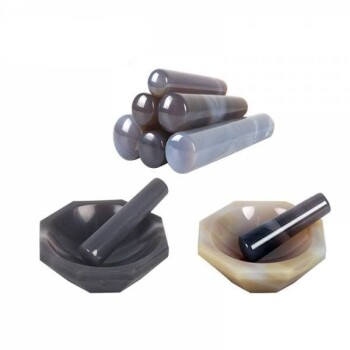
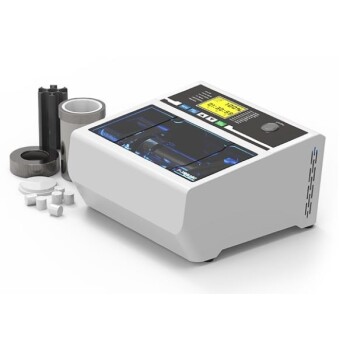
Agate milling jars and grinding balls are utilized primarily to guarantee material purity. In the preliminary mixing of Mo-La2O3 (molybdenum-lanthanum oxide) alloy powders, agate provides a chemically stable environment that prevents the introduction of unwanted metallic impurities, such as iron, which are common when using steel media.
Core Insight: The selection of agate is a strategic choice to prioritize low-pollution mixing over high-energy impact. It utilizes the material's moderate hardness and chemical inertness to achieve a uniform dispersion of powders while strictly maintaining the chemical integrity of the high-purity precursor before high-energy processing begins.
The Critical Need for Purity
The primary challenge in preparing high-performance alloys like Mo-La2O3 is maintaining the chemical baseline of the constituent powders.
Eliminating Metallic Contamination
Standard grinding media, such as stainless steel or tungsten carbide, can degrade during operation. This wear introduces foreign metallic particles (impurities) into the batch.
Leveraging Chemical Stability
Agate is a naturally hard, silica-based mineral known for its exceptional chemical resistance. By using agate jars and balls, you ensure that the physical contact between the media and the powder does not result in chemical reactions or cross-contamination.
Preserving the Precursor
The goal at this stage is to mix micron-scale molybdenum powder with nano-scale lanthanum oxide. Agate allows this physical blending to occur without altering the elemental composition of these sensitive powders.
The Mechanics of Preliminary Mixing
It is important to understand that the "preliminary mixing" stage has different physical requirements than the subsequent "mechanical alloying" stage.
Uniform Dispersion vs. Deformation
The objective of this phase is homogeneity, not particle deformation. The process uses stable rotational centrifugal forces (often around 400 r/min) to evenly disperse the nano-particles among the micron-particles.
Moderate Hardness is Sufficient
Because this stage does not require the violent impact energy of mechanical alloying, the extreme hardness of tungsten carbide is not yet necessary. Agate possesses "moderate hardness," which is perfectly adequate for this lower-intensity mixing regime while offering superior purity protection.
Understanding the Trade-offs
While agate is the superior choice for purity during mixing, it has distinct limitations that must be managed.
Insuitability for High-Energy Milling
Agate lacks the density and extreme hardness required for high-energy mechanical alloying. When the process moves to the stage requiring particle refinement and lattice defect introduction, agate would likely suffer excessive wear or fail to transfer sufficient impact energy.
The Necessity of Media Switching
Process engineers must view agate as a phase-specific tool. It is ideal for the initial mix but must typically be swapped for high-hardness media (like Zirconia or Tungsten Carbide) when the process transitions to high-energy ball milling to avoid fracturing the agate.
Making the Right Choice for Your Goal
To optimize your powder metallurgy process, you must match the media material to the specific stage of production.
- If your primary focus is Initial Homogenization: Choose agate media to mix varying particle sizes (micron/nano) while ensuring zero metallic contamination.
- If your primary focus is High-Energy Alloying: Switch to tungsten carbide or zirconia to generate the shear energy needed for particle refinement, accepting that contamination risks must be managed differently.
Success in Mo-La2O3 alloy preparation relies on using agate to secure a pristine starting mixture before applying the high energy required for final alloying.
Summary Table:
| Feature | Agate Media | Metal/Carbide Media |
|---|---|---|
| Primary Goal | Purity & Homogenization | High-Energy Refining |
| Contamination Risk | Extremely Low (Silica-based) | High (Fe, W, Co impurities) |
| Hardness Level | Moderate | Very High |
| Best Application | Preliminary Mixing (Micron/Nano) | Mechanical Alloying |
| Chemical Stability | Excellent | Variable |
Elevate Your Powder Research with KINTEK Purity Solutions
High-performance alloys like Mo-La2O3 require absolute chemical integrity from the very first step. At KINTEK, we specialize in providing high-purity laboratory equipment designed to eliminate contamination and optimize your material synthesis.
Whether you need agate milling jars and balls for low-pollution mixing or high-energy crushing and milling systems for mechanical alloying, we have the expertise to support your workflow. Our comprehensive portfolio includes:
- Milling & Grinding: Agate, Zirconia, and Tungsten Carbide media with matching jars.
- High-Temperature Systems: Muffle, vacuum, and atmosphere furnaces for precise sintering.
- Advanced Reactors: High-temperature high-pressure reactors and autoclaves.
- Sample Prep: Hydraulic pellet presses and sieving equipment.
Ready to achieve superior material homogeneity? Contact KINTEK today to consult with our specialists and find the perfect equipment for your laboratory needs.
Related Products
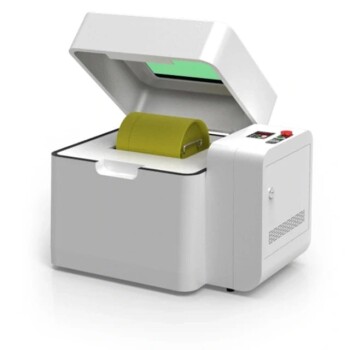
- Laboratory Jar Mill with Agate Grinding Jar and Balls
- Nature Agate Mortar and Pestle for Grinding and Mixing
- Laboratory Jar Ball Mill with Alumina Zirconia Grinding Jar and Balls
- Laboratory Ball Mill Jar Mill with Metal Alloy Grinding Jar and Balls
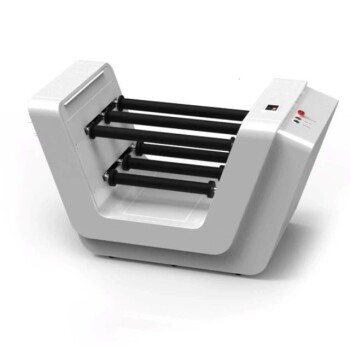
- Laboratory Four-Body Horizontal Jar Mill
People Also Ask
- What are the different types of laboratory mills? Choose the Right Grinder for Your Sample Material
- What is use for grinding in the laboratory? Select the Right Mill for Accurate Sample Prep
- What laboratory apparatus is used for grinding? Match the Right Mill to Your Sample Material
- What is the function of a laboratory grinding mill? Achieve Precise Sample Preparation for Accurate Results
- What is the use of a laboratory mill? Achieve Accurate Sample Homogenization for Reliable Results