Electrolytic cells function as the regenerative heart of a closed-loop titanium production system. They are essential because they convert byproduct salts—specifically magnesium chloride, sodium chloride, or calcium chloride—back into reusable active metal reducing agents and chlorine gas.
Core Insight: By using electrical energy to decompose waste salts, electrolytic cells transform a linear production line into a circular one. This capability significantly lowers operational costs by recycling raw materials and eliminates the environmental burden of discharging waste salts.
The Role of Electrolysis in Titanium Recovery
Recovering Active Reducing Agents
In processes like magnesiothermic or sodiothermic reduction, active metals are consumed to produce titanium.
This reaction leaves behind byproduct salts. Electrolytic cells process these salts to recover the original active metal reducing agents.
Recycling Chlorine Gas
The recovery process is twofold. Alongside the metal, the cells also recover chlorine gas.
This gas can be recirculated back into the initial stages of titanium processing, further reducing the need to purchase raw chemical inputs.
Economic and Environmental Impact
Reducing Production Costs
The integration of electrolytic cells directly impacts the bottom line.
By constantly recycling reducing agents, facilities drastically lower their material procurement costs. The system effectively manufactures its own raw materials from its waste.
Minimizing Waste Discharge
Without electrolysis, the byproduct salts would constitute industrial waste.
Electrolytic cells minimize the discharge of these environmental waste products, allowing facilities to meet stricter environmental standards.
Operational Mechanism
Driving Nonspontaneous Reactions
Electrolytic cells are electrochemical devices that use electrical energy to force chemical reactions that would not occur naturally.
This is required because the byproduct salts are chemically stable and require energy to be decomposed.
The Molten Salt Environment
To facilitate this recycling, the byproduct salts serve as the electrolyte within the cell.
Using a DC power supply and two electrodes, the system drives the decomposition of these molten salts to separate the metal from the chlorine.
Understanding the Trade-offs
Energy Dependence
While the process saves on material costs, it shifts the operational burden to energy consumption.
The process relies on a DC power supply to drive the nonspontaneous decomposition of salts. The feasibility of the closed loop depends heavily on the availability and cost of the electrical energy required to run the electrolysis.
Implications for Process Design
To leverage electrolytic cells effectively, consider your primary operational objectives:
- If your primary focus is Cost Reduction: Prioritize the efficiency of the cell's recovery rate to maximize the reuse of magnesium or sodium, reducing the need to buy fresh reducing agents.
- If your primary focus is Environmental Compliance: Focus on the cell's ability to process the full volume of byproduct salts to ensure zero discharge of hazardous waste.
Electrolytic cells are not just disposal units; they are the critical link that makes titanium production economically and environmentally sustainable.
Summary Table:
| Key Function | Impact on Production | Benefit Category |
|---|---|---|
| Salt Decomposition | Converts byproduct salts (MgCl2, NaCl) into active metals | Material Recycling |
| Gas Recovery | Recaptures chlorine gas for initial processing stages | Resource Efficiency |
| Waste Minimization | Transforms industrial waste into reusable raw materials | Environmental Compliance |
| Closed-Loop Integration | Creates a circular system from a linear production line | Operational Sustainability |
| Energy Conversion | Uses DC power to drive nonspontaneous chemical reactions | Process Control |
Elevate Your Laboratory Efficiency with KINTEK Advanced Solutions
Transition to a more sustainable and cost-effective production model with KINTEK’s precision-engineered equipment. Whether you are optimizing a closed-loop titanium process or advancing material research, our comprehensive portfolio is designed to meet the most rigorous scientific standards.
How KINTEK Empowers Your Research & Production:
- Electrolytic Excellence: High-performance electrolytic cells and electrodes for efficient salt decomposition and metal recovery.
- Thermal Precision: A full range of high-temperature furnaces (muffle, tube, vacuum, and CVD) for advanced material processing.
- Pressure & Synthesis: Industry-leading high-temperature high-pressure reactors, autoclaves, and hydraulic presses.
- Support & Consumables: Specialized PTFE products, ceramics, and crucibles to ensure long-term durability.
Ready to transform your laboratory output and minimize environmental impact? Contact our technical experts today to find the perfect equipment solution tailored to your specific application.
References
- Nyasha Matsanga, Willie Nheta. An Overview of Thermochemical Reduction Processes for Titanium Production. DOI: 10.3390/min15010017
This article is also based on technical information from Kintek Solution Knowledge Base .
Related Products
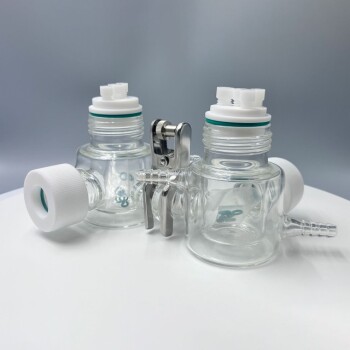
- Electrolytic Electrochemical Cell with Five-Port
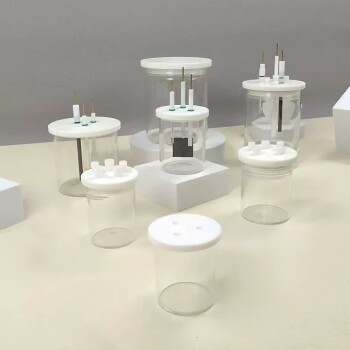
- PTFE Electrolytic Cell Electrochemical Cell Corrosion-Resistant Sealed and Non-Sealed
- Super Sealed Electrolytic Electrochemical Cell
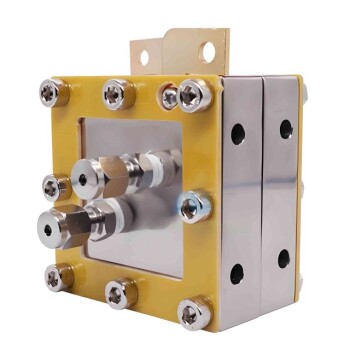
- Electrolytic Electrochemical Cell Gas Diffusion Liquid Flow Reaction Cell
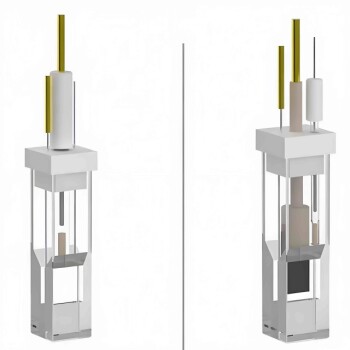
- Electrolytic Electrochemical Cell for Coating Evaluation
People Also Ask
- How does the design of an electrochemical electrolytic cell influence the coating uniformity? Optimize Your Catalysts
- What is the correct shutdown and disassembly procedure after an experiment? Ensure Safety and Protect Your Equipment
- What are the three essential components that comprise an electrolytic cell? Key Elements of Chemical Synthesis
- How does the design of an electrolytic cell affect the production yield of ferrate(VI)? Optimize Efficiency & Purity
- What is galvanic cell or electrolytic cell? Unlock the Secrets of Electrochemical Power