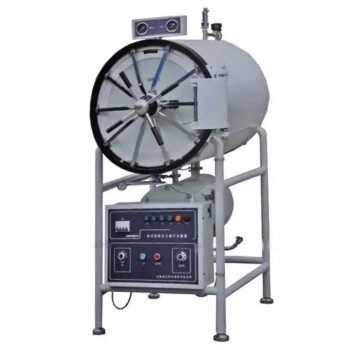
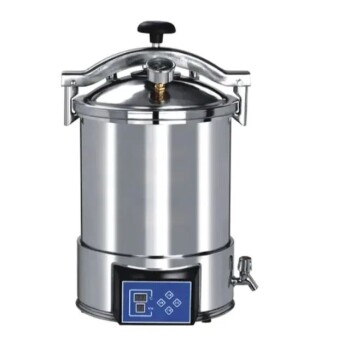
High-pressure reactors, or autoclaves, are essential for overcoming the significant kinetic barriers inherent in producing anhydrous magnesite. Without these specialized vessels, the chemical reaction naturally favors the formation of unstable hydrated phases rather than the desired dry product. By sustaining temperatures above 100°C and carbon dioxide partial pressures up to 100 bar, these reactors force the rapid precipitation of thermodynamically stable anhydrous magnesite.
Core Insight: While anhydrous magnesite is thermodynamically stable, it is difficult to form under standard conditions because water molecules readily integrate into the crystal lattice. Autoclaves create a high-energy hydrothermal environment that effectively "skips" these hydrated stages, ensuring a pure and rapid output.
Overcoming Kinetic Barriers
The Trap of Hydrated Phases
Under ambient or low-pressure conditions, magnesium carbonate tends to bond with water molecules. This results in the formation of nesquehonite or other unstable hydrated phases rather than pure magnesite. The system requires significant energy to prevent these water molecules from integrating into the final structure.
Bypassing Intermediate Steps
The production of anhydrous magnesite is not just about heating materials; it is about managing reaction pathways. Significant kinetic barriers exist that prevent the direct formation of the anhydrous phase. High-pressure reactors provide the necessary environment to surmount these barriers, driving the reaction directly toward the stable end-product.
The Mechanics of Hydrothermal Synthesis
The Role of Carbon Dioxide Pressure
To ensure the correct chemical phase forms, the reactor must maintain immense pressure. Primary industrial processes utilize carbon dioxide partial pressures of up to 100 bar. This high pressure is critical for stabilizing the carbonate structure against the tendency to hydrate or decompose.
Temperature as a Catalyst
Heat is the primary driver for dehydration and structural reorganization. Reactors must operate at temperatures above 100°C to ensure the thermodynamic stability of the anhydrous phase. In broader hydrothermal synthesis applications, temperatures often range even higher to facilitate complete structural reorganization.
Achieving Industrial Speed
Without high pressure and temperature, the precipitation of anhydrous magnesite is geologically slow. Autoclaves compress this timeline significantly, allowing for rapid precipitation. This transforms a process that could take eons in nature into one viable for industrial production cycles.
Operational Considerations and Trade-offs
Equipment Complexity and Cost
Implementing high-pressure autoclaves introduces significant capital expense. The vessels must be engineered to withstand extreme internal forces, often requiring specialized alloys or liners to prevent failure. This complexity increases both initial investment and ongoing maintenance costs compared to atmospheric processing.
Safety and Corrosion Management
Operating at 100 bar requires rigorous safety protocols and specialized containment. Furthermore, hydrothermal environments can be highly corrosive to standard reactor materials. While specific liners (such as titanium) are used in similar applications to prevent impurity leaching and corrosion, the material selection for magnesite must specifically withstand high CO2 environments.
Making the Right Choice for Your Goal
To determine if an autoclave process is required for your specific application, consider your end-product requirements:
- If your primary focus is producing pure anhydrous magnesite: You must utilize a high-pressure reactor to generate the heat and partial pressure necessary to bypass hydrated phases like nesquehonite.
- If your primary focus is low-cost production of hydrated carbonates: You can likely utilize atmospheric vessels, accepting that the final product will contain water molecules and possess lower thermodynamic stability.
High-pressure reactors are not merely a method of acceleration; they are a thermodynamic necessity for forcing the crystallization of anhydrous magnesite in a commercially viable timeframe.
Summary Table:
| Parameter | Requirement | Purpose in Magnesite Production |
|---|---|---|
| Temperature | > 100°C | Ensures thermodynamic stability and dehydration of the phase. |
| CO2 Pressure | Up to 100 bar | Stabilizes the carbonate structure and prevents hydration. |
| Reaction Target | Anhydrous Magnesite | Bypasses unstable hydrated phases like nesquehonite. |
| Kinetics | Rapid Precipitation | Compresses geological timelines into industrial production cycles. |
Elevate Your Chemical Synthesis with KINTEK Precision
To produce high-purity anhydrous magnesite, you need equipment that can handle extreme kinetic and thermodynamic demands. KINTEK specializes in high-performance laboratory solutions, offering industry-leading high-temperature high-pressure reactors and autoclaves designed for rigorous hydrothermal synthesis.
Our equipment ensures precise control over pressure and temperature, allowing you to bypass intermediate hydrated phases and achieve stable, pure results efficiently. Whether you are focused on battery research, material science, or industrial chemical production, our comprehensive portfolio—including muffle and vacuum furnaces, hydraulic presses, and specialized ceramics—is engineered to meet your strictest specifications.
Ready to optimize your production cycle? Contact KINTEK today to find the perfect reactor for your lab!
References
- Caleb M. Woodall, Jennifer Wilcox. Utilization of mineral carbonation products: current state and potential. DOI: 10.1002/ghg.1940
This article is also based on technical information from Kintek Solution Knowledge Base .
Related Products
- Stainless High Pressure Autoclave Reactor Laboratory Pressure Reactor
- Mini SS High Pressure Autoclave Reactor for Laboratory Use
- High Pressure Laboratory Autoclave Reactor for Hydrothermal Synthesis
- Customizable High Pressure Reactors for Advanced Scientific and Industrial Applications
- Portable High Pressure Laboratory Autoclave Steam Sterilizer for Lab Use
People Also Ask
- Why is a laboratory high-pressure reactor used in the hydrothermal synthesis of hydroxyapatite catalysts?
- Why is a laboratory high-pressure reactor necessary for synthesizing fly ash-based zeolite? Achieve Pure Crystallization
- What role does a laboratory high-pressure reactor play in the leaching process of spent cathode materials? Optimize Recovery
- What conditions do laboratory high-pressure reactors provide for HTC? Optimize Your Biochar Production Processes
- How are high-pressure reactors used to prepare metaphosphate electrocatalysts? Master In-Situ Precursor Growth