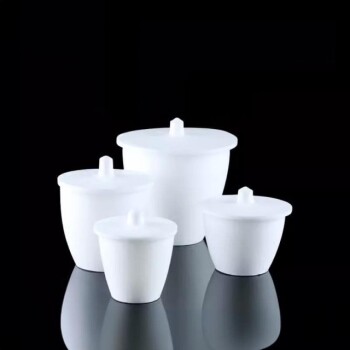
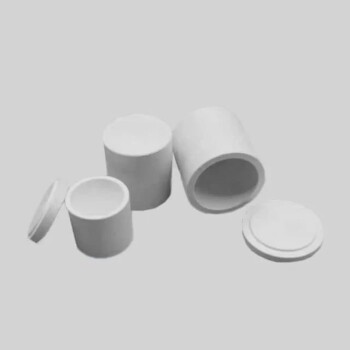
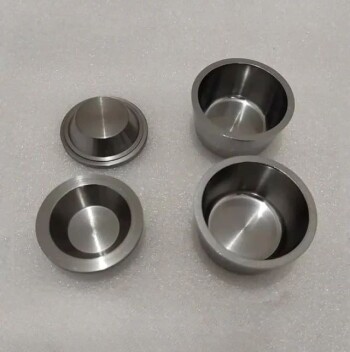
High-purity fused silica crucibles are the preferred choice for nickel slag smelting because they provide exceptional thermal shock stability and maintain the chemical integrity of the melt at 1400°C. These crucibles effectively contain corrosive slag without leaching metallic impurities into the sample. Furthermore, their specific geometry facilitates the gravity-driven settling and agglomeration of reduced metal particles, which is critical for accurate post-experiment phase analysis.
Core Takeaway: Fused silica crucibles are selected for nickel slag reduction because they combine high-temperature chemical inertness with a structural design that optimizes the separation and collection of reduced metal phases.
Thermal and Chemical Integrity at High Temperatures
Superior Thermal Shock Resistance
Fused silica, or quartz, possesses an extremely low coefficient of thermal expansion, making it highly resistant to thermal shock. This allows the crucible to endure the rapid temperature fluctuations inherent in slag smelting and reduction processes without cracking.
Maintenance of Chemical Purity
During the reduction of molten slag at 1400 degrees Celsius, the crucible must remain chemically inert. High-purity fused silica ensures that no significant metallic impurities are introduced into the slag, preserving the accuracy of the experimental data.
Structural Stability Under Heat
While other materials might soften or react, high-purity silica maintains the necessary structural rigidity to hold molten slag for extended periods. This stability is vital for experiments that require precise control over the reaction environment at the thermal limits of the material.
Optimizing the Reduction Process
Design-Enabled Particle Agglomeration
The conical design of many fused silica crucibles is a functional requirement for reduction experiments. This shape uses gravity to encourage reduced metal particles to settle at the bottom and agglomerate into larger droplets.
Simplified Phase Analysis
By concentrating the reduced metal into a single mass at the base of the cone, the crucible simplifies the subsequent phase analysis. Researchers can more easily separate the metallic phase from the remaining slag for weighing and chemical characterization.
Surface Interaction with Slag
Fused silica provides a surface that minimizes unwanted interactions with nickel-rich slags. This ensures that the molten material flows correctly within the vessel, allowing for the maximum recovery of reduced metal particles.
Understanding the Trade-offs
Temperature Limitations
While fused silica is excellent up to 1400°C, it approaches its softening point shortly thereafter. For experiments exceeding 1500°C, alternative materials like high-purity alumina or corundum may be required to maintain mechanical strength.
Chemical Sensitivity to Basic Slags
Fused silica is an acidic refractory and can be susceptible to chemical attack by highly basic slags. In environments where the slag chemistry is aggressively basic, the crucible walls may thin, potentially leading to sample contamination or vessel failure.
Comparison with Graphite
Unlike graphite crucibles, which provide a natural reducing environment, fused silica is neutral. While graphite is excellent for carbothermic reduction, fused silica is preferred when the researcher needs to strictly control the source of the reducing agent without interference from the container walls.
Making the Right Choice for Your Goal
How to Apply This to Your Project
- If your primary focus is phase separation and metal recovery: Use a conical fused silica crucible to maximize the gravity-driven agglomeration of metal particles.
- If your primary focus is preventing metallic contamination: Ensure you select high-purity (quartz) silica to avoid introducing trace elements into your nickel slag samples.
- If your primary focus is extreme temperature stability above 1450°C: Consider high-purity alumina or corundum crucibles, as they offer higher refractoriness than fused silica.
- If your primary focus is creating a reducing atmosphere: Evaluate whether a graphite crucible is more appropriate, as it assists the carbothermic reduction process.
By aligning crucible material and geometry with the specific chemical and thermal demands of nickel slag reduction, researchers can ensure both the purity of their samples and the clarity of their analytical results.
Summary Table:
| Feature | Advantage for Slag Smelting | Practical Benefit |
|---|---|---|
| Thermal Shock Resistance | Low expansion coefficient | Prevents cracking during rapid temp cycles |
| Chemical Inertness | High-purity quartz composition | No metallic impurity leaching into samples |
| Conical Geometry | Gravity-driven design | Enhances metal particle agglomeration |
| Temperature Limit | Stable up to 1400°C | Ideal for standard nickel slag reduction |
| Surface Interaction | Non-reactive with acidic slag | Ensures clean separation of metallic phases |
Elevate Your Metallurgical Research with KINTEK
Precision in nickel slag smelting requires more than just skill—it demands the highest quality consumables and equipment. KINTEK specializes in high-performance laboratory solutions, offering a comprehensive range of high-purity fused silica, alumina, and graphite crucibles designed for extreme thermal environments.
Beyond consumables, we provide the advanced hardware necessary for precise results, including:
- High-Temperature Furnaces: Muffle, vacuum, and atmosphere furnaces for controlled reduction.
- Sample Preparation: Crushing, milling, and hydraulic pellet presses.
- Specialized Labware: PTFE products, ceramics, and high-pressure reactors.
Whether you are focusing on metal recovery or phase analysis, KINTEK ensures your lab is equipped for success with reliable supply chains and expert support. Contact us today to optimize your smelting experiments!
References
- Desmond Attah-Kyei, Daniel Lindberg. A Crucial Step Toward Carbon Neutrality in Pyrometallurgical Reduction of Nickel Slag. DOI: 10.1007/s40831-023-00763-5
This article is also based on technical information from Kintek Solution Knowledge Base .
Related Products
- High Purity Pure Graphite Crucible for Evaporation
- High Purity Pure Graphite Crucible for Electron Beam Evaporation
- Arc-Shaped Alumina Ceramic Crucible High Temperature Resistant for Engineering Advanced Fine Ceramics
- Custom Machined and Molded PTFE Teflon Parts Manufacturer with PTFE Crucible and Lid
- Engineering Advanced Fine Ceramics Alumina Al2O3 Crucible With Lid Cylindrical Laboratory Crucible
People Also Ask
- Why are high-purity graphite crucibles preferred for sulfide solid electrolytes? Achieve Superior Material Purity
- Why is a high-purity graphite crucible required for Chromel-TaC composites? Ensure Peak Purity at 1400°C
- What role do high-purity graphite crucibles play in molten salt corrosion research? Ensure Reactor-Grade Precision
- Why are high-purity graphite crucibles used for magnesium distillation? Ensure 3N8 Purity & Thermal Stability
- Why is a high-purity graphite crucible ideal for nitrogen-doped graphene at 1500 °C? Maximize Purity and Stability