High-purity graphite crucibles require this rigorous pretreatment because the material is naturally porous and acts as a reservoir for atmospheric moisture and oxygen. Treating the crucibles in a vacuum oven followed by high-temperature hydrogen reduction is the only reliable method to eliminate these internal impurities before they are released into the molten salt.
By effectively removing moisture and oxygen-containing functional groups, this process ensures that any corrosion observed during the experiment is driven solely by the intended carbon content, rather than uncontrolled environmental contaminants.
The Hidden Vulnerability of Graphite
The Porosity Factor
High-purity graphite is not a solid, impermeable block; it is inherently porous. Because of this structure, it readily absorbs moisture and gases directly from the atmosphere during storage and handling. If left untreated, these pores act as microscopic traps for contaminants that are fatal to sensitive experiments.
Oxygen Functional Groups
Beyond simple moisture, graphite surfaces often harbor oxygen-containing functional groups. These are chemically bonded impurities that cannot be removed by simple drying or low-temperature heating. They represent a reservoir of oxygen that will react unpredictably when subjected to extreme heat.
The Two-Stage Purification Logic
Stage 1: Deep Vacuum Drying
The first step involves processing the crucibles in a vacuum oven. This creates a low-pressure environment that lowers the boiling point of trapped water, facilitating deep drying. This stage effectively drives off the physical moisture and residual gases adsorbed within the porous structure.
Stage 2: High-Temperature Hydrogen Reduction
Vacuum drying alone is insufficient to break chemical bonds; a second pre-baking step is required at 900 °C under a reducing atmosphere, typically Argon with 4% Hydrogen (Ar-4% H2). The hydrogen actively reacts with the oxygen-containing functional groups on the graphite, converting them into water vapor that is then carried away by the gas flow. This chemical scrubbing ensures the graphite is chemically inert regarding oxygen prior to use.
Implications for Molten Salt Experiments
Preventing In-Situ Contamination
Molten salt experiments are typically conducted at high temperatures, such as 700 °C. Without pre-treatment, the trapped moisture and functional groups would release exactly when the experiment begins. This release introduces uncontrolled variables into the melt, fundamentally altering the chemical environment.
Isolating the Corrosion Mechanism
The goal of these experiments is often to study the specific interaction between the salt and the carbon content. If oxygen is released from the crucible, it creates a "corrosion driving force" based on oxidation, not carbon interaction. Proper pre-treatment guarantees that the experimental results reflect the true behavior of the materials, not the artifacts of contamination.
Common Pitfalls to Avoid
Insufficient Temperature
A common mistake is assuming that standard drying temperatures (100°C - 200°C) are sufficient. These temperatures only remove surface water; they fail to eliminate the chemically bonded oxygen groups that require the 900 °C environment to dislodge.
Neglecting the Reducing Atmosphere
Baking graphite in an inert atmosphere (like pure Argon) is helpful, but less effective than using a reducing atmosphere. Without hydrogen to chemically "reduce" the oxygen groups, you leave potential contaminants behind. The hydrogen component is critical for achieving the high purity required for accurate corrosion data.
Making the Right Choice for Your Experiment
To ensure your data is valid and reproducible, apply the following standards:
- If your primary focus is baseline accuracy: Ensure the pre-baking temperature reaches at least 900 °C to fully activate the hydrogen reduction process.
- If your primary focus is corrosion study: Verify that the "corrosion driving force" is limited to carbon by confirming the removal of oxygen groups via this two-step process.
- If your primary focus is system sealing: Use the vacuum treatment to establish a foundation for high-vacuum sealing (10⁻⁶ Torr), preventing leaks later in the process.
Eliminating variables before the experiment begins is the only way to trust the data you collect at the end.
Summary Table:
| Pretreatment Stage | Equipment Required | Key Function | Target Impurities |
|---|---|---|---|
| Stage 1: Vacuum Drying | Vacuum Oven | Lowers boiling point to extract deep-seated moisture | Physical moisture & adsorbed gases |
| Stage 2: Pre-baking | High-Temp Furnace | Hydrogen reduction (Ar-4% H2) at 900°C | Oxygen-containing functional groups |
| Final Goal | Controlled Environment | Ensures corrosion is driven by carbon, not oxygen | Uncontrolled environmental contaminants |
Elevate Your Research Precision with KINTEK
Don't let hidden contaminants compromise your molten salt or high-temperature experiments. KINTEK specializes in the advanced laboratory equipment you need for rigorous material preparation.
From high-performance vacuum ovens and high-temperature furnaces (muffle, tube, and atmosphere) to precision crushing systems and hydraulic presses, we provide the tools necessary for absolute purity. Whether you are conducting battery research, dental material testing, or advanced chemical synthesis, our comprehensive portfolio—including high-pressure reactors, autoclaves, and specialized ceramics—is designed to meet the strictest scientific standards.
Ready to achieve reproducible, high-accuracy results? Contact KINTEK today to discuss how our heating and processing solutions can optimize your laboratory workflow!
References
- Kevin J. Chan, Preet M. Singh. Carburization effects on the corrosion of Cr, Fe, Ni, W, and Mo in fluoride-salt cooled high temperature reactor (FHR) coolant. DOI: 10.1016/j.anucene.2018.05.013
This article is also based on technical information from Kintek Solution Knowledge Base .
Related Products
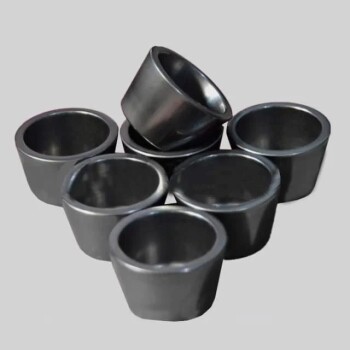
- High Purity Pure Graphite Crucible for Evaporation
- High Purity Pure Graphite Crucible for Electron Beam Evaporation
- Carbon Graphite Boat -Laboratory Tube Furnace with Cover
- Custom Machined and Molded PTFE Teflon Parts Manufacturer with PTFE Crucible and Lid
- Arc-Shaped Alumina Ceramic Crucible High Temperature Resistant for Engineering Advanced Fine Ceramics
People Also Ask
- Why are high-purity graphite crucibles preferred for sulfide solid electrolytes? Achieve Superior Material Purity
- Why is a high-purity graphite crucible required for Chromel-TaC composites? Ensure Peak Purity at 1400°C
- What role do high-purity graphite crucibles play in molten salt corrosion research? Ensure Reactor-Grade Precision
- Why are high-purity graphite crucibles used for magnesium distillation? Ensure 3N8 Purity & Thermal Stability
- Why is a high-purity graphite crucible ideal for nitrogen-doped graphene at 1500 °C? Maximize Purity and Stability