Knowledge Why are rotating reactors preferred for metal leaching? Boost E-Waste Recovery Efficiency & Yield
Author avatar

Tech Team · Kintek Solution

Updated 1 day ago

Why are rotating reactors preferred for metal leaching? Boost E-Waste Recovery Efficiency & Yield


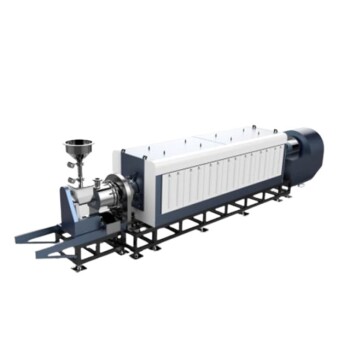
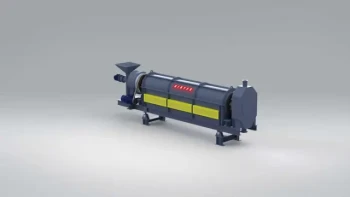
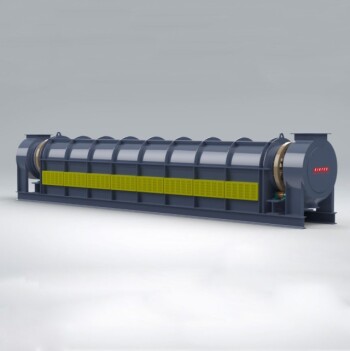
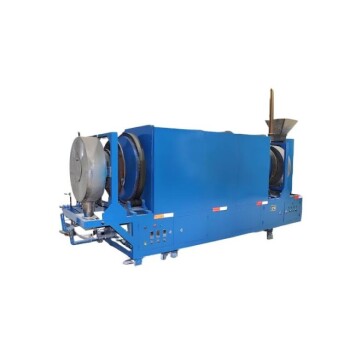
Rotating reactors act as the critical driver for efficiency in electronic waste recovery by fundamentally changing the interaction between solid waste and chemical solutions. By utilizing continuous rotational movement, these systems force waste fragments into constant, thorough contact with leaching agents such as citric acid mixtures. This dynamic mechanical action directly addresses the limitations of static methods, resulting in significantly faster processing times and higher metal recovery rates.

Core Takeaway Static leaching often struggles with stagnation, where the chemical reaction slows down as the solution near the metal becomes saturated. Rotating reactors overcome this by maintaining a dynamic flow that maximizes mass transfer efficiency and ensures a consistent, high-yield dissolution process.

The Mechanics of Efficient Leaching

To understand why rotating reactors are superior, one must look at the physical dynamics occurring inside the vessel.

Enhancing Mass Transfer

The primary advantage of a rotating reactor is the enhancement of mass transfer efficiency.

Continuous rotation prevents the solid waste from settling, ensuring that every fragment is constantly exposed to the leaching solution. This active movement accelerates the chemical reaction required to dissolve metals from electronic components.

Ensuring Uniform Distribution

In a static environment, chemical components can settle or separate, leading to uneven reactions.

Rotational movement ensures a uniform distribution of the solution components throughout the reactor. This consistency guarantees that all waste fragments are treated equally, maximizing the overall efficiency of the recovery batch.

Avoiding Common Process Failures

The preference for rotating reactors is largely defined by the specific failures and inefficiencies they prevent compared to static leaching methods.

Preventing Concentration Polarization

A major pitfall in static leaching is "local concentration polarization."

This occurs when the solution immediately surrounding a metal fragment becomes saturated with dissolved metal, acting as a shield that stops further reaction. Rotating reactors continuously wash this saturated layer away, exposing fresh surface area to the leaching agent.

Overcoming Time Constraints

Static processes rely heavily on passive diffusion, which is inherently slow.

By actively mixing the contents, rotating reactors achieve a higher proportion of metal dissolution in a much shorter timeframe. This makes the process viable for industrial applications where throughput speed is critical.

Making the Right Choice for Your Goal

When designing a recovery process, understanding the relationship between movement and yield is essential.

  • If your primary focus is process speed: Implement rotating reactors to leverage active mixing, which significantly reduces the time required for complete dissolution compared to static methods.
  • If your primary focus is maximum yield: Use rotational movement to prevent local saturation (polarization), ensuring that the leaching solution can access and dissolve a higher proportion of the available metal.

Rotation transforms the leaching process from a passive wait into an active, high-efficiency extraction system.

Summary Table:

Feature Rotating Reactors Static Leaching Methods
Mass Transfer High; continuous movement Low; relies on passive diffusion
Reaction Speed Accelerated via active mixing Slow due to stagnation
Yield Consistency Uniform distribution of solution Uneven; local concentration polarization
Material Handling Prevents settling and shielding Waste fragments often settle/shield
Processing Goal High-speed industrial throughput Low-volume or laboratory scale

Maximize Your Metal Recovery Efficiency with KINTEK

Transition from passive leaching to high-efficiency extraction with KINTEK’s advanced laboratory solutions. Whether you are optimizing electronic waste recovery or developing new recycling protocols, our high-temperature high-pressure reactors and autoclaves and rotating reactor systems provide the mechanical precision needed to eliminate concentration polarization and accelerate dissolution.

From crushing and milling systems for waste preparation to electrolytic cells for final metal recovery, KINTEK offers a comprehensive range of equipment designed for the rigorous demands of battery research and material science.

Ready to scale your throughput and maximize metal yields? Contact our technical experts today to find the perfect reactor system for your lab.

Related Products

People Also Ask

Related Products

Stainless High Pressure Autoclave Reactor Laboratory Pressure Reactor

Stainless High Pressure Autoclave Reactor Laboratory Pressure Reactor

Discover the versatility of Stainless High Pressure Reactor - a safe and reliable solution for direct and indirect heating. Built with stainless steel, it can withstand high temperatures and pressures. Learn more now.

Customizable Laboratory High Temperature High Pressure Reactors for Diverse Scientific Applications

Customizable Laboratory High Temperature High Pressure Reactors for Diverse Scientific Applications

High-pressure lab reactor for precise hydrothermal synthesis. Durable SU304L/316L, PTFE liner, PID control. Customizable volume & materials. Contact us!

Mini SS High Pressure Autoclave Reactor for Laboratory Use

Mini SS High Pressure Autoclave Reactor for Laboratory Use

Mini SS High Pressure Reactor - Ideal for medicine, chemical, and scientific research industries. Programmed heating temp and stirring speed, up to 22Mpa pressure.

High Pressure Laboratory Autoclave Reactor for Hydrothermal Synthesis

High Pressure Laboratory Autoclave Reactor for Hydrothermal Synthesis

Discover the applications of Hydrothermal Synthesis Reactor - a small, corrosion-resistant reactor for chemical labs. Achieve rapid digestion of insoluble substances in a safe and reliable way. Learn more now.

Laboratory High Pressure Horizontal Autoclave Steam Sterilizer for Lab Use

Laboratory High Pressure Horizontal Autoclave Steam Sterilizer for Lab Use

The horizontal autoclave steam sterilizer adopts the gravity displacement method to remove the cold air in the inner chamber, so that the inner steam and cold air content is less, and the sterilization is more reliable.

Visual High-Pressure Reactor for In-Situ Observation

Visual High-Pressure Reactor for In-Situ Observation

The visual high-pressure reactor uses transparent sapphire or quartz glass, maintaining high strength and optical clarity under extreme conditions for real-time reaction observation.

Desktop Fast Laboratory Autoclave Sterilizer 35L 50L 90L for Lab Use

Desktop Fast Laboratory Autoclave Sterilizer 35L 50L 90L for Lab Use

The desktop fast steam sterilizer is a compact and reliable device used for rapid sterilization of medical, pharmaceutical, and research items. It efficiently sterilizes surgical instruments, glassware, medicines, and resistant materials, making it suitable for various applications.

Manual High Temperature Heated Hydraulic Press Machine with Heated Plates for Lab

Manual High Temperature Heated Hydraulic Press Machine with Heated Plates for Lab

The High Temperature Hot Press is a machine specifically designed for pressing, sintering and processing materials in a high temperature environment. It is capable of operating in the range of hundreds of degrees Celsius to thousands of degrees Celsius for a variety of high temperature process requirements.

Warm Isostatic Press WIP Workstation 300Mpa for High Pressure Applications

Warm Isostatic Press WIP Workstation 300Mpa for High Pressure Applications

Discover Warm Isostatic Pressing (WIP) - A cutting-edge technology that enables uniform pressure to shape and press powdered products at a precise temperature. Ideal for complex parts and components in manufacturing.

Split Chamber CVD Tube Furnace with Vacuum Station Chemical Vapor Deposition System Equipment Machine

Split Chamber CVD Tube Furnace with Vacuum Station Chemical Vapor Deposition System Equipment Machine

Efficient split chamber CVD furnace with vacuum station for intuitive sample checking and quick cooling. Up to 1200℃ max temperature with accurate MFC mass flowmeter control.

915MHz MPCVD Diamond Machine Microwave Plasma Chemical Vapor Deposition System Reactor

915MHz MPCVD Diamond Machine Microwave Plasma Chemical Vapor Deposition System Reactor

915MHz MPCVD Diamond Machine and its multi-crystal effective growth, the maximum area can reach 8 inches, the maximum effective growth area of single crystal can reach 5 inches. This equipment is mainly used for the production of large-size polycrystalline diamond films, the growth of long single crystal diamonds, the low-temperature growth of high-quality graphene, and other materials that require energy provided by microwave plasma for growth.

Microwave Plasma Chemical Vapor Deposition MPCVD Machine System Reactor for Lab and Diamond Growth

Microwave Plasma Chemical Vapor Deposition MPCVD Machine System Reactor for Lab and Diamond Growth

Get high-quality diamond films with our Bell-jar Resonator MPCVD machine designed for lab and diamond growth. Discover how Microwave Plasma Chemical Vapor Deposition works for growing diamonds using carbon gas and plasma.

Double Layer Five-Port Water Bath Electrolytic Electrochemical Cell

Double Layer Five-Port Water Bath Electrolytic Electrochemical Cell

Experience optimal performance with our Water Bath Electrolytic Cell. Our double-layer, five-port design boasts corrosion resistance and longevity. Customizable to fit your specific needs. View specs now.

Custom PTFE Teflon Parts Manufacturer for Acid and Alkali Resistant Chemical Powder Material Scoops

Custom PTFE Teflon Parts Manufacturer for Acid and Alkali Resistant Chemical Powder Material Scoops

Known for its excellent thermal stability, chemical resistance and electrical insulating properties, PTFE is a versatile thermoplastic material.

Square Bidirectional Pressure Mold for Lab Use

Square Bidirectional Pressure Mold for Lab Use

Discover precision in molding with our Square Bidirectional Pressure Mold. Ideal for creating diverse shapes and sizes, from squares to hexagons, under high pressure and uniform heating. Perfect for advanced material processing.

CVD Diamond Domes for Industrial and Scientific Applications

CVD Diamond Domes for Industrial and Scientific Applications

Discover CVD diamond domes, the ultimate solution for high-performance loudspeakers. Made with DC Arc Plasma Jet technology, these domes deliver exceptional sound quality, durability, and power handling.

Automatic Lab Cold Isostatic Press CIP Machine Cold Isostatic Pressing

Automatic Lab Cold Isostatic Press CIP Machine Cold Isostatic Pressing

Efficiently prepare samples with our Automatic Lab Cold Isostatic Press. Widely used in material research, pharmacy, and electronic industries. Provides greater flexibility and control compared to electric CIPs.

Optical Water Bath Electrolytic Electrochemical Cell

Optical Water Bath Electrolytic Electrochemical Cell

Upgrade your electrolytic experiments with our Optical Water Bath. With controllable temperature and excellent corrosion resistance, it's customizable for your specific needs. Discover our complete specifications today.

Laboratory Jaw Crusher

Laboratory Jaw Crusher

Discover the small jaw crusher for efficient, flexible, and affordable crushing in labs and small mines. Ideal for coal, ores, and rocks. Learn more now!

Super Sealed Electrolytic Electrochemical Cell

Super Sealed Electrolytic Electrochemical Cell

Super-sealed electrolytic cell offers enhanced sealing capabilities, making it ideal for experiments that require high airtightness.


Leave Your Message