Maintaining chemical purity is the single most critical factor when processing high-performance powder mixtures like tungsten carbide (WC), tungsten (W), and nickel (Ni). Silicon nitride milling balls and plastic jars are preferred because they provide a chemically stable environment that prevents iron contamination while possessing the necessary hardness to efficiently pulverize powder agglomerates. This combination ensures the final composite retains the specific mechanical properties required for operation in extreme environments.
The core value of this configuration is its ability to deliver high-impact mechanical milling—breaking down tough agglomerates—without introducing the metallic impurities that inevitably degrade the performance of tungsten-based composites.
The Imperative of Purity
Eliminating Metallic Contamination
The most significant threat to the integrity of WC-W-Ni composites is the introduction of foreign elements during processing.
Traditional milling setups often utilize metallic media, such as steel balls or jars. These inevitably degrade during the intense friction of the milling process, shedding iron particles into the powder mixture.
The Role of Chemical Stability
By replacing metallic components with silicon nitride balls and plastic jars, you eliminate the source of iron contamination entirely.
This setup ensures that the chemical composition of your powder mixture remains unaltered, which is essential for materials intended for use in extreme environments where even trace impurities can lead to failure.
Mechanics of Efficient Dispersion
Leveraging High Hardness
While plastic jars provide a passive, non-contaminating container, the milling media itself must be aggressive.
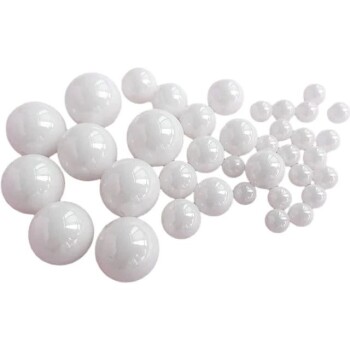
Silicon nitride is utilized specifically for its high hardness. This allows the balls to effectively transfer kinetic energy to the powder.
Breaking Down Agglomerates
The primary mechanical goal of this process is to de-agglomerate the powder particles.
The hard silicon nitride balls efficiently shatter these clusters, ensuring the WC, W, and Ni powders are not just mixed, but fully dispersed. This results in enhanced mixing uniformity, which is the foundation of a consistent final product.
Understanding the Trade-offs
The Cost of Contamination
It is important to understand why "traditional" metallic media is rejected in this specific context.
While metallic media might be standard for less critical applications, the "iron contamination" mentioned in the reference is a non-starter for high-performance WC composites.
Efficiency vs. Purity
You are essentially prioritizing material integrity over standard processing methods.
Using plastic jars and ceramic balls may require different handling or process parameters compared to all-metal setups, but this is a necessary trade-off to achieve the required level of chemical purity.
Making the Right Choice for Your Goal
To achieve the best results with your tungsten carbide mixtures, consider your specific end-goals:
- If your primary focus is chemical purity: Prioritize the use of plastic jars and silicon nitride media to completely eliminate the risk of iron cross-contamination.
- If your primary focus is dispersion quality: Rely on the high hardness of silicon nitride balls to ensure thorough breakdown of powder agglomerates for uniform mixing.
Success in processing these composites lies in balancing aggressive mechanical mixing with strict contamination control.
Summary Table:
| Feature | Silicon Nitride Media | Plastic Milling Jars | Benefit for WC-W-Ni |
|---|---|---|---|
| Material Property | High Hardness & Inertness | Chemically Resistant Polymer | Eliminates iron contamination sources |
| Mechanical Action | High-impact de-agglomeration | Passive, non-reactive container | Ensures uniform powder dispersion |
| Purity Control | Zero metallic shedding | Zero metallic shedding | Maintains chemical integrity of composites |
| Application Focus | Efficient particle breakdown | Contamination prevention | Ideal for extreme environment materials |
Elevate Your Material Purity with KINTEK Solutions
Don't let iron contamination compromise the integrity of your high-performance tungsten carbide composites. KINTEK specializes in advanced laboratory equipment designed for the most demanding research and production environments. Whether you are perfecting powder mixtures or developing new alloys, our comprehensive range of crushing and milling systems, including high-purity silicon nitride media and specialized jars, ensures your materials remain pristine and perfectly dispersed.
From high-temperature furnaces and hydraulic presses to battery research tools and precision cooling solutions, KINTEK provides the end-to-end support your lab needs to achieve repeatable, superior results.
Ready to optimize your milling process? Contact our technical experts today to find the perfect equipment configuration for your specific application!
References
- Ahmed-Ameur Zegai, Antonio Javier Sánchez‐Herencia. Microstructural and Mechanical Characterization of Colloidal Processed WC/(W5Vol%Ni) via Spark Plasma Sintering. DOI: 10.3390/ma16134584
This article is also based on technical information from Kintek Solution Knowledge Base .
Related Products
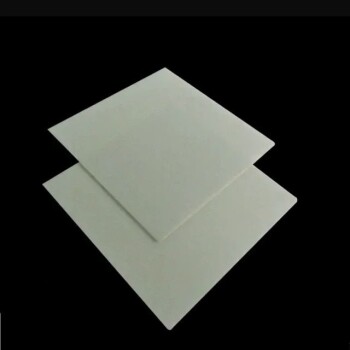
- Precision Machined Silicon Nitride (SiN) Ceramic Sheet for Engineering Advanced Fine Ceramics
- Stainless Steel Laboratory Ball Mill for Dry Powder and Liquid with Ceramic Polyurethane Lining
- Laboratory Jar Mill with Agate Grinding Jar and Balls
- Laboratory Ball Mill Jar Mill with Metal Alloy Grinding Jar and Balls
- Laboratory Jar Ball Mill with Alumina Zirconia Grinding Jar and Balls
People Also Ask
- What are the methods of high temperature ceramic? Master the 3-Stage Process for Durable Components
- What are pure silicon sputtering targets? Precision Source for High-Performance Thin Films
- Can silicon be sputtered? A Guide to RF & DC Methods for Thin Film Deposition
- What is the most commonly used in semiconductors? Discover Why Silicon Dominates Modern Electronics
- Which is the most preferred material for manufacturing of a semiconductor? Silicon's Dominance Explained