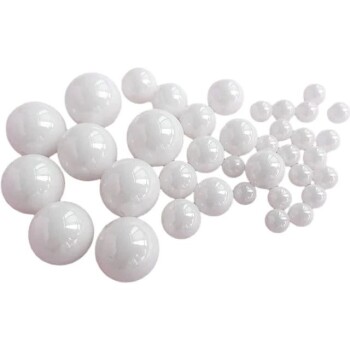
The primary reason for selecting zirconia grinding balls is to achieve a critical balance between high-energy grinding efficiency and strict material purity. Specifically, zirconia provides the high density required to generate sufficient kinetic energy for breaking down powder agglomerates, while its chemical inertness prevents the contamination of the sensitive MAX phase ceramic structure.
Core Takeaway The effectiveness of zirconia lies in its dual-nature advantage: its high density delivers the impact force necessary to physically pulverize and mix agglomerates, while its superior wear resistance ensures that the final slurry remains chemically pure and free of foreign debris.
The Mechanics of Efficient Milling
High Density Generates Kinetic Energy
To successfully prepare MAX phase slurries, the grinding medium must deliver significant force. Zirconia balls are selected for their high density, which translates directly into higher kinetic energy during the milling process.
Breaking Down Agglomerates
When the milling jar rotates, the heavier zirconia balls impact the raw materials with greater intensity than lighter alternatives like silica or alumina.
This high-impact energy is essential for effectively breaking up powder agglomerates that naturally form in raw ceramic materials.
Ensuring Uniform Mixing
Beyond simple size reduction, the kinetic energy provided by zirconia ensures the effective mixing of the constituent powders.
This uniformity is vital for the subsequent synthesis steps, ensuring the MAX phase ceramics develop consistent properties throughout the batch.
Preserving Material Purity
Superior Wear Resistance
In high-energy milling, the grinding media constantly collides with the jar walls and the material itself. Soft media would degrade quickly, shedding particles into your slurry.
Zirconia exhibits excellent wear resistance, which drastically minimizes the production of "medium-wear debris." This ensures that the physical volume of your slurry isn't contaminated by degrading grinding balls.
Chemical Inertness
MAX phase ceramics require high-purity raw materials to function correctly. Zirconia is chemically inert, meaning it does not react with the powder slurry.
This stability prevents side reactions and eliminates the introduction of metallic impurities that could compromise the electrochemical or structural performance of the final ceramic product.
Understanding the Trade-offs
The Risk of Impurity Introduction
The most common pitfall in preparing ceramic slurries is the unintentional doping of the material via the grinding media.
Using media with lower hardness (like steel) often introduces metallic impurities (such as iron) into the matrix. This contamination can fundamentally alter the intended electrochemical performance or structural integrity of the MAX phase.
Balancing Energy and Stability
While heavier metals like steel might offer high density, they lack the chemical stability of ceramics. Conversely, other ceramics might be inert but lack the density to grind efficiently.
Zirconia represents the necessary trade-off: it sacrifices the extreme cheapness of steel or the ubiquity of silica to provide maximum density without chemical reactivity.
Making the Right Choice for Your Goal
To ensure your MAX phase preparation meets project requirements, align your media selection with your specific constraints:
- If your primary focus is Grinding Efficiency: Rely on zirconia's high density to maximize the impact energy transferred to the powder, ensuring agglomerates are fully dispersed.
- If your primary focus is Material Purity: Leverage zirconia's wear resistance and chemical inertness to prevent the introduction of foreign elements or debris into your raw materials.
By utilizing zirconia, you ensure that the physical breakdown of your powder never comes at the cost of its chemical integrity.
Summary Table:
| Feature | Benefit for MAX Phase Slurries |
|---|---|
| High Density | Generates high kinetic energy to break down tough agglomerates. |
| Wear Resistance | Minimizes debris and prevents contamination from the grinding media. |
| Chemical Inertness | Prevents side reactions and preserves the material's electrochemical properties. |
| Mixing Efficiency | Ensures uniform distribution of powders for consistent final synthesis. |
Elevate Your Materials Research with KINTEK
Precision in MAX phase ceramic synthesis starts with the right equipment and consumables. At KINTEK, we specialize in providing high-performance laboratory solutions tailored for advanced material science. Whether you need zirconia grinding media, high-precision crushing and milling systems, or sieving equipment to ensure particle uniformity, we have the expertise to support your workflow.
From high-temperature furnaces for final synthesis to hydraulic presses for sample preparation, our comprehensive portfolio is designed to maximize your lab's efficiency and purity.
Ready to achieve superior grinding results? Contact us today to find the perfect solution for your lab!
Related Products
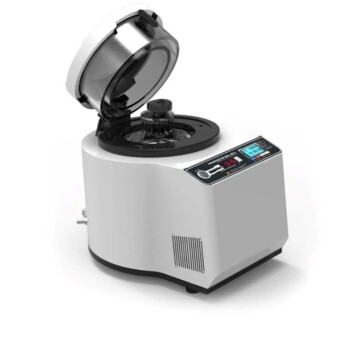
- Laboratory Jar Ball Mill with Alumina Zirconia Grinding Jar and Balls
- Precision Machined Zirconia Ceramic Ball for Engineering Advanced Fine Ceramics
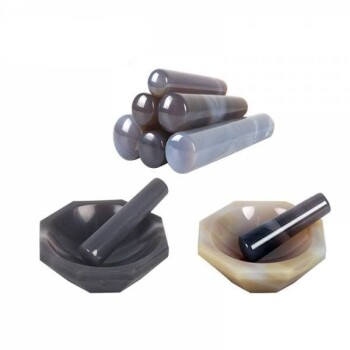
- Laboratory Jar Mill with Agate Grinding Jar and Balls
- Laboratory Ball Mill Jar Mill with Metal Alloy Grinding Jar and Balls
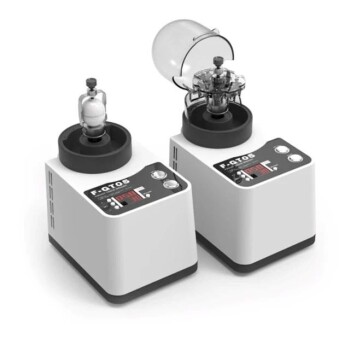
- Laboratory Micro Tissue Grinding Mill Grinder
People Also Ask
- What are the primary functions of using a ball mill for BZCY72 powder? Achieve High Purity and Enhanced Sintering
- In what way does a laboratory ball mill affect material properties when modifying PHBV/pulp fiber composites?
- Why is a laboratory ball mill required for ultra-fine fly ash? Unlock Nano-Scale Adsorption Power
- What is the function of a laboratory ball mill in the preparation of AMMCs? Optimize Dispersion & Grain Refinement
- What is the function of a laboratory ball mill in the pretreatment of waste tire char (WTC)? Optimize Material Reactivity