The integrity of your Scanning Electron Microscope (SEM) data is directly dependent on your surface preparation. High-quality grinding and polishing consumables are essential because they create a mirror finish that is free from scratches and mechanical deformation. Without this level of surface fidelity, the SEM cannot accurately resolve the fine microstructural details required to evaluate Cast Austenitic Stainless Steels.
High-quality consumables do more than clean the sample; they selectively remove surface stress layers introduced during cutting and grinding. This ensures that the features you observe—such as phase boundaries and precipitates—are genuine material properties, preventing the costly misinterpretation of preparation artifacts as material defects.
The Critical Role of Surface Integrity
Removing Deformation Layers
Every mechanical step in sample preparation, from sectioning to coarse grinding, introduces a layer of damaged, stressed material on the sample surface.
High-quality consumables, such as diamond polishing suspensions, are engineered to cut cleanly rather than plow through the material. This effectively removes these deformation layers, revealing the true bulk structure underneath.
Achieving a True Mirror Finish
SEM imaging relies on the interaction between an electron beam and the sample surface.
Any remaining scratches or topography can scatter electrons unpredictably or create "shadows." High-quality colloidal silica provides the final chemical-mechanical polish needed to flatten the topography completely, ensuring the electron signal represents material composition rather than surface roughness.
Why Cast Austenitic Stainless Steels Demand Precision
Visualizing Phase Boundaries
Cast Austenitic Stainless Steels are characterized by a complex microstructure. Accurately resolving the boundaries between different phases is critical for characterizing the material.
If the surface retains deformation from poor-quality consumables, these boundaries become blurred or distorted. A deformation-free surface allows for the sharp delineation of phase structures necessary for quantitative analysis.
Detecting Fine Precipitates
The analysis of these steels often involves searching for minute precipitates that signal changes in material properties.
These features are often microscopic. A scratched surface creates background noise that can easily hide these fine precipitates, rendering the SEM analysis inconclusive or misleading.
Preventing Data Misinterpretation
Avoiding False Positives
The primary risk of using inferior consumables is the creation of artifacts that mimic failure mechanisms.
Scratches can look like micro-cracks, and embedded polishing debris can resemble inclusions. High-quality consumables minimize these artifacts, ensuring that what you analyze is the steel itself, not the residue of the preparation process.
Accurate Embrittlement Analysis
One of the most critical aspects of analyzing Cast Austenitic Stainless Steels is understanding embrittlement mechanisms.
If the surface contains stress layers, it can obscure the specific microstructural evidence of embrittlement. You must have a pristine surface to correctly identify the causes of material degradation.
Understanding the Trade-offs
Initial Cost vs. Total Value
High-quality consumables, such as specialized diamond suspensions, invariably carry a higher upfront cost than general-purpose abrasive papers or powders.
However, "saving" money on consumables often leads to higher costs later. The expense of SEM beam time and the labor required to re-polish a failed sample far outweigh the price difference of premium consumables.
Process Sensitivity
High-performance consumables often require more precise application and adherence to specific protocols.
Using colloidal silica, for example, requires careful cleaning to prevent crystallization on the surface. The trade-off for superior results is the need for a more disciplined, rigorous preparation workflow.
Making the Right Choice for Your Goal
To ensure your SEM analysis yields valid results, align your consumable selection with your analytical objectives.
- If your primary focus is general microstructural checks: You may achieve acceptable results with standard metallographic supplies, provided the SEM magnification is low.
- If your primary focus is failure analysis or embrittlement studies: You must use high-quality diamond suspensions and colloidal silica to ensure a deformation-free surface.
- If your primary focus is high-resolution imaging: You cannot compromise on consumables; any surface artifact will degrade the resolution and accuracy of your images.
Investing in superior preparation materials is the only way to guarantee that your SEM images reflect the reality of the material, not the flaws of the process.
Summary Table:
| Consumable Type | Key Function | Impact on SEM Results |
|---|---|---|
| Diamond Suspensions | Removes deformation layers | Reveals true bulk structure without plowing or scratching. |
| Colloidal Silica | Chemical-mechanical polish | Achieves a flat topography for clear electron signal interaction. |
| High-Grade Abrasives | Stress-free surface removal | Delineates phase boundaries and detects minute precipitates. |
| Premium Lubricants | Heat & friction reduction | Prevents preparation artifacts from being mistaken for defects. |
Elevate Your Material Analysis with KINTEK Precision
Don't let inferior surface preparation compromise your SEM data integrity. At KINTEK, we specialize in the high-performance laboratory equipment and consumables essential for advanced material science. Whether you are analyzing complex Cast Austenitic Stainless Steels or conducting critical embrittlement studies, our premium crushing and milling systems, hydraulic presses, and specialized metallographic tools ensure your samples are pristine and deformation-free.
Our value to your laboratory:
- Comprehensive Solutions: From high-temperature furnaces and vacuum systems to precision PTFE and ceramic consumables.
- Unmatched Accuracy: Our tools are designed to eliminate background noise and artifacts, ensuring your results reflect genuine material properties.
- Expert Support: We help you select the right products to optimize your workflow and reduce costly SEM beam time re-runs.
Ready to achieve a true mirror finish? Contact KINTEK today to discuss your sample preparation needs and discover how our expertise can drive your research forward.
References
- Thak Sang Byun, Jeremy T. Busby. Thermal Aging Phenomena in Cast Duplex Stainless Steels. DOI: 10.1007/s11837-015-1709-9
This article is also based on technical information from Kintek Solution Knowledge Base .
Related Products
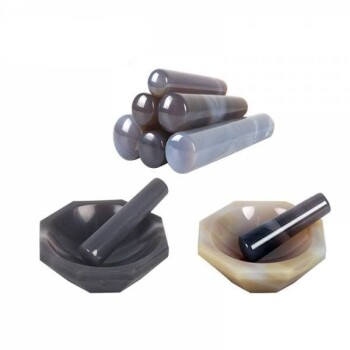
- Nature Agate Mortar and Pestle for Grinding and Mixing
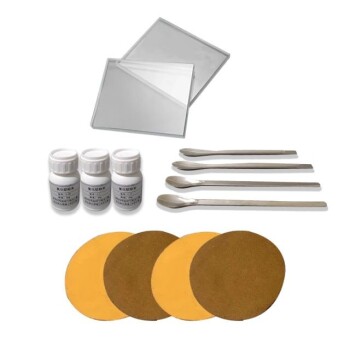
- Electrode Polishing Material for Electrochemical Experiments
People Also Ask
- Why are agate mortars and pestles used for grinding iron oxide? Ensure Sample Purity for XRD Analysis
- What is the function of an agate mortar and pestle? Ensure Purity in Halide Solid-State Electrolyte Synthesis
- What is the primary function of an agate mortar and pestle? Optimize VO2+ CaZn2(PO4)2 Nanopowder Pre-Treatment
- Why is an agate mortar and pestle required for grinding Zr3(Al1-xSix)C2? Ensure Maximum Sample Purity
- Why is an agate mortar and pestle preferred for grinding MAX phase? Ensure Sample Purity & Zero Contamination