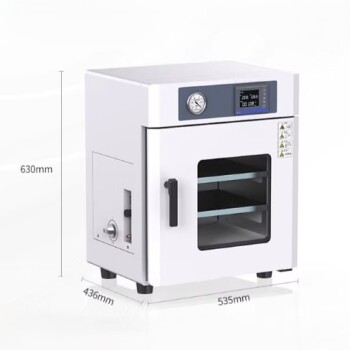
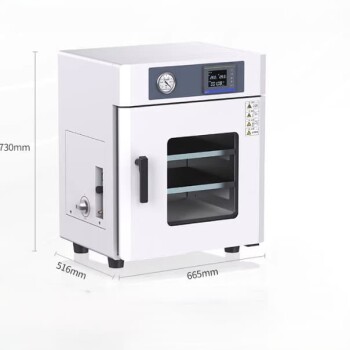
The primary function of a benchtop constant temperature drying oven is to establish a stable thermal environment for glass substrates that have been sprayed with a titanium dioxide layer. By maintaining a steady temperature of approximately 100°C, the oven facilitates the rapid evaporation of moisture from the suspension. This step is critical for achieving the initial adhesion of photocatalyst particles to the surface, serving as a mandatory preparation stage before high-temperature calcination.
The drying oven acts as an intermediate stabilization stage, converting a wet suspension into a solid coating. It ensures that the photocatalyst layer is physically adhered and moisture-free, preventing structural defects prior to the final fixation process.
The Mechanics of Catalyst Fixation
Facilitating Rapid Evaporation
The fabrication process begins with a suspension or slurry of titanium dioxide.
To transition this from a liquid phase to a fixed solid phase, the carrier solvent (typically water in this context) must be removed.
Operating at approximately 100°C, the oven ensures the rapid and complete evaporation of moisture from the sprayed glass plates.
Ensuring Initial Adhesion
Before the coating can be permanently fixed, the particles must settle and bond to the substrate.
The drying process removes the liquid layer separating the particles from the glass.
This allows the titanium dioxide particles to form an initial physical attachment to the glass surface, stabilizing the layer for handling.
Preparation for Calcination
A Necessary Precursor
The drying oven does not provide the final mechanical strength of the reactor; that is achieved through calcination.
However, drying is the prerequisite step that makes calcination possible.
Attempting to calcine a wet substrate would lead to rapid, uncontrolled vaporization, likely destroying the coating.
Reinforced Fixation
Once the moisture is removed and the initial adhesion is achieved in the drying oven, the plates are ready for the high-temperature step.
This subsequent calcination process reinforces the fixation, making the reactor durable enough for operational use.
Critical Process Variables and Trade-offs
Temperature Sensitivity vs. Substrate
While 100°C is effective for glass plates and aqueous suspensions, this is not a universal constant.
Using a "constant temperature" oven allows for precision; deviating from the optimal temperature can damage the reactor.
For example, delicate 3D structures like carbon foam may require lower temperatures (e.g., 60°C) to slowly evaporate volatile solvents like ethanol without damaging the framework.
Speed vs. Structural Integrity
The primary goal for glass plates is rapid evaporation, but this involves a trade-off regarding the material's microstructure.
In scenarios requiring high specific surface area, rapid drying can sometimes cause pore structures to collapse or cracks to form.
Therefore, the oven's ability to maintain a stable, uniform heat is vital to balancing drying speed with the preservation of the catalyst's active surface area.
Making the Right Choice for Your Fabrication Protocol
The specific settings of your drying oven should be dictated by your substrate material and the solvent used in your suspension.
- If your primary focus is standard glass plate fabrication: Set the oven to approximately 100°C to ensure rapid moisture removal and secure initial particle adhesion.
- If your primary focus is preserving delicate pore structures: Lower the temperature to achieve a gentler evaporation rate, preventing cracks and preserving the high specific surface area.
- If your primary focus is loading control on porous foams: Use lower temperatures (e.g., 60°C) and repeated drying cycles to layer the catalyst precisely without causing it to detach.
Precision in the drying stage is the single most important factor in ensuring your reactor survives the transition from a wet suspension to a functional catalytic device.
Summary Table:
| Stage | Temperature | Primary Function | Outcome |
|---|---|---|---|
| Drying | ~100°C (Glass) / ~60°C (Foam) | Rapid evaporation of carrier solvents | Initial physical adhesion and layer stabilization |
| Intermediate | Stable Uniform Heat | Prevents structural defects and cracks | Preserves catalyst microstructure and surface area |
| Calcination | High Temperature | Thermal fixation and bonding | Final mechanical strength and reactor durability |
Elevate Your Reactor Fabrication with KINTEK Precision
Don't let moisture compromise your catalyst's integrity. KINTEK provides high-performance benchtop constant temperature drying ovens and a comprehensive range of laboratory equipment—including muffle furnaces for calcination, crushing systems, and specialized reactors—tailored for advanced material research.
Whether you are working with standard glass substrates or delicate porous foams, our solutions ensure precise thermal control to preserve your catalyst’s active surface area. Contact KINTEK today to discover how our expert-grade ovens and high-temperature systems can optimize your laboratory workflow and improve reactor durability.
References
- Faouzi Achouri, Ahmed Ghrabı. Comparative study of Gram-negative bacteria response to solar photocatalytic inactivation. DOI: 10.1007/s11356-018-2435-y
This article is also based on technical information from Kintek Solution Knowledge Base .
Related Products
- Laboratory Scientific Electric Heating Blast Drying Oven
- 23L Laboratory Vacuum Drying Oven
- 56L Vertical Laboratory Vacuum Drying Oven
- 1700℃ Muffle Oven Furnace for Laboratory
- 1400℃ Muffle Oven Furnace for Laboratory
People Also Ask
- How does a laboratory electric drying oven contribute to the formation of the initial coating? Expert Insights
- What role does a precision laboratory drying oven play in the synthesis of GO-PANI nanocomposites? Protect Material Integrity
- What role does a laboratory drying oven play in the preparation of zinc oxide nanoparticle precursors?
- What is the necessity of using a laboratory drying oven when processing MoO3/GO composite nanopowders? Find out here.
- What is the role of a laboratory drying oven in cellulose citrate production? Ensure Material Stability & Purity