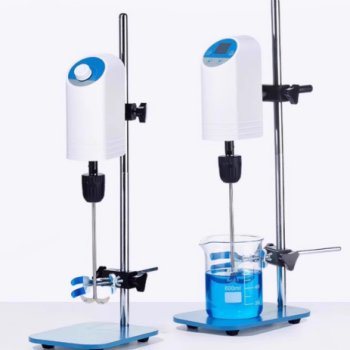
Efficient biodiesel production hinges on a constant temperature stirring reactor because it simultaneously solves the two biggest physical challenges of transesterification: overcoming mass transfer resistance and stabilizing reaction kinetics. By integrating precise heating with vigorous mechanical agitation, this equipment ensures that the castor oil, alcohol (typically methanol), and catalyst maintain uniform contact throughout the process.
Core Takeaway Transesterification is a multiphase reaction that is highly sensitive to environmental variables. A constant temperature stirring reactor is essential to eliminate concentration gradients and maintain thermal uniformity, which are the primary prerequisites for achieving high conversion rates and reliable kinetic data.
The Critical Role of Thermal Consistency
Establishing Precise Kinetic Conditions
The rate at which castor oil converts to biodiesel is directly tied to temperature. A constant temperature reactor maintains the mixture at a specific set point, often around 60°C, which is optimal for many transesterification reactions.
Preventing Temperature Fluctuations
External heating sources without integrated control can lead to fluctuations that stall the reaction or degrade the fuel. This reactor ensures thermal uniformity, preventing "cold spots" where no reaction occurs and "hot spots" that could damage the reactants.
Managing Solvent Boiling Points
Biodiesel production uses solvents like methanol, which boils at approximately 64.7°C. Precise temperature regulation keeps the reaction just below this threshold to maximize kinetic energy without causing rapid evaporation or dangerous pressure buildup.
Overcoming Mass Transfer Limitations
Mixing Immiscible Phases
Castor oil and methanol do not mix naturally; they form separate layers. The reactor’s stirring mechanism applies mechanical shear force (e.g., 200 min⁻¹) to break these layers into fine droplets, forcing them to interact.
Optimizing Catalyst Contact
Whether using calcium oxide nanocatalysts or solid dolomite, the catalyst must be evenly distributed to be effective. Vigorous stirring ensures the solid, liquid, and oil phases maintain thorough contact, preventing the catalyst from settling at the bottom of the vessel.
Eliminating Concentration Gradients
Without constant agitation, reactants would deplete in specific areas of the vessel while remaining untouched in others. Stirring eliminates these concentration gradients, ensuring the entire batch reacts uniformly to achieve high yields, such as the 89% conversion rate noted in optimized setups.
Understanding the Trade-offs
Equipment Complexity vs. Simplicity
While a stirring reactor guarantees consistency, it introduces mechanical complexity compared to static batch processing. Moving parts like impellers or magnetic stirrers require maintenance and calibration to ensure the shear force remains constant over time.
Energy Consumption
Maintaing a precise temperature and constant agitation consumes significant energy. For smaller operations, the cost of running a heated, agitated vessel must be weighed against the value of the increased conversion efficiency.
Making the Right Choice for Your Goal
To maximize the effectiveness of your transesterification process, align your equipment settings with your specific objectives:
- If your primary focus is Commercial Production: Prioritize high shear rates to maximize the contact area between oil and methanol for the highest possible yield (89%+).
- If your primary focus is Scientific Research: Prioritize thermal precision to eliminate variables and ensure the generation of reliable, reproducible kinetic data.
Consistency in temperature and mixing is not just a feature; it is the fundamental requirement for converting raw castor oil into viable fuel.
Summary Table:
| Feature | Benefit for Biodiesel Production | Key Outcome |
|---|---|---|
| Precise Heating | Maintains optimal kinetic conditions (e.g., 60°C) | Consistent and accelerated reaction rates |
| Mechanical Stirring | Breaks immiscible phases (Oil & Methanol) | Overcomes mass transfer resistance |
| Thermal Uniformity | Prevents cold spots and solvent boiling | Uniform batch quality and safe operation |
| Gradient Removal | Ensures thorough catalyst and reactant contact | High conversion rates (up to 89%+) |
Elevate Your Biodiesel Research with KINTEK Precision
Ready to achieve maximum conversion rates and reproducible results in your transesterification process? KINTEK specializes in high-performance laboratory equipment, offering a specialized range of high-temperature high-pressure reactors and autoclaves designed to meet the rigorous demands of chemical synthesis and biofuel research.
From precise thermal regulation to powerful agitation systems, our equipment ensures your castor oil reactions remain stable, uniform, and efficient. Don't let mass transfer limitations or temperature fluctuations stall your progress.
Contact our experts today to find the perfect reactor solution for your lab!
References
- Hammad Ahmad Jan, Raja Alotaibi. Synthesis of Biodiesel from Ricinus communis L. Seed Oil, a Promising Non-Edible Feedstock Using Calcium Oxide Nanoparticles as a Catalyst. DOI: 10.3390/en15176425
This article is also based on technical information from Kintek Solution Knowledge Base .
Related Products
- Laboratory Small Constant Temperature Heated Magnetic Stirrer Heater and Stirrer
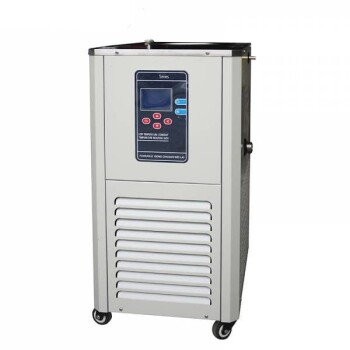
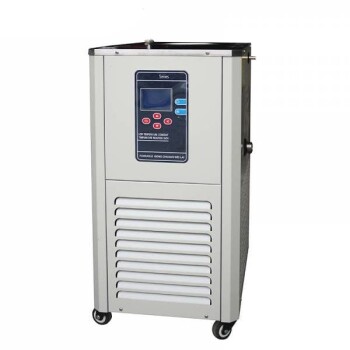
- 50L Chiller Water Bath Cooling Circulator Low Temperature Constant Temperature Reaction Bath
- 10L Chilling Circulator Cooling Water Bath Low Temperature Constant Temperature Reaction Bath
- 5L Chilling Circulator Cooling Water Bath Circulator for Low Temperature Constant Temperature Reaction Bath
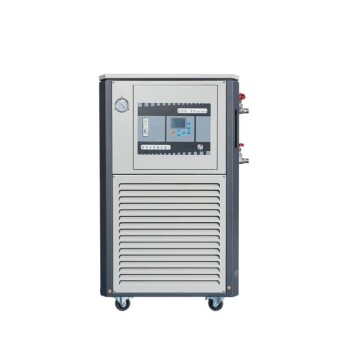
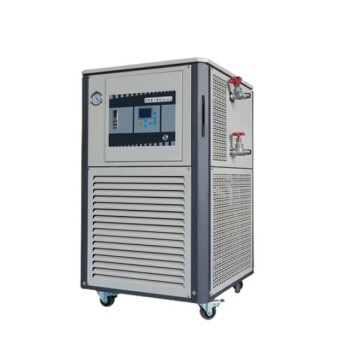
- High Temperature Constant Temperature Heating Circulator Water Bath Chiller Circulator for Reaction Bath
People Also Ask
- What role does a magnetic stirrer with heating play in ZnO nanoparticle synthesis? Precision Control for Quality Results
- What role does a constant temperature heating magnetic stirrer play in MFC-HAp synthesis? Achieve Material Homogeneity
- What is the function of a laboratory magnetic stirrer in Ni–Cr–P electrodeposition? Optimize Ion Transport & Coating
- Why is a laboratory magnetic stirrer required for benzoic acid esters? Boost Reaction Speed & Yield with High RPM
- What role does a laboratory magnetic stirrer play in TiO2 and TiO2-Ag sol preparation? Master Chemical Kinetics