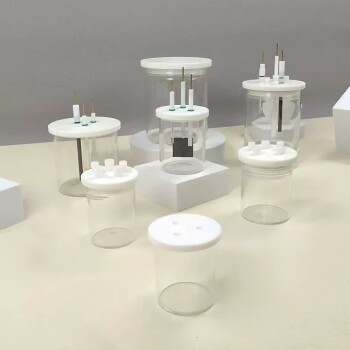
A flow-controlled fixed-bed quartz reactor is the preferred instrument for high-temperature coal pyrolysis because it guarantees that the data collected reflects the properties of the coal, not the reactor walls. This setup provides a stable thermal environment capable of reaching temperatures between 800°C and 950°C. Most importantly, the quartz material offers exceptional chemical inertness, preventing the containment vessel from reacting with the sample or the corrosive gases evolved during the process.
Core Insight: The value of a quartz reactor lies in experimental isolation. By using a material that is both thermally stable and chemically non-reactive, researchers ensure that kinetic measurements and gas analyses remain uncorrupted by catalytic wall effects or corrosion.
The Critical Role of Chemical Inertness
Preventing Corrosive Interactions
During coal pyrolysis, samples often release corrosive gases, such as hydrogen chloride (HCl).
In a metal reactor, these gases could react with the walls, altering the gas composition before it reaches the analyzer. Quartz exhibits exceptional inertness, effectively eliminating these chemical reactions and preserving the accuracy of the outlet gas data.
Eliminating Catalytic Interference
High-temperature environments can cause standard reactor materials to act as unintentional catalysts.
Specifically, metal walls can induce catalytic reactions with cracking gas components. Quartz is non-catalytic, ensuring that phenomena such as carbon deposition occur exclusively on the coal sample or central alloy, rather than on the reactor walls. This isolation is vital for accurate kinetic measurements.
Thermal Stability at High Ranges
Withstanding Extreme Heat
Coal pyrolysis research requires simulating intense thermal conditions.
Quartz reactors offer excellent thermal stability, reliably withstanding temperatures up to 950°C. This allows researchers to push the boundaries of their experiments without risking the structural integrity of the vessel.
Maintaining Consistent Conditions
Beyond just surviving the heat, the reactor must provide a consistent environment.
The flow-controlled fixed-bed design allows for precise temperature regulation. This ensures the sample is subjected to the exact thermal fluctuations required for the simulation, without interference from the vessel itself.
Understanding the Trade-offs
While quartz is superior for chemical purity, it does have physical limitations compared to metal alloys.
Pressure and Durability Constraints
Quartz is inherently brittle. It cannot withstand high-pressure applications that a steel reactor could handle. Additionally, while it handles high heat well, it requires careful handling to avoid mechanical breakage or fracture during setup and cleaning.
Scale Limitations
Quartz tubes are typically suited for lab-scale or pilot-scale research.
Scaling up to industrial sizes is often impractical due to the fragility and manufacturing constraints of large-diameter quartz vessels. Therefore, while excellent for fundamental research, data may eventually need to be correlated for use in larger, metal-walled industrial reactors.
Making the Right Choice for Your Goal
To ensure your experimental setup aligns with your research objectives, consider the following:
- If your primary focus is precise gas analysis: Prioritize the quartz reactor to prevent HCl and other corrosive gases from reacting with the vessel walls.
- If your primary focus is reaction kinetics: Use quartz to eliminate catalytic interference, ensuring that carbon deposition and cracking rates are attributed solely to the sample.
- If your primary focus is high-pressure simulation: You may need to sacrifice chemical inertness for a metal alloy reactor capable of withstanding the required pressure.
The ideal reactor acts as an invisible stage, supporting the reaction without becoming part of the performance.
Summary Table:
| Feature | Quartz Fixed-Bed Reactor | Metal Alloy Reactor |
|---|---|---|
| Max Operating Temp | Up to 950°C | Varies (often higher) |
| Chemical Inertness | Excellent (No reaction with HCl/corrosives) | Poor (Subject to corrosion) |
| Catalytic Effect | None (Ensures accurate kinetics) | High (Wall cracking/carbon deposition) |
| Pressure Tolerance | Low (Brittle material) | High (Suitable for HP applications) |
| Best Use Case | Precision kinetic research & gas analysis | Industrial scaling & high-pressure simulation |
Elevate Your Pyrolysis Research with KINTEK Precision
Don't let reactor wall interference compromise your experimental data. KINTEK specializes in high-performance laboratory equipment designed for the most demanding thermal environments. Whether you need chemically inert quartz reactors for precise coal pyrolysis or high-temperature high-pressure reactors and autoclaves for industrial simulations, our expert-engineered solutions ensure your results reflect your material's true properties.
From advanced muffle and tube furnaces to specialized crushing, milling, and pelletizing systems, KINTEK provides the comprehensive tools and consumables (including PTFE, ceramics, and crucibles) your lab requires for accuracy and durability.
Ready to optimize your lab setup? Contact KINTEK today to discuss your specific research requirements and discover how our expertise can drive your next breakthrough.
References
- Naoto Tsubouchi, Yasuo Ohtsuka. Fate of the Chlorine in Coal in the Heating Process. DOI: 10.2355/isijinternational.isijint-2017-302
This article is also based on technical information from Kintek Solution Knowledge Base .
Related Products
- Visual High-Pressure Reactor for In-Situ Observation
- Laboratory Rapid Thermal Processing (RTP) Quartz Tube Furnace
- Customizable Laboratory High Temperature High Pressure Reactors for Diverse Scientific Applications
- 1200℃ Split Tube Furnace with Quartz Tube Laboratory Tubular Furnace
- Customizable High Pressure Reactors for Advanced Scientific and Industrial Applications
People Also Ask
- How do high-pressure reactors enhance biochar redox activity? Optimize Surface Functionalization and Energy Density
- What is the purpose of a high-pressure reactor in oleophilic GO modification? Optimize Grafting and Oil Dispersion.
- How does a high-pressure reactor facilitate reductive amidation? Maximize Yield & Speed in Tandem Reactions
- How does a high-pressure reactor assist in catalytic hydrogenation of 2,6-dimethylnitrobenzene? Optimize Your Process
- What is the significance of using a high-pressure reactor for the treatment of rice husk? Boost Furfural Yield & Speed