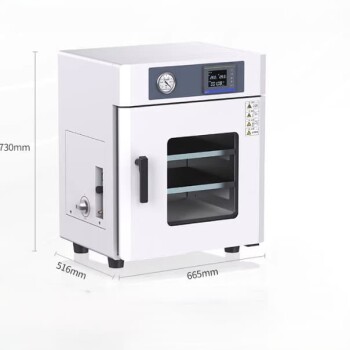
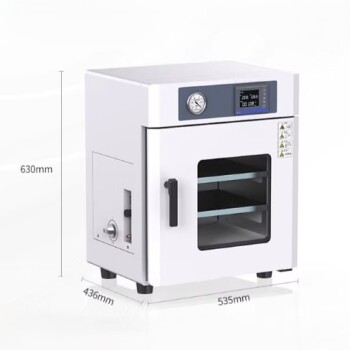
A high-performance laboratory oven is strictly required to generate a continuous and stable thermal field around hydrothermal reactors. In mineral kinetic studies, this precise thermal control is essential to supply the constant energy needed to overcome the kinetic barriers responsible for mineral transformation. Without this stability, researchers cannot accurately measure how variables such as background ions affect induction times and conversion rates.
Stability is the prerequisite for validity in kinetic modeling. A controlled thermal environment allows you to isolate chemical variables, ensuring that observed reaction rates are driven by the experimental conditions rather than temperature fluctuations.
The Physics of Mineral Transformation
Overcoming Kinetic Barriers
Many mineral transformations are thermodynamically possible but kinetically inhibited at ambient conditions. To initiate change, the system requires a specific, sustained energy input.
In studies such as dolomitization, maintaining a reaction system at a constant high temperature (e.g., 200°C) is critical. This provides the necessary thermal energy to overcome the kinetic barriers that otherwise prevent the mineral from transforming.
Driving Conversion Rates
Once the kinetic barrier is surmounted, the reaction proceeds through induction and conversion phases. The rate at which this occurs is heavily dependent on thermal consistency.
A high-performance oven ensures that the energy supplied to the reactor remains uniform. This uniformity guarantees that the conversion process is driven by a steady force, rather than erratic heating spikes or drops.
Isolating Experimental Variables
Investigating Background Ions
A primary goal in kinetic studies is often to determine how different chemical environments influence the reaction. For instance, researchers may investigate how specific background ions impact the time it takes for a reaction to start (induction time).
If the temperature fluctuates, it becomes impossible to distinguish whether a change in reaction rate was caused by the ions or a shift in heat. A high-performance oven removes temperature as a variable, allowing for precise correlation between chemical inputs and kinetic results.
Deriving Accurate Activation Energy
Mathematical models used to describe reaction kinetics rely on the assumption of a stable environment.
For example, applying the Shrinking Core Model (SCM) to derive activation energy values requires precise data. Any thermal instability introduces noise into the data, rendering the calculated activation energy values for minerals (such as chalcopyrite) unreliable.
Understanding the Trade-offs
Air vs. Fluid Heat Transfer
While high-performance ovens are excellent for creating a stable thermal field for sealed reactors, they rely on air for heat transfer.
For specific applications like leaching or dissolution, a high-precision constant temperature circulator may be preferable. Circulators supply fluid at a constant temperature directly to a reactor jacket, which can offer faster thermal recovery than air-based ovens in certain setups.
Equipment Capability
Not all laboratory ovens are capable of the precision required for kinetic modeling. Standard drying ovens often suffer from significant spatial temperature gradients or fluctuations over time.
Using equipment that cannot maintain a "flat" temperature profile at high settings (like 200°C) will compromise the validity of sensitive kinetic data.
Making the Right Choice for Your Goal
To select the correct thermal control equipment, you must define the physical nature of your reaction system.
- If your primary focus is hydrothermal transformation (e.g., Dolomitization): Use a high-performance oven to provide a stable, enveloping thermal field for sealed reactors to overcome kinetic barriers.
- If your primary focus is fluid-based dissolution or leaching: Prioritize a high-precision circulator to control the temperature of the reactor jacket via direct fluid contact.
Success in mineral kinetic studies is defined by the ability to keep thermal energy constant while manipulating chemical variables.
Summary Table:
| Feature | Importance in Kinetic Studies | Benefit |
|---|---|---|
| Thermal Stability | Overcomes specific kinetic barriers | Ensures consistent energy input for transformations |
| Uniform Heating | Maintains steady conversion rates | Prevents data noise caused by temperature fluctuations |
| Variable Isolation | Isolates chemical factors (e.g., ions) | Correlates chemical inputs directly to reaction rates |
| Model Accuracy | Supports models like SCM | Provides reliable data for calculating activation energy |
Elevate Your Research Precision with KINTEK
Success in mineral kinetic studies demands absolute thermal consistency. KINTEK specializes in high-performance laboratory equipment designed to meet the rigorous standards of modern geochemistry and material science. Our comprehensive range of high-temperature ovens, muffle furnaces, and vacuum furnaces provides the stable thermal environment necessary to overcome kinetic barriers and isolate experimental variables with confidence.
Beyond thermal control, KINTEK offers a full suite of laboratory solutions, including high-temperature high-pressure reactors and autoclaves, precision crushing and milling systems, and specialized PTFE and ceramic consumables. Whether you are modeling dolomitization or investigating mineral leaching, our tools ensure your data is driven by science, not equipment limitations.
Ready to achieve superior thermal stability? Contact us today to discover how KINTEK’s advanced laboratory solutions can enhance your research efficiency and accuracy.
References
- Veerle Vandeginste, Yukun Ji. Dolomitisation favoured by Lewis acidic background compounds in saline fluids. DOI: 10.1007/s12665-023-11180-y
This article is also based on technical information from Kintek Solution Knowledge Base .
Related Products
- Laboratory Scientific Electric Heating Blast Drying Oven
- 56L Vertical Laboratory Vacuum Drying Oven
- 23L Laboratory Vacuum Drying Oven
- 1200℃ Muffle Furnace Oven for Laboratory
- 1700℃ Muffle Oven Furnace for Laboratory
People Also Ask
- How does a laboratory electric drying oven contribute to the formation of the initial coating? Expert Insights
- What role does a precision laboratory drying oven play in the synthesis of GO-PANI nanocomposites? Protect Material Integrity
- What role does a laboratory drying oven play in the preparation of zinc oxide nanoparticle precursors?
- What is the necessity of using a laboratory drying oven when processing MoO3/GO composite nanopowders? Find out here.
- What is the role of a laboratory drying oven in cellulose citrate production? Ensure Material Stability & Purity